Ag Official on Asian Citrus Psyllid in Tulare County

Marilyn Kinoshita, Tulare County Ag Commissioner, talks about the Asian Citrus Psyllid and how its affecting growers in the area.

“Our growers have the heavy commercial production as opposed to the ranchettes in San Diego Count, so we got more emphasis on spray treatments immediately after a find. We’ve had really good success rate, and so our trapping program is top-notch, so if psyllids are found, we have the ability to eradicate immediately and keep it under control that way,” said Kinoshita.

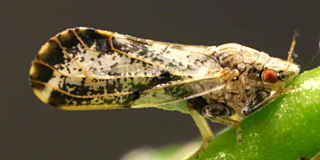
The Asian Citrus Psyllid, or ACP, is a tiny insect that acts as a carrier of the citrus disease Huanglongbing, also known as citrus greening disease. this bacterial disease is transmitted by the ACP, after it feeds on affected plant tissue.

Without proactive measures such as quarantine and eradication treatments, ACP could have dire consequences for the entire California citrus industry.

“We always knew that we were going to be ground zero. Because we’ve got the most packing sheds in the state, and the most juice facilities, and we’re receiving products from Mexico, Texas, Arizona, and Southern California and our growers need to stay diligent. We got all but 13,000 acres of citrus within the quarantine area, and so that can cause some problems with not having the entire county included,” said Kinoshita.

Citrus Greening Disease has only recently become a problem for California. The first infected plant was discovered in March 2012. It has still caused a concern in that short period of time, as the California Department of Food and Agriculture has found that here is no physical, cultural, or biological methods to completely eradicate ACP.

“So far we are dealing with it, and I have heard that this fall would kind of be the ‘trigger point’ that the Southern California counties saw at the two and a half year point of having Psyllids in their county. So we will see,” said Kinoshita.

2016-05-31T19:34:17-07:00July 14th, 2014|

UC Research on Effects of Herbicide Milestone

Milestone, a herbicide from Dow AgroSciences, was registered about 9 years ago in California for mainly cattle ranged applications, targeting problem weeds.

Guy Kyser with the Department of Plant Sciences at UC Davis looked at how the herbicide was affecting good perennial grasses.

“Its used mostly for broadleaf weeds, its been a real help with the Yellow Starthistle. There was some concern about whether it might affect seedling grasses, especially the perennial native plants that we want to replant after controlling yellow star thistle, because it got a little bit of soil residual, which is good for thistles but we wanna make sure it wasn’t hurting our grasses, and that’s what this trial is. We treated several rates of Milestone, and replanted with several species of native California perennial grasses, to see if there was any impact on the seedlings.

Kyser found out that the important grass species are more tolerant to Milestone applied at the time of planting, then when milestone is applied to young seedlings. He noted that California Brome is the most tolerant grass to Milestone.

Kyser’s research was featured at the recent 58th annual UC Davis Weed Day.

2016-05-31T19:34:17-07:00July 14th, 2014|

Tips on Minimizing Herbicide Drift

Its critically important to minimize drift when applying crop protection materials.

Alan James is a Technical Services Agronomist with Mid Valley Agriculture Services, based in Linden, in Stanislaus County. James noted the usual drift issue.

“We get called out all the time by the growers themselves, ‘What are those spots on my leaves?’ and eight times out of ten, it’s drift from the herbicide application they put on, on their own. There is always a little bit, you can’t eliminated drift, you can minimize it,” said James.

James points out some practical strategies in minimizing drift, and not just the obvious of not spraying during heavy wind.

“They need to think about the type of nozzles, the 800 nozzle produce fewer finds than the 110 nozzles, and they came out a few years ago with an extended range, T-Jet extended range nozzle, which allowed you to work at lower pressure and still the coverage,” said James. “And since then there has been at least 2 types of air induction nozzle, where you draw air in, and produce droplets that are bigger because they are wrapped around a little bit of air, and they tend to settle quicker,” he added.

Low pressure is the key, says James.

“You get a good pattern with 15-20 PSI, which produces much fewer finds if you are up at 30-40 PSI. and sometimes they think the higher the pressure the better ill drive it down into the weed, and that has nothing to do with that, it just producing more finds.” said James.

James comments on the scenario of worn out or missing nozzles.

“Every year, you ought to start out with a new set of nozzles, and make sure they are all the same. That is the other thing, when they have weed sprayers got 8 nozzles across the boom, and one plugs up, they have to put in the that plugged one, whatever they got in their pocket. which may or may not be the right size.” said James.

2016-05-31T19:34:17-07:00July 14th, 2014|

Save Our Water Does Double Duty at State Fair, Hosts Exhibits Featuring Indoor and Outdoor Water Saving Tips

The drought is on and so is the California State Fair. This year, the Save Our Water campaign is doubling down its messaging on conservation by hosting two exhibits at the fair – one on indoor water conservation and the other on outdoor conservation.

Save Our Water is the water conservation campaign co-managed by ACWA and the California Department of Water Resources (DWR).  Staff from both organizations will be on hand this year to help attendees identify opportunities to conserve.

The outdoor garden area exhibit on outdoor water conservation tips is themed “It’s Easy as 1, 2, 3.” Its featured tips are:  1 – Get efficient– with your Irrigation system. 2 – Get smart with new technology. 3 – Get green with great plants, compost and mulch.

The indoor exhibit is set up to look like a home to inspire fairgoers to conserve water. It offers three islands that focus on saving water in the kitchen, laundry, and bathroom. Each island has an interactive component.

“Californians have a great resource in Save Our Water to help them combat this extraordinary drought,” said Tim Quinn, executive director of the Association of California Water Agencies. “We hope taking part in events like the State Fair will encourage even more of us to join the effort to save water.”

Mark Cowin,  director of DWR, added:  “The State Fair has always been a great opportunity to connect with Californians and spread the message of how important it is to save water. Now that the drought has brought the issue of conservation to the forefront, the Save Our Water displays are especially timely.”

Save Our Water has been connecting Californians to daily drought tips and news via its recently launched Don’t Waste Summer campaign. The campaign is devoted to providing daily tips and news on the new microsite –SaveOurWater.com– to help Californians find ways to conserve at home and at work every day. Save Our Water’s Facebook page, Twitter and Instagram are also great resources for Californians looking to join the effort to save water.

To learn more about the Save Our Water program, visit saveourh2o.org.

2016-05-31T19:34:17-07:00July 14th, 2014|

Agriculture Shows Off at the California State Fair!

The State Fair Farm is three acres of living proof of the importance of agriculture and food production in California.

The Kitchen

‘The California State Fair is pleased to announce the newly expanded and enhanced program, “The Kitchen.” The success of this annual culinary program (formerly known as Foodstyle) has afforded the fair the opportunity to relocate it into the California Counties Building, where it will be centrally located among The Farm, Save Mart Supermarkets Wine Garden, and the Craft Brew Pub. The Kitchen will give us more room to expand the program and allow us to continue to showcase California’s Agriculture and the bounty our great state produces.State-Fair-SaveMart2013

The new “Kitchen Theatre” will continue to offer our traditional food judging events, cooking demonstrations, and chef challenges while the programming will showcase the “Farm to Fork” philosophy. Along with the three main cooking stations in the Kitchen Theatre, The Kitchen will also have a new “Do-It-Yourself” space that will offer programs such as “Make Your Own Pickles,” “5-Minute Marinades,” and many other topics of interest.

The Kitchen’s exciting exhibits will not only educate fair guests, but will entertain as well. Sacramento Area Beekeepers Association’s Kate Morton continues to be instrumental in helping us to educate the public about beekeepers and in staffing the wonderful volunteers that come out to help every year.

The Farm presented by Save Mart Supermarkets

What’s growing on at The Farm?  The Save Mart Supermarkets is taking “farm to fork” to the next level this year, relocating next to The Farm presented by Save Mart Supermarket to create a completely immersive experience, not to be missed. Guests can go to Save Mart’s California Kitchen (featuring the SMUD Energy Efficient Kitchen Theatre with Official Partner California Family Fitness) and get a Save Mart Supermarkets recipe passport and learn about more than 70 crops grown in California. Taste local culinary delights prepared by chefs at our outdoor kitchen grill.

Epic Chef Battles

Food Network junkies will enjoy watching as firefighters, postal workers, 4-H youth, rising stars from cooking schools and others go head-to-head in timed cooking competitions with surprise ingredients. Don’t miss local pros as they defend their street-cred in the Professional Chef Challenge. And this year, check out our men in uniform as they face-off for a Meals Ready to Eat (MRE) Cooking Challenge.

Get Your Grill On
Just outside The Kitchen is The Grill, a shady outdoor demonstration kitchen that brings the fork right to the farm. Here, you can pick up techniques for your own backyard culinary adventures.

Bragging Rights
Our panel of highly esteemed judges has a tough job to do, tasting their way through the state’s best homemade cookies, pies, preserves, sauces and more. Watch the judging events live – but try not to drool!

In The Raw
Sample California’s finest and freshest produce at the In The Raw Taste Center, featuring personal appearances by farmers, suppliers and Save Mart Supermarkets experts.  This experience is sure to have you looking at food in new way. 

Blue-Ribbon Secrets
Learn the recipes for top fair entries as home chefs demonstrate how to make their prize-winning treats.

Fermentation Sensation
The Home Brew and Home Wine exhibits will introduce fair-goers to the time-honored tradition of home-crafted libations. Get tips on how to taste wine; hone your nose with interactive sensory experiences; and experience innovative technologies and demonstrations on brewing beer.

Food With A View
This demonstration counter allows you to get up-close-and-personal with California’s culinary experts. Gain inspiration for your own kitchen learning about dehydrated foods, gourmet waffle making, one-pot meals, decorative food carving and more.

A Taste Of The East
The Little Saigon Cooking Series invites chefs from the famed Sacramento neighborhood to demonstrate Asian recipes and cooking techniques.

Learn about fish farming by visiting our aquaculture and aquaponics displays. Check out water-efficient gardens sponsored by the Department of Water Resources. Get gardening tips from our Master Gardeners booth. For even more fun, go inside our greenhouse to learn about orchids and careers in horticulture. Step back in time at our blacksmith booth. See what’s buzzing at the insect pavilion. Visit Urban Farming to learn about backyard and container gardening. Then let the kids race off to Kids Pedal Tractor Pull for some good family fun!

Don’t forget the Commercial Wine Competition, Cheese Competition and Commercial Craft Brew Competition, plus the Winery-of-the-Day partners.

Want to plan your day at the fair down to the last deep-fried Twinkie? There’s an online tool for that.

Make an account on the California State Fair website, advises the Sacramento Bee, and browse through each day’s events, exhibits and special activities. Add items to a schedule you can import to your phone’s iCal or Google Calendar for easy reference at the fair. You can also search all activities in a certain category, such as animals or entertainment, to figure out when and where your fair favorites are being offered. Though the program is not available for download, the tool is mobile-compatible, so you can access the site on your phone anywhere you go.

2016-05-31T19:34:17-07:00July 12th, 2014|

Report Highlights Urgent Need to Address California’s Groundwater Management

Management of California’s groundwater basins is fragmented, and many groundwater management plans are outdated and lacking important details, leaving significant room for improvement, according to a report released today by the California Water Foundation (CWF).

The report, An Evaluation of California Groundwater Management Planning, assesses the current condition of groundwater management planning in the state and makes recommendations to support sustainable management.

Lester Snow, Executive Director, California Water Foundation

Lester Snow, Executive Director, California Water Foundation

“California’s limited approach to groundwater management has been a concern for a long time, but the drought has drawn renewed attention to this increasing problem,” said Lester Snow, executive director of CWF. “Developing effective plans for how we manage this valuable resource is a crucial step to ensure that California’s farms, cities, and environment have reliable water supplies today and in the future.”

Groundwater is a critical part of California’s water supply, used to meet approximately 40 percent of the state’s water demands in an average year and up to 60 percent or more during droughts. In some regions, groundwater provides 100 percent of the local water supply. Yet, California is the only state without comprehensive statewide groundwater management programs.

The report released today reviewed 120 groundwater management plans adopted by local water agencies to manage their groundwater basins and concludes that current state groundwater management laws are inadequate. While many districts are effectively managing their groundwater resources, the report found significant limitations to the overall quality of groundwater plans in all parts of the state. Many plans lack basic basin management objectives or an implementation strategy for ensuring that objectives will be met. Most of the plans did not include or describe stakeholder outreach and participation. Additionally, 28 percent of the plans examined were written in 2002 or earlier and have not been updated.

The report makes the following recommendations to advance the development and implementation of groundwater management plans:

  • Establish a statewide goal that groundwater plans must describe how they will achieve sustainability of each groundwater basin.
  • Organize and empower local groundwater agencies to manage groundwater sub-basins.
  • Require the development and enforcement of groundwater management plans by local groundwater agencies.
  • Provide local agencies with technical guidance and financial support from the state of California.
  • Empower the state of California to oversee program implementation.

The state’s growing groundwater overdraft problems have resulted in a number of adverse consequences, including saltwater intrusion, increased energy costs due to pumping from greater depths, environmental degradation, and land subsidence that results in costly damage to infrastructure.

In May, CWF released a report of findings and recommendations to achieve sustainable groundwater management in California. Learn more at: http://www.californiawaterfoundation.org.

An Evaluation of California Groundwater Management Planning was prepared for CWF by RMC Water and Environment. The California Water Foundation’s (CWF) vision is to sustainably meet the water needs of California’s farms, cities, and environment today and into the future. CWF supports innovative projects and policies and brings together experts, stakeholders, and the public to achieve 21st century solutions.

Photo Credit: CDFA

2016-05-31T19:34:17-07:00July 12th, 2014|

Climate Change: Register now for the first California Adaptation Forum

The consensus is overwhelming: our climate is changing. According to NASA’s Global Climate Change website, “97% of climate scientists agree that climate-warming trends over the past century are very likely due to human activities, and most of the leading scientific organizations worldwide have issued public statements endorsing this position.”

Adapting to climate change is critical at all levels of our economy, including ensuring a secure food supply in the future.

For the first time, the Local Government Commission in partnership with the State of California will be holding the California Adaptation Forum. The two-day event is designed to engage a diverse mix of attendees to create a comprehensive network with a shared, strong commitment to addressing climate risks. It will be held in Sacramento on August 19-20, 2014.

Registration for the forum is now open with early registration rates ending on July 18th, 2014. This event is very timely and builds off last year’s successful National Adaptation Forum.

The event will include agriculture/food-focused sessions such as:

  • How Local Food System Planning Can Create More Resilient Communities
  • The Role of California Rangelands in Adapting to Climate Change
  • Reclaiming Energy: Farms, Forests and Waste Streams

CDFA has engaged growers on identifying potential adaptation measures, which are highlighted in the Climate Change Consortium Final Report. The California Adaptation Forum will continue this discussion in a highly useful way, for the benefit of our children and future generations that will call California home.

2016-05-31T19:34:17-07:00July 11th, 2014|

Several Key Industry Associations Urge Immigration Reform

The U.S. Chamber of Commerce yesterday urged Congress and the Administration to work together to enact immigration reform in order to drive job creation and economic growth.

The call came as part of the national ‘Day of Action’, which included events in Washington D.C. along with 25 other states.

Several key agricultural and economic industry groups also supported the proposal, including the Western Growers Association, Partnership for a New American Economy, American Farm Bureau Federation and AmericanHort.

The national press conference in the U.S. capital featured leading business association CEOs discussing the critical need for new legislation.

There was also a range of coordinated events throughout the country with state farm bureaus, local businesses and state representatives which aimed to show immigration laws in the business community needed to be modernized across industries, sectors and geographies.

In a release, U.S. Chamber of Commerce president and CEO Thomas J. Donohue said he strongly believed improvements were needed and he would continue to make the case for them.

“While our lawmakers are deadlocked on this issue, business leaders are more determined than ever to fix our immigration system,” Donohue said.

“We need meaningful immigration reform to revitalize our economy and to remain a nation ruled by law, guided by principle, and driven by compassion and common sense.

“We’re going to continue to make the case in the nation’s capital and in every corner of this country, and will use every tool and resource at our disposal. We’re not going to let up until the job gets done.”

Western Growers president and CEO Tom Nassif echoed Donohue’s remarks, adding many currently unauthorized immigrant workers were vital for the agricultural industry.

“The effect of inaction on immigration reform is devastating to the fresh produce industry and consumers. We rely on people to plant and harvest the nutritious and domestic supply of food for Americans and for export,” Nassif said.

“Many of these workers are unauthorized, but are willing and able to do the work. It’s been demonstrated many times that Americans won’t work in the fields, so why won’t our elected officials provide us the means to have a legal, reliable workforce?

If no solution is provided, production will continue to move overseas along with the jobs agriculture supports in rural communities across America.”

American Farm Bureau Federation president Bob Stallman also said the current laws were outdated and changes were needed for both farmers and the economy.

“As a nation, we can’t afford to continue with an immigration system we’ve long outgrown and is working more and more against our overall national interest,” he said.

“We urge Congress and the Administration to work together and with us to achieve real immigration reform that addresses the needs of farmers, the economy, as well as the country’s need for border security.”

2016-05-31T19:34:18-07:00July 10th, 2014|

CAWG Annual Meeting July 23-25

The Sacramento-based California Association of Winegrape Growers (CAWG) Annual Meeting is July 23-25, in Carmel Valley, Monterey County. “It’s even more exciting because this is our 40th anniversary!” said Ron Lopp, communications manager for CAWG. “Forty years ago, CAWG was founded by a small number of winegrape growers,”

The event kicks off with a golf event on the 23rd, followed by a speaker program on the 24th and the CAWG Board of Directors meeting on the 25th.

“An important part of the event is recognizing the winegrower and the wine leader of the year,” noted Lopp. “This year, the grower of the year recipient is the Ledbetter Family, owners and operators of Vino Farms in Lodi. The Grower of the Year Award—an individual, family or company—represents an outstanding example of excellence in viticulture management, recognized by others for innovation and leadership in the industry. We are recognizing the main family members of the Ledbetters,” said Lopp.

The CAWG Leadership Award recipient,” Lopp stated, “is actually one of the founding members of CAWG, Richard Keene, a Mendocino winegrape grower and winemaker. He is the third recipient of the award,” said Lopp.

2016-07-28T07:48:13-07:00July 9th, 2014|

The International Food Information Council Conducts Consumer Survey

The International Food Information Council took a look at what U.S. consumers think about food safety and food technology, and offered some insights on the results in a webinar in late June. The topics included some that are of interest to the produce industry, including sustainability and biotechnology.

IFIC staff noted that consumers are farther removed from the sources of their food than ever before, and that food is a personal and emotional topic. They also noted that labeling initiatives around the United States put biotech in the spotlight, and social media and speedy communications spread information more quickly than ever.

These are a few takeaways from the webinar:

Confidence in the U.S. food supply, at 67% (19% neutral, 14% not confident) remains about the same as it has for the past six years. Consumers’ top concerns remain disease/contamination (18%) and handling/preparation (18%), but those concerns have declined since 2008.

When asked whether they avoid certain foods, 53% said they did—primarily for health reasons. The types of foods they avoid (in order) were: sugar/carbs, fats/oils/cholesterol, animal products, snack foods/fast foods/soda, salt/sodium, artificial/additives, processed/refined foods, biotech (1%). These attitudes certainly bode well for fresh produce.

Fewer than one in 10 know a lot about sustainability in food production, and more than four in 10 know nothing at all. Yet two-thirds say it is important that foods are produced sustainably. However, in general, consumers won’t pay more for sustainable foods.

Consumers believe modern agriculture produces nutritious, safe, high-quality foods that can be sustainable. Just over half believe farms are still primarily family-run.

Overall, U.S. consumers have heard a little about food biotechnology, but only 11% have heard a lot. Compared to prior years, consumers’ impressions of food biotech has changed—favorable 28% (37% in 2012) and 29% unfavorable (20% in 2012).

Interestingly, nearly two-thirds of consumers believe vegetables and fruits are biotech products. When given rationales for using biotechnology (e.g. reducing carcinogens, protecting produce from insect damage which reduces pesticide applications), two-thirds or more of consumers say they are likely to buy them. One-quarter of consumers want additional labeling information, and of those 4% want biotech information (up from 1% and 0% in prior surveys).

Studies like this continue to show that consumers need and want information. It’s up to us to tell them.

2016-05-31T19:34:18-07:00July 9th, 2014|
Go to Top