NEXT WEEK RAISIN HARVEST WILL BE BIG ON A RECORD CROP

No Labor Shortages Yet in Raisin Vineyards
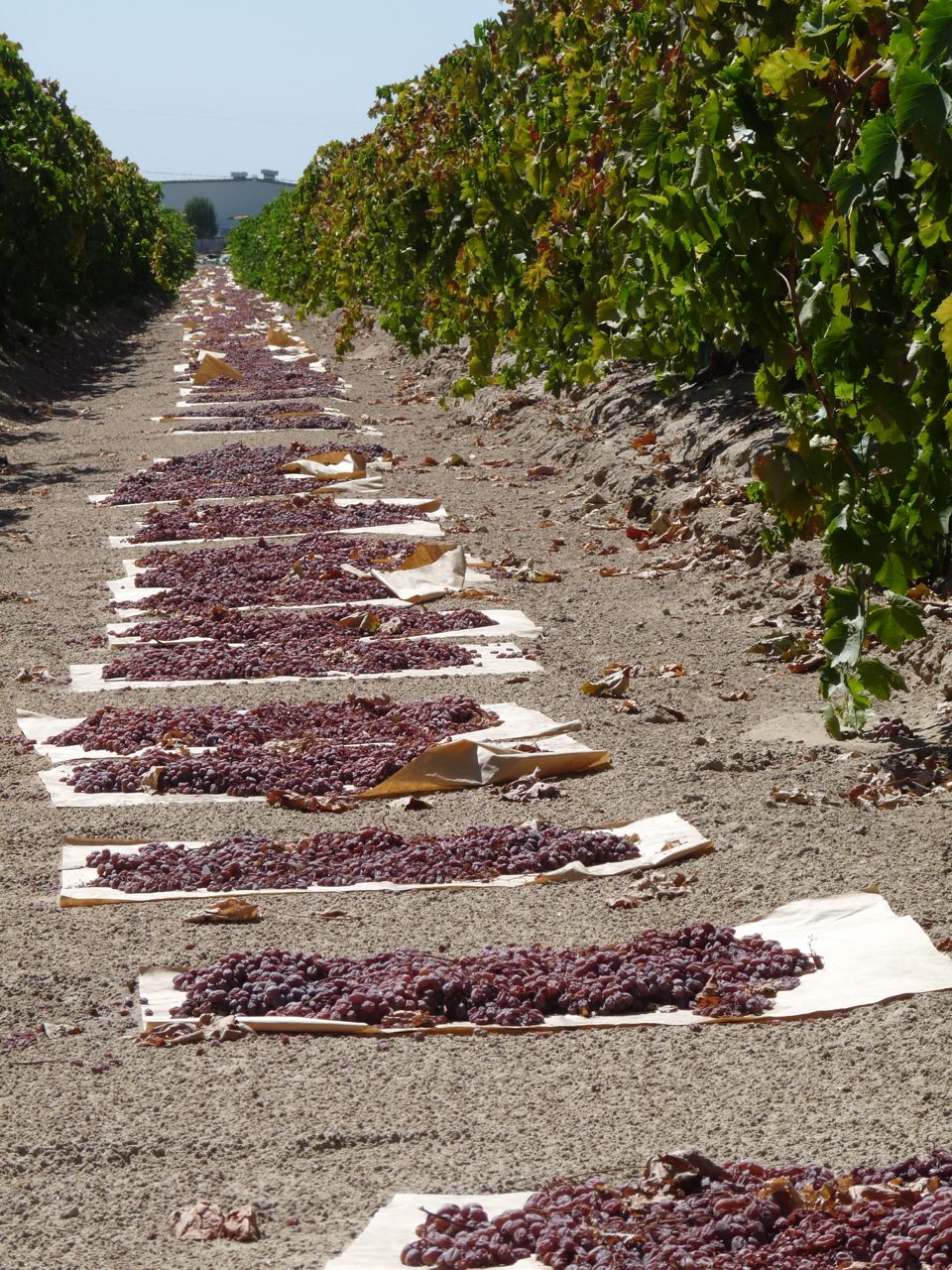
Sun-dried grapes will soon be raisins.


By Patrick Cavanaugh, Editor

According to Glen Goto, Chief Executive Officer for the Fresno-based Raisin Bargaining Association, there has been no reported labor shortage in raisin vineyards so far this season.

“The season started earlier, which may have spread the labor out, or growers are using less labor to harvest their vineyards, which means the labor will be working for more hours in those vineyards,” Goto said.
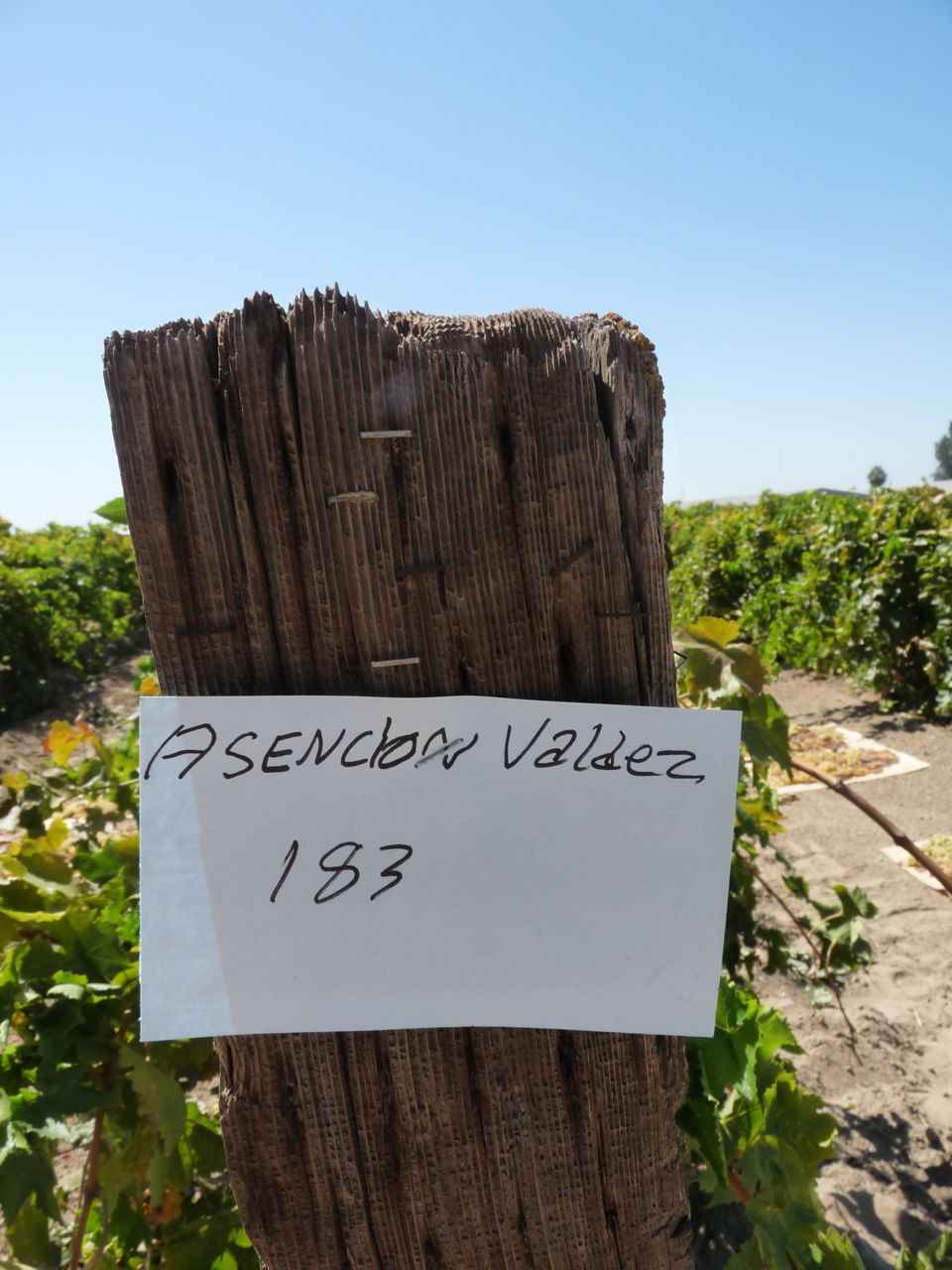
Tray counts are often noted on the end posts.
So far this season’s cost per tray is 30 cents, which is where it ended up at the end of last season. “We are seeing a little price inflation, which means growers are paying more per tray,” said Goto.

Goto noted that after Sept. 1, the harvest will be going strong, and that’s when labor shortages may start to be noticed.

Hand harvested raisins must be on the trays by Sept. 20 to qualify for raisin rain insurance. For machine-harvested raisins, they must be on the continuous tray by Sept. 25.

The raisin-type variety grape forecast is 2.40 million tons, up 25.5 percent from the 2012 final production. Based on the objective measurement survey, bunches per vine totaled a record 47.7 compared to 29.1 in 2012. This could be a record harvest year.
2016-05-31T19:45:21-07:00August 31st, 2013|

PISTACHIO GROWERS GATHER TO SEE DAMAGE

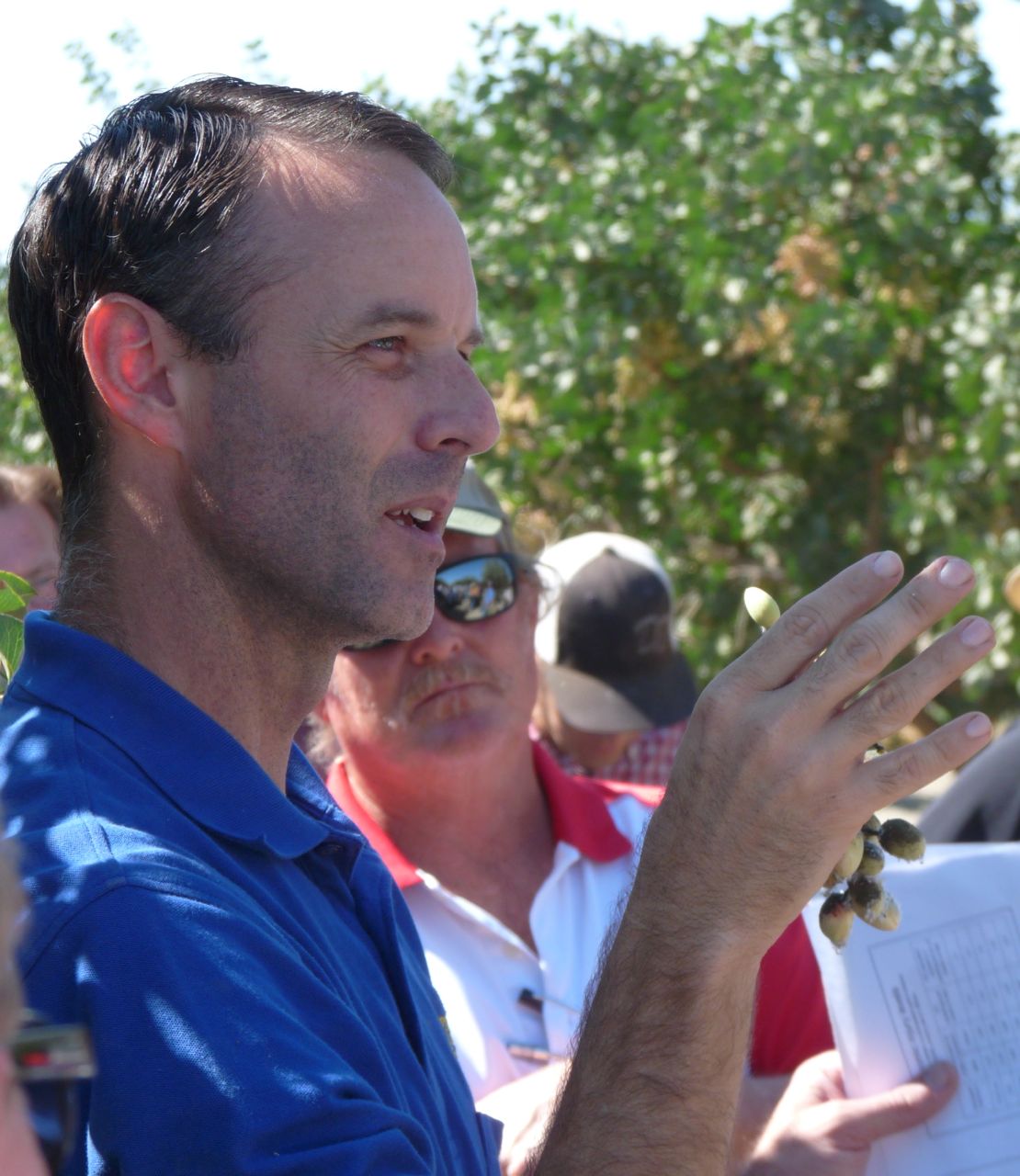
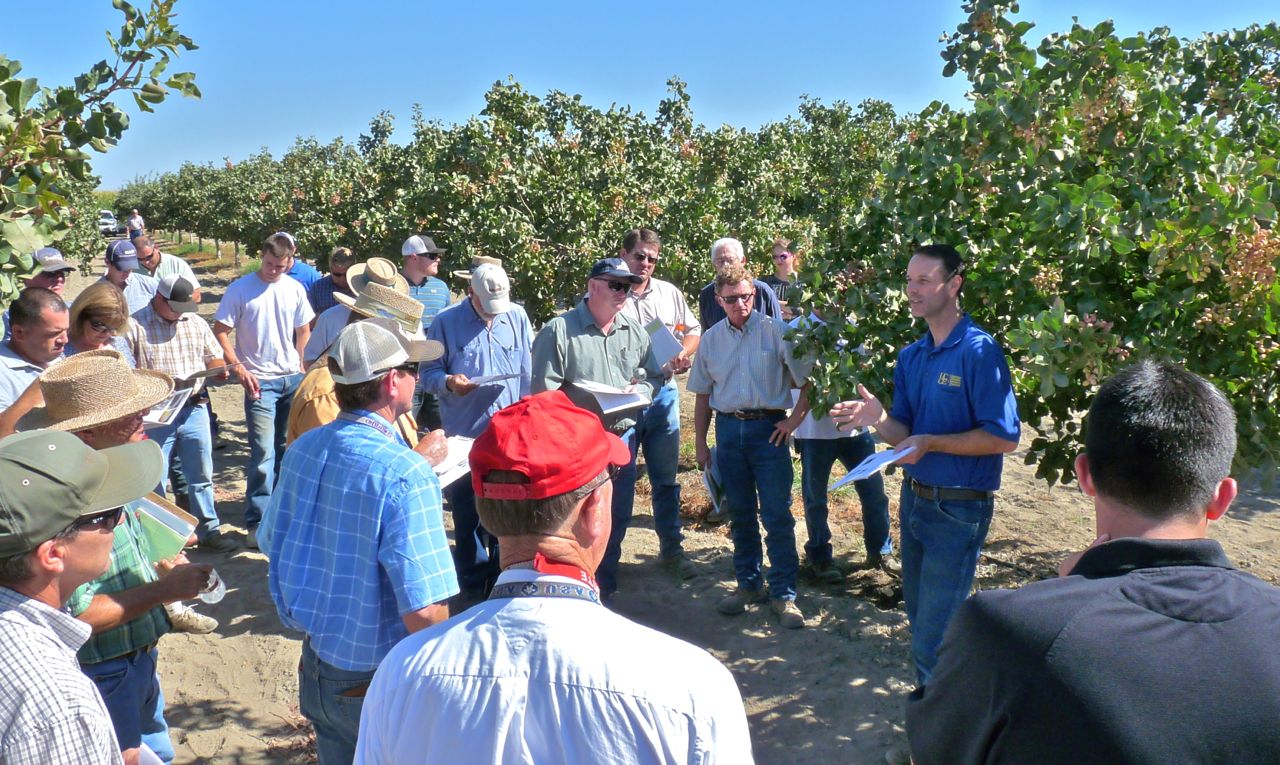
      Today Pistachio growers heard from David Haviland about Gill’s Mealybug
pressure and control timing.

Gill’s Mealybug Field Meeting
Focuses On Damage and Treatments

By Patrick Cavanaugh, Editor

Today, pistachio growers, PCA and others gathered in a Tulare County Pistachio orchard owned by Dennis Burner who is cooperating in a Gill’s mealybug control trial with UC Farm Advisors. Attendees saw mealybug pressure on trees and heard about the best time to treat for the pest.

Gill’s mealybug is a relatively new pest of pistachios in California. “It was first recognized in the late 1990s in a an orchard near Tulare. It has now spread up to Colusa County and has move down to Kern County,” said David Haviland, UC Cooperative Extension Kern County, who organized the field day with Elizabeth Fichtner, UC Cooperative Extension Tulare County.

Tulare County is a hot spot with most pistachio orchards having the bug, which has three generations per year. “Right about harvest time there are a whole bunch of mealybug crawlers hatching, and then they overwinter and become adults in May. These adults will produce an enormous amount of new crawlers the first week of June, which is an important treatment time, right when those crawlers come out,” said Haviland. “The ones that are born the first week of June will become adults in about mid-to-late July, which is the second generation. The mealybugs that are in the tree now are the start of the third generation when they become adults then hatch more young bugs at harvest.”

David Haviland
“Population-wise, growers will get millions of crawlers at harvest, but if you come back to the tree in the spring, you will see maybe one or two per pistachio cluster, so there is a huge winter mortality,” said Haviland.

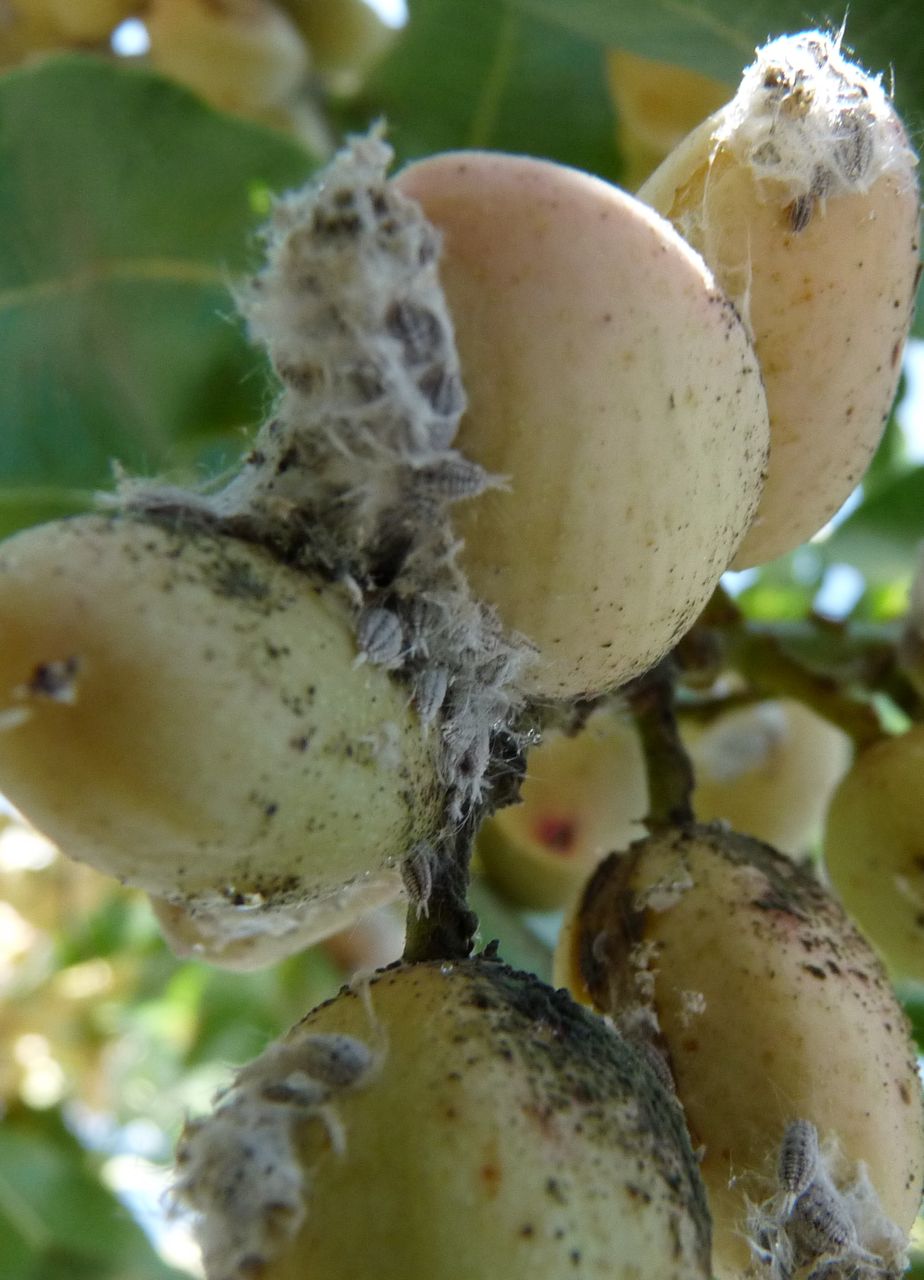
Haviland stood by a tree that had only about one mealybug per 10 clusters in the May, but now the untreated trees in the trial have clusters that are covered with honeydew, and now blackened with sooty mold, with 30 or 40 adults on the clusters. The lower leaves on the trees were turning black from the sooty mold.


Gill’s Mealybug on pistachio clusters
Causing a sooty mold mess.

“Typically growers go out in their orchards April and May and see about one mealybug for every 10 clusters. In fact they might not even notice it. But that mealy bug produces about 20 live young, which increases the count to about one per cluster, but now those adults give rise to 15 or 20 crawlers per cluster which causes clusters to be moist and black,” said Haviland. “So the point is that one or two per cluster can cause many more per cluster near harvest time, so May is the time to be thinking about spraying the first of June.”

Haviland looked back at the tree he was standing next to, and said: “If you have tree that looks like this, with a lot of mealybugs and sooty mold, let it go; you can’t do anything about it. Come back the first week of June 2014 and treat it with an insecticide and you should be clean at harvest next year. It’s really that simple.

Insecticide timing is important, but there is a widow. Of all the products registered, they are most effective on crawlers. “So you really want to get them the first week of June when the crawlers are out regardless of which product your using,” Haviland said.

During the upcoming harvest season, Haviland warn growers to ask the harvest crew to wash down the harvesting equipment and make sure no tree debris from another orchard is on the equipment. “And if growers have an orchard with mealybug, please inform the harvest crews so that they clean the equipment before moving to another site, which may not have mealybug.

“The harvest crew should blow off all leaf trash and hose the equipment down before it goes from property to property. Growers should insist upon this,” Haviland said.

2016-05-31T19:45:21-07:00August 30th, 2013|

RECORD SHIPMENTS FOR CALIFORNIA GRAPES

Grapes Are in High Demand Everywhere

The month of August has seen record shipments for grapes from California, posting TODAY week-ending totals of over 4 million boxes three weeks in a row.
 

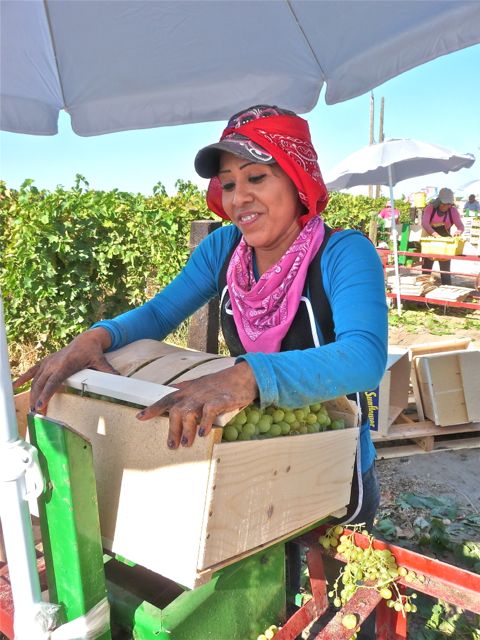
A Table Grape Worker Packs Grapes in Fresno
County. There was high demand in August.

“The crop is moving at what could be a record-setting pace,” said Kathleen Nave, president of the Fresno-based California Table Grape Commission.

According to USDA data, more than 28 million boxes of California table grapes have been shipped through Friday, August 23, 2013. The 2013 year-to-date total is threepercent ahead of last year, which saw a record-high season total volume that surpassed the 100 million 19-pound box equivalent mark for the first time in history.

Earlier this year, a study conducted by The NPD Group found that fresh fruit is the top snack food and the fastest growing snack food in America. The fruit category is continuing to grow in the U.S. Figures for the 52-week period ending in the middle of July 2013 showed a gain of fruit sales and volume over last year, according to data from FreshLook Marketing.

“Shoppers are becoming more health conscious about the food they buy for themselves and their families,” said Nave. “As one of the top-selling fruit categories, grapes are a good fit for today’s shopper.”

Grapes from California are available around the world, with over 40 percent of the crop exported. The 2013 season started in May 2013 and will continue through January 2014. Over 60 percent of the crop is shipped after August 31.

2016-05-31T19:45:21-07:00August 30th, 2013|

CALIFORNIA FAMERS INVEST IN DRIP TO CONSERVE WATER

California Farmers Praised in Article

Scientific American has published a story on how over pumping threatens to deplete the U.S. High Plains groundwater aquifer. In the story, the writer Erin Brodwin mentions Central California agriculture and how farmers are conserving water. The following is a quick comment on the story from the California Farm Water Coalition in Sacramento

It is important to note that San Joaquin Valley farmers, contrary to statements made in this article, do not use water from the Colorado River basin to irrigate their crops.

The article is correct, however, in describing the enormous increase in water use efficiency achieved by San Joaquin Valley farmers. Since 2003 more than $2.1 billion has been invested in upgrading irrigation systems on more than 1.8 million acres. One of the results of that kind of investment is that crop production has increased more than 89 percent on about the same amount of applied water per acre in years past.

2016-05-31T19:45:21-07:00August 28th, 2013|

RIM FIRE DESTROYS CATTLE THAT COULD HAVE PREVENTED IT

Rim Fire Reportedly Kills
Hundreds of Head of Cattle

By Laurie Greene, Associate Editor

The California Farm Bureau Federation reports that as firefighters work to slow the Rim Fire in the Sierra Nevada, ranchers and timberland owners are trying to assess the extent of their losses.

Officials are calling the Rim Fire one of biggest known wildfires in California. As of 7 pm PST today, the Incident Information System (InciWeb) assessed the fire to be 20% contained with extreme growth potential.

Cattle ranchers rescued as many of their animals as possible, but cattle still perished in the flames that also destroyed their grazing lands. Tuolumne County Farm Bureau is organizing efforts to provide hay for cattle and displaced livestock. Thousands of acres of timberland have also burned.

Stevie Ipsen, Director of Communications for the California Cattlemen’s Association, explained that the ranchers she has spoken with report cattle in herds of 25 to 30 have died, and estimates are in the hundreds of head of cattle. It is unknown whether the fire suddenly shifted causing the calamity, but Ipsen said it appears that ranchers did not have enough time. Some have lost their homes or cabins as well.

Ipsen commented, “Some ranchers have insurance, but the reimbursement is nowhere near the real market value.”

Several livestock facilities have been established for ranchers to take their cattle to safety.


Most cattle are not in the mountains; rather, they are on valley-floor ranchland. Ipsen said, “Ranchers bring their cattle up the mountain to graze at the discretion of the U.S. Forest Service. Ranchers really provide a public service because the cattle help the Forest Service manage overgrowth that becomes fuel for fire.”

“Recently, overgrowth on public forest land grazing areas has been improperly managed due to increased public pressure to cease the practice and less frequent annual NEPA (Bureau of Land Management’s National Environmental Policy Act) assessments that enable the Forest Service to dictate the locations, length of time and herd size of cattle allowed up the mountain. “If NEPA assessments are not done fast enough, fewer cattle are allotted for grazing.”

U.S. Congress House Report (112-596-part 1) claims that project delays due to the NEPA process are caused by the overly cumbersome program, which causes a lengthy decision-making process for Federal agencies. Basically, lagging NEPA assessments are due to long preparation time needed for NEPA-required document preparation and litigation challenging the documents.

“All California forests are in danger,” Ipsen asserted. “It’s a perfect storm—overgrowth and dryness.”

We’ll post updates as they come in.

2016-05-31T19:45:21-07:00August 28th, 2013|

WGA EXPANDS COMMUNICATION DEPARTMENT

Jeff Janas Is New Communications Manager

Jeff Janas

Today, Western Growers (WG) announced the appointment of Jeff Janas as its new communications manager in its Irvine office.

Jeff comes to WG from Arizona where he served as vice president of public affairs and communication at the Arizona Charter Schools Association.  He has extensive experience in government and communications having served previously as an appointee at the Ohio Department of Insurance in former Ohio Governor George Voinovich’s Administration and for eleven years as a congressional staffer at the U.S. House of Representatives. 

During his congressional career, Jeff served as director of committee operations at the House Administration Committee and also covered a multitude of topics including agriculture, insurance and transportation issues.

“We are very happy to welcome Jeff to the Western Growers staff,” said Sr. Director of Communications Wendy Fink-Weber. “He has a great deal of experience in government affairs and communications and will make significant contributions to our efforts to advance the public policy goals of our members.”

Jeff is an Ohio native and graduate of Ohio University in Athens, Ohio, where he earned a B.S. in Communications degree.  He will edit WG’s twice-weekly electronic newsletter, Spotlight, handle news monitoring, and contribute to issues management, social media, media relations and several writing and editing projects.  

2016-05-31T19:45:22-07:00August 27th, 2013|

RESOLUTIONS TO BE READ TO PUT LEGISLATURE ON NOTICE

Counties and Cities Prepare For Resolutions

Today the Kings County Board of Supervisor will read a formal resolution on where they draw the line on the Water Bond and the need for storage.

According to Mario Santoyo, assistant general manager of the Friant Water Authority “Essentially the resolutions will say: ‘We reaffirm our support for the 2010 Water Bond, and we are open to a modified bond. However it better have $3 billion in continuous appropriation for storage, $2.25 Billion for the Delta and some regional projects, otherwise we are not going to support any modify bond.’”

It’s reported that the City of Fresno will also adopt the Resolution in the coming weeks. More cities and counties are also proposing the Resolution.

2016-05-31T19:45:22-07:00August 27th, 2013|

WESTSIDE DOCUMENTARY COLLECTS ACCOLADES

“The Fight for Water” Wins Over Critics

AUGUST 26, 2013 — “The Fight for Water: A Farm Worker Struggle”, a documentary based on the historic 2009 march that spanned across the Westside of the California Central Valley to the San Luis Reservoir by farmers and farm workers, won the Best Documentary in Cinematography Runner Up Award and the Best Documentary Political Film Runner Up Award at the Action on Film International Film Festival in Pasadena, California, which ended this past weekend.

The film was also nominated for Best Documentary, Best Cinematography Feature and for The Sony Software Award for “Excellence in Filmmaking” in a Major Genre.

The festival showcased the works of independent writers, producers, directors and actors from around the world in all genres.

Furthermore, “The Fight For Water” has been selected to screen internationally alongside some renowned environmental films from around the world later this year at the 6th Annual Kuala Lumpur Eco Film Festival in Malaysia. Additional screenings are planned in the U.S. and, in particular, California.

The Northern California Living Series Magazines reviewed the film and called it, “Compelling… A ‘must see’ film!” It also won an Honorable Mention for Best Documentary Feature at this year’s Los Angeles Movie Awards.


Juan Carlos Oseguera, a San Francisco State University alumnus, is a published film critic and has won awards in writing, producing and directing. 


Juan Carlos Oseguera

Raised in the California Central Valley by parents who were migrant farmworkers, Oseguera set out to film the 2009 march and document the farm workers’ struggle as a lesson to be learned and a voice to be heard. 


Multitalented, Oseguera produced, directed, wrote, shot, and edited the film, the first feature-length documentary under his production studio, Filmunition.

The documentary features two Latino farmers, Joe Del Bosque and George Delgado, who describe how federal water measures contributed to fields going dry in 2009 in the Westside of the California Central Valley while refuges that protect a threatened fish received all of the water designated for the Westside. 

This diversion of water affected their community tremendously; the governor declared the area a disaster and the state provided food assistance to over 200,000 farm workers who lost their jobs.

Oseguera uncovered class, social and environmental intricacies behind water access and distribution in California, and the ripple effect it has on all of us.

Hollywood actor Paul Rodriguez, who helped organize the water march in the style of Cesar Chavez, is featured for his activism in this cause. Governor Arnold Schwarzenegger also appears on the film.

Los Angeles area music composer Benjamin Coria and California Central Valley musicians, Dustin Morris and Eric Vega, contributed to the film’s emotional score. Coria is a trained pianist, orchestrator and composer who has scored numerous award-winning film projects. His work can be heard in the documentary film, Bet Raise Fold (2013). He currently produces music for Access Hollywood and Inside Edition.

Dustin Morris is singer and songwriter who has scored short films and is a member of the rock band Solar Powered People, which has a large following in Europe. Eric Vega composed “Se Me VA”, “The Fight For Water” film’s thematic song, exclusively for the film. A songwriter, singer and stage performer, Vega has produced music albums of his own and for other artists. He recently performed at the L.A. Comedy Festival.

For additional information about the film and film screenings, visit:

For filmmaker interviews or to book film screenings, contact filmunition@yahoo.com or call (209) 675-2988.

###

2016-05-31T19:45:22-07:00August 27th, 2013|

GROUNDWATER COOP EXTENDS DEADLINE TO SEPTEMBER 9TH

CCGC Eases Water Board Compliance

Membership materials are now available to join the Central Coast Groundwater Cooperative (CCGC). CCGC’s groundwater monitoring plan was recently accepted by the Regional Board for grower/landowners in Monterey, San Benito, Santa Cruz and Santa Clara counties.

If a landowner/grower selects the cooperative approach on their EPA Electronic Notice of Intent (eNOI), they still need to submit a membership application to CCGC. Those who selected the individual well monitoring option can now switch to the cooperative program based on a recent action by the Regional Water Board.

The Program Welcome Letter states member dues will support the sampling of drinking water wells throughout Monterey, Santa Clara, San Benito and Santa Cruz counties on farm property owned or leased by members.

Sampling will occur September 2013 through August 2014, with follow-up nitrate source identification continuing into 2016-17.

CCGC combines member resources to achieve economies of scale to comply with the regulatory requirements of the Central Coast Regional Water Board.

CCCG has already accomplished what individual growers/landowners could not do alone; it has illustrated to the Regional Water Board that a one mile square blurring of well locations is protective and important such that staff is recommending that the Board amend the Monitoring and Reporting Plan (MRP) and the Order to make the rule for all growers, regardless of whether they’re in CCGC or monitoring individually.

CCGC provides long-term security of individual well monitoring information, fulfilling the need for accurate information to be used as a basis for the next Irrigated Lands Regulatory Program (ILRP). Negotiations are expected to begin in 2014.

CCGC uses experts in groundwater to create an accurate characterization of the aquifers covered by the plan, using science-based, and aggregated reporting.

The Grower-Shipper Association of Central California, Western Growers, and the Farm Bureaus of Monterey, San Benito, Santa Cruz and Santa Clara Counties created CCCG.

Growers should submit the CCGC Application no later than September 9, 2013. 

There are three upcoming informational workshops on this program:

Wednesday, September 4 @ 9:00 – 11:00 a.m. at the Monterey County Agricultural Commissioner’s Conference Center – 1428 Abbott St., Salinas

Wednesday, September 4 @ 1:00 – 3:00 p.m. at Santa Cruz Farm Bureau – 141 Monte Vista, Watsonville

Thursday, September 5 @ 9-11 a.m. at Veterans of Foreign Wars – 58 Monterey St., San Juan Bautista

Contact Abby Taylor-Silva at 831-422-8844 or Parry Klassen at 831-240-9533 with any questions.   

2016-05-31T19:45:22-07:00August 27th, 2013|

Table Grape Season Shines

Table Grape Harvest Going Well

A Table Grape Harvester packs a box of
Thompson Seedless grapes for market.
According to Mark Givens, a salesman with HMC Farms in Kingsburg, the table grape harvest is moving along well in the central San Joaquin Valley. “The harvest got started in the area a little earlier than normal, around the first of July,” he said.

Givens said the there has been a lot of good quality fruit throughout the entire state this season and that prices have been a little lower compared to last season. “Flame Seedless in the central valley are coming to and end and Thompson Seedless is just getting underway,” Givens said. “A newer variety Scarlet Royal is just getting underway and Crimson Seedless will be starting soon.”

This years production estimates are 105.7 million 19 pound boxes this compared to 100.8 million boxes last year.

2016-05-31T19:45:22-07:00August 26th, 2013|
Go to Top