University of California, Division of Agricultural and Natural Resources
Strawberry Meeting Focused on Fumigants, Pest Control

Fumigation Was Big Topic at Santa Maria Strawberry Meeting


New laws and regulations on fumigation for Santa Barbara and San Luis Obispo County strawberry growers were in place for the first time this season, and growers did a good job for the most part. This and other topics were discussed at the Wednesday’s annual Strawberry Production and Pest Management Meeting in Santa Maria.

According to Lottie Martin, Ag Biologist, Santa Barbara County Ag Commissioners office, for the most part, grower chose the right tarps for the right situation. “Growers must be careful to use a 60 percent tarp when capping a fumigation with the

Surendra Dara, crop advisor, UC Cooperative Extension, San Luis Obispo

Surendra Dara, crop advisor, UC Cooperative Extension, San Luis Obispo

1,3 D,” said Martin. “Growers should plan well in advance to make sure the tarp that is needed, is available.”

Martin said mandated buffer zones were noted and documented, however operators need to do a better job with required signage.

Surendra Dara, a Strawberry and Vegetable Crops Advisor, UC Cooperative Extension, San Luis Obispo, spoke about re-evaluating lygus bug IPM tools in strawberries with a focus on field vacs, monitory and economic thresholds. He spoke of an experiment with softer chemistry such as well as using B. bassiana, a soil fungus that acts as a parasite to lygus. “A combination of B. bassiana and azadirachtin.

Hillary Thomas, research manager, California Strawberry Commission

Hillary Thomas, research manager, California Strawberry Commission

Hillary Thomas, Research Manager with California Strawberry Commission in Watsonville also spoke about lygus. Her focus was third year bug vac research for lygus control.

Kirk Larson, pomologist and strawberry production specialist with the UC South Coast Research and Education Center, Irvine

Kirk Larson, pomologist and strawberry production specialist with the UC South Coast Research and Education Center, Irvine

Kirk Larson, Pomologist and Strawberry Production Specialist with the UC South coast Research and Education Center, Irvine spoke about advanced selections and non-chilling plug plants.

Mark Bolda, Strawberry and Caneberry Farm Advisor and County Director with UC Cooperative Extension, Santa Cruz County spoke about strawberry transplanting and the critical importance of chilling hours necessary for strawberry production.

Steve Fennimore, Cooperative Extension Specialist, UC Davis updated attendees on the use of steam to kill soil pathogens, in place of fumigants. He said work is focused on reducing the cost and outlined possible use of a prototype machine around certain higher risk areas near buffer zones on production fields.

Karen Klonsky UC Cooperative Extension specialist

Karen Klonsky UC Cooperative Extension specialist

Karen Klonsky, Cooperative Extension Specialist, UC Davis spokes about the economic considerations of alternatives to fumigation and producing a second year crop.

Also speaking was Thomas Flewell, Flewell Consulting, Watsonville-Salinas. His topic focused on evaluating pest management strategies with numbers. What do the numbers mean and how do we really know what we’re doing.

A more detailed report can be found in future issue of Vegetables West Magazine. Free subscription at VegetablesWest.com.
2021-05-12T11:06:02-07:00November 22nd, 2013|

Record Crowd of Tree Nut Growers in Turlock

Big Crowd in Turlock for Tree Nut and Vine Expo

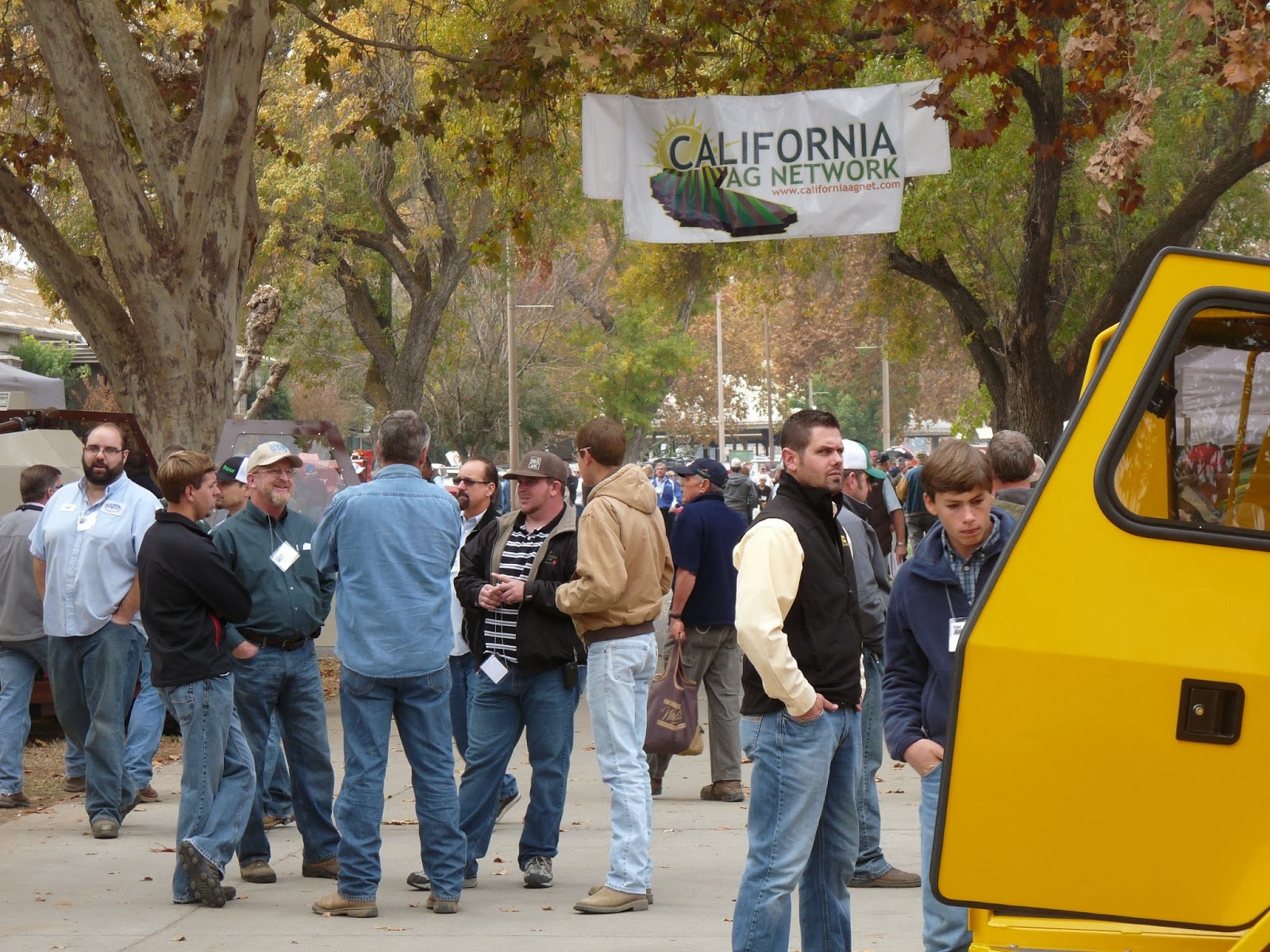
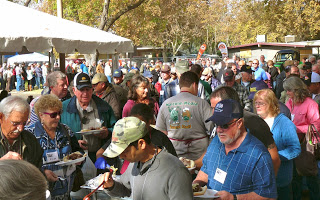
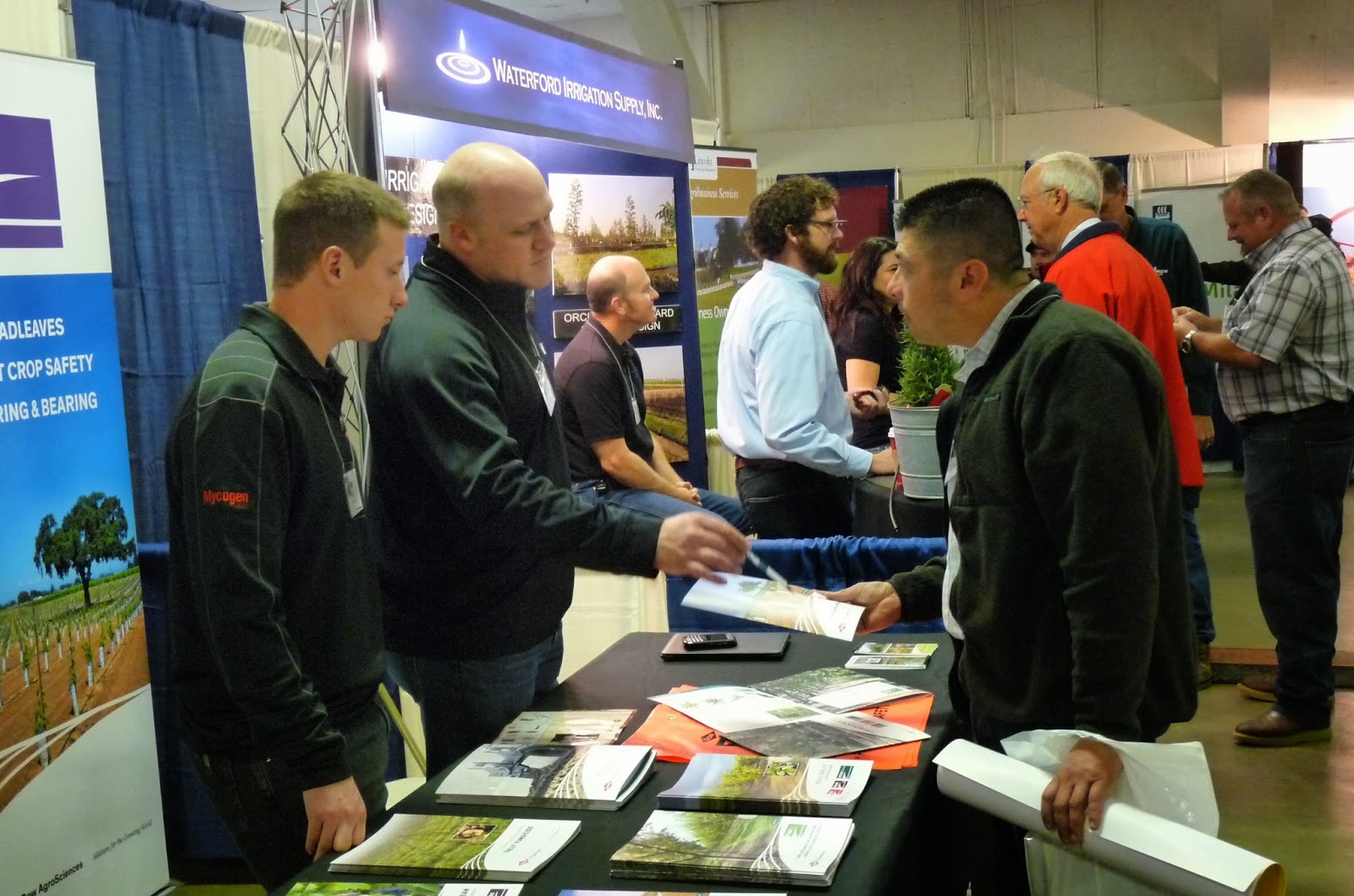
More than 800 growers and PCAs were at the Stanislaus County Fairgrounds TODAY, to hear from many speakers, visit with hundreds of exhibitors, talk about tree nuts and grape vines, and enjoy breakfast and a barbeque Tri-Tip lunch.

“It was the 18th annual event and with a record crowd. All growers were upbeat following a good harvest and good nut prices. Also, both domestic and export sales are increasing,” said Patrick Cavanaugh, editor of Pacific Nut Producer magazine and co-host of the event.
tree nut growers
Exhibitors speak with tree nut growers about products and services
“We are pleased that both the nut and grape industry are doing well in California. All we really need is a lot of rainfall this winter,” said Dan Malcolm, publisher of Pacific Nut Producer as well as American Vineyard magazine, and co-host of the show.
Crowd gathers outside to look over equipment.

Speakers came from UC Davis, Stanislaus County Ag Commissioner’s office, UC Cooperative Extension, Almond Board of California, California Walnut Board, Stanislaus County Farm Bureau, and CalAgSafety.

“We appreciate the support of the event sponsors and the record number exhibitors,” said Cavanaugh.
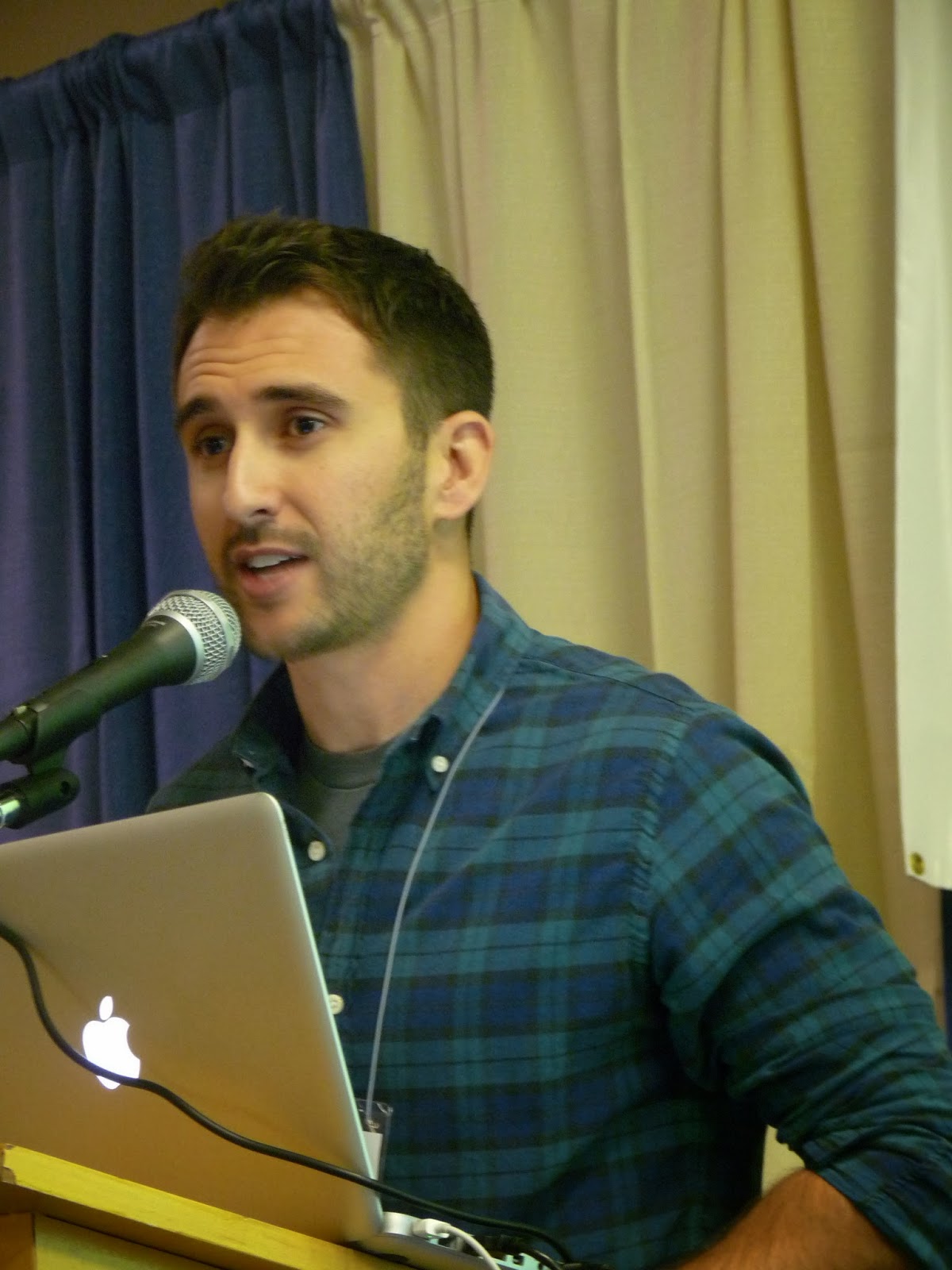
Ryan Genzoli with Cal Ag Safety speaks. tree nut growers

Ryan Genzoli with Cal Ag Safety speaks.

Sponsors Included:
    • Agromillora
    • American Ag Credit
    • Big Tree Organics
    • California Walnut Board
    • Compass Minerals
    • Dave Wilson Nursery
    • Diamond Foods
    • Fresno State Viticulture and Enology Dept.
    • JKB Energy
    • Novozymes
    • Principal Financial Group
    • Yosemite Farm Credit
2021-05-12T11:06:02-07:00November 13th, 2013|

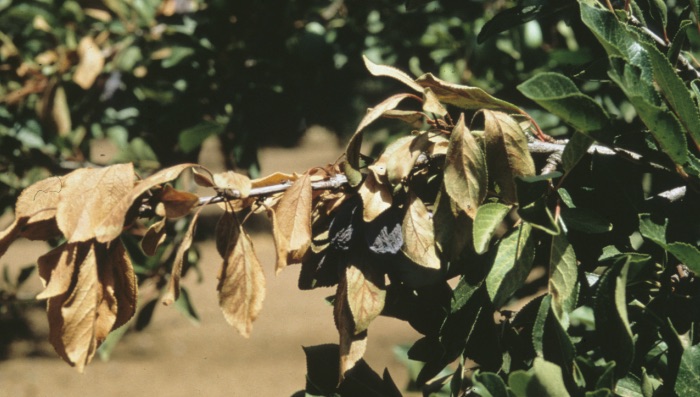
Blue Prune Drop

Blue Prune Drop and Leaf Scorch in Glenn and Tehama Counties

According to Bill Krueger UC farm advisor emeritus, Glenn County and Richard Buchner UC farm advisor, Tehama County, overheated prunes are succumbing to pressure due to high temperatures over the last few weeks. Blue prune drop and, in some cases, an associated leaf scorch, often develops following the rapid onset of high temperatures as occurred in June of this year.
Damaged prunes color prematurely (turn blue) and usually drop from the tree. The sun-exposed fruits on the top or south side of the tree are more likely to be affected by becoming sunken or flattened. Leaf scorch and dieback may develop in leaves and twigs near the damaged fruit. When damaged leaves dry, the veins may be a darker brown than the rest of the leaf.
Blue prune  drop is associated with heat stress. Excessive heat results in damage to the fruit that is thought to produce a toxin which is transported to spurs, leaves and shoots resulting in the leaf scorch symptoms. Leaf scorch symptoms are always associated with damaged prunes. They do not occur in areas of the tree with no fruit or on young trees without a crop. Anything affecting fruit temperature can have an effect. This would include:
1. Irrigation – Drop and particularly scorch are generally more severe on shallow soils with limited water holding capacity or in orchards toward the end of their irrigation cycle at the onset of heat. Adequate soil moisture insures maximum evapotranspiration and cooling of the plant.
2. Tree Position or Fruit Location – Leaf scorch is usually worse on overheated border trees, or on the south side of individual trees with greater sun exposure.
3. Cultural Practices – Blue prune appears to be less severe in orchards with cover crops than in clean tilled or drip irrigated orchards. Transpiration from an adequately irrigated cover crop should contribute to orchard cooling. In addition, a vegetated orchard floor reflects less sunlight than dead vegetation or bare ground.
4. Nutrition – While blue prune and leaf scorch does not appear to be directly related to potassium deficiency, anything adversely affecting tree health and condition could contribute to higher fruit temperatures. Adequate tree nitrogen levels promote vegetative growth that shades fruit from direct sunlight.
Krueger and Buchner report they have no sure ways of preventing blue prune drop and the associated leaf scorch. However, you can reduce the risk by making sure trees are healthy, vigorous and well supplied with water. Because the damage is caused by heat and not a disease, it should not continue to expand in the tree. Damaged wood should be pruned out during the dormant season.
Source: University of California Division of Agriculture and Natural Resources Cooperative Extension 

2016-05-31T19:47:14-07:00July 4th, 2013|
Go to Top