About Patrick Cavanaugh

This author has not yet filled in any details.
So far Patrick Cavanaugh has created 1490 blog entries.

Solano County 4-H Clubs Win Big at Skills Day

When Life Gives you Lemons, Make Lemon Curd!

Showmanship winner Tyler Scott of the
Wolfskill 4-H Club
DIXON–Tyler Scott of the Wolfskill 4-H Club, Dixon, figures that “When Life Gives You Lemons, I Make Lemon Curd.” 

And that’s exactly what he did when he showcased his project at the Solano County 4-H Project Skills Day, held Jan. 11 in the C. A. Jacobs School, Dixon. 

Scott gathered lemons from his grandparents’ tree, figured out the cost and nutrition value, purchased a table cover from a thrift shop, and polished his presentation skills. For his efforts he won a showmanship award in the intermediate food preservation category for sixth through eighth graders. 

Scott was one of 11 youths winning showmanship awards, the highest honor given at the annual Project Skills Day, which showcases what the youths have learned in their projects and provides an opportunity to share their knowledge with others. Judges score the 4-H’ers on their display, presentation, knowledge and interaction. 

The event drew 40 projects. Youths showcased projects ranging from poultry, horses, dairy goats and swine to  gardening, Legos, candles and “the role of the 4-H treasurer.” 

Other showmanship winners: 

Lilya Gardner, Roving Clovers 4-H Club, Dixon, “Iced Pumpkin Cookies,” entered in the intermediate foods category, sixth through eighth grades. 

Evelyn Young, Rio Vista 4-H Club, “Chickens: Easy Ways to Cook Eggs,” entered in the junior livestock/animals category, fourth through fifth grades 

Sarah Bowen, Sherwood Forest 4-H Club, Vallejo, “Backing a Horse,” entered in the intermediate livestock/animals category, sixth through eighth grades 

Makenna Caulfield, Roving Clovers 4-H Club, “Home-Grown Cookies,” entered in the intermediate livestock/animals category, sixth through eighth grades 

Ivy Christensen, Sherwood Forest 4-Club, “Join Up With Your Horse,” entered in the intermediate livestock/animals category, sixth through eighth grades 

Josephine Linan, Sherwood Forest 4-H Club, “The Bridle: English or Western,” entered in the senior livestock/animals category, ninth through 12 grades 

Adilene Koelzer, Vaca Valley 4-H Club, Vacaville, “Gi’me Kumihimo,” entered in “all other projects,” junior division, fourth through fifth grades 

Maya Miller, Suisun Valley 4-H Club, Fairfield-Suisun, “Stretching from your Health Officer,” entered in “all other projects,” junior division, fourth through fifth grades 

Alec Merodio, Suisun Valley 4-H Club, “A Rube Goldberg Machine,” entered in “all other projects,” intermediate division, sixth through eighth grades 

Carson Merodio, Suisun Valley 4-H Club, “The Role of the 4-H Treasurer,” entered in “all other projects,” senior division ninth through 12 grades 

In addition to the showmanship winners, participation certificates went to:   

Foods (primary grades, kindergarten through third grade)  – Not Judged
Kaitlyn Westerhaus, Roving Clovers, Dixon, Baking Mixes
 

Kylie Westerhaus, Roving Clovers, Dixon, Baking Mixes 

Foods Intermediate, sixth through eighth grades)
Katie Hurtado, Wolfskill, Dixon, “What’s up, Doc? Hoppin’ and Healthy Rabbit Meat” 

Food Preservation (junior, fourth and fifth grades)
–Xavier Copeland, Suisun Valley, “What’s P J – How To Make Pomegranate Jelly” 

Food Preservation (senior, ninth through 12th grades)
–Siera Giron, Wolfskill,  “Poppin’ Hot Pepper Jelly” 

Livestock/Animals (junior, fourth and fifth grades)
–Jordan Burkett, Sherwood Forest, “Horsie Hair Cuts”
–Christopher Lang, Suisun Valley, “This Little Piggy Went to the Market”
–Savannah Torres, Sherwood Forest, “Good Hoof/ Good Horse” 

Livestock/Animals (intermediate,sixth through eighth grade) 

–Kasey Davis, Elmira 4-H Club, Elmira, “Got Combs?”
–Natalie Greene, Sherwood Forest, “One Size Does Not Fit All – Selecting the  Saddle for Your Horse”
–Amanda Kant, Sherwood Forest, “Trick or Treat – Decorating a Horse for  Halloween”
 –Luis Laffitte, Vaca Valley, “Nutrition Mission”
–Erica Lull, Elmira, “What’s a Good Egg”
–Julette Pierce,Vaca Valley, “Scoop on Chicken Combs”
–Daniela Setka, Wolfskill, “Dressing the Little Piggy” 
–Jack Strickland, Vaca Valley, “Nutrition for a Pregnant Dairy Goat”
–Emily Turner, Elmira, “Caring for Your HYPP Horse” 

Livestock/Animals (senior, ninth through 12th grades)
–Nika Gardner, Roving Clovers, “No Horsin’ Around”
–Audrey Hennigan, Roving Clovers, “The Bunnies, The Birds and The Bees”
–Sarah Lull, Elmira, “A Fishy Home – Setting Up a Freshwater Aquarium” 

All Other Projects (junior, fourth and fifth grades)
 

Natalie Frenkel, Suisun Valley, “Record Book Tips”
–Haley Scott, Wolfskill, “Haley’s Edible Flower Garden”
–Jason Williams, Roving Clovers, “Pi”
–Cheyenne Miller, Suisun Valley, “Recycle/Reuse” 

All Other Projects (intermediate, sixth through eighth grade)
–Sam Forbes, Suisun Valley, “Fire and Ice: How To Make Ice Candles”
–Ethan Brown, Suisun Valley, “Lego Pieces, Parts, Bricks”
 

All Other Projects (senior, ninth through 12th grades)
 

–Megan Torres, Sherwood Forest, “Garden in a Jar”
–Emma Vogliano, Suisun Valley, “The Science of WORDS” 

In addition, the Solano County 4-H Project Skills Day featured the annual 4-H Chili

The 4-Alarm Team was comprised of (from left) Cody Ceremony,
Marley and Justin Means. 

Cook-Off, won by the 4-Alarm Chili team of Dixon Ridge/Pleasant Valley clubs. The winning team: Cody Ceremony, Randy Marley and Justin Means of the Pleasants Valley Club with advisor Chuck Means of Dixon Ridge.  Solano County Supervisor John Vasquez Jr. of Vacaville, Ed Coffelt of Dixon and Kathy Keatley Garvey of Vacaville judged the competition.

Receiving participation certificates were: 

Want Quackers With Your Chili, Vaca Valley:  Makenzie Davi, Marissa Daviand Emma Ryder 

Jeans n Beans, Pleasants Valley:  Sabrina Brown, Melanie Campilongo, Lillian Tudbury and David Witzel 

The Persim-Monsters, Suisun Valley:  Alexis Taliafero, Clairese Wright and Robert Wright 

The 2013-14 Solano County 4-H All-Star Lyle Glass of the Vaca Valley 4-H Club served as the emcee. Assisting him were Tyler Sasabuchi of the Roving Clovers 4-H Club, and Siera Giron of the Wolfskill 4-H Club,  the Dixon area representatives to the Solano County 4-H Leaders’ Council, and the 2012-2013 Solano County 4-H All-Star Julianne Payne of the Sherwood Forest 4-H Club. 

In special presentation, Tractor Supply Company of Dixon received the 4-H Paper Clover Award. Receiving the award was the store’s representative, Kristen Clark-Webb. The company and its employees supported 4-H during the Paper Clover promotion, which raised $503 for the county 4-H program. 
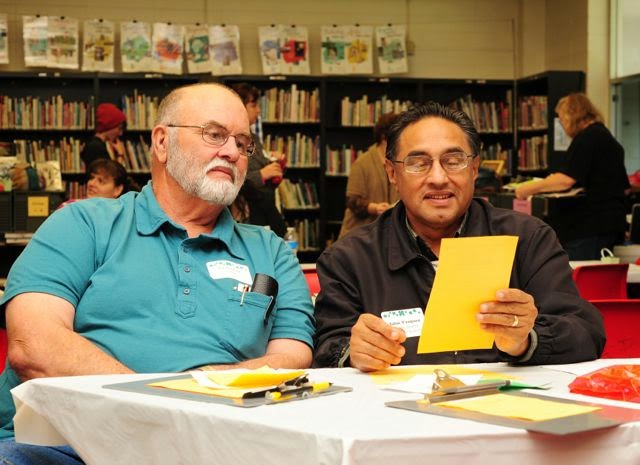
     Chili judges Ed Coffelt (left) of the Maine Prairie 4-H Club, Dixon, and Solano
County Supervisor John Vasquez Jr. of Vacaville score the teams at the Solano
County 4-H Chili Cookoff.

Solano County 4-H representative Valerie Williams of Vacaville and her sister, Kelly Fletcher of Dixon, each received a bouquet of flowers for their work in organizing the event.


 Solano County has 12 4-H clubs with a total of 500 members
The clubs are:
 Dixon: Dixon Ridge, Maine Prairie, Roving Clovers, Tremont and Wolfskill 


Fairfield-Suisun: Suisun Valley and Westwind
Rio Vista: Rio Vista 4-H Club

Vacaville: Elmira, Vaca Valley and Pleasants Valley

Vallejo: Sherwood Forest 

More information about the 4-H program is available from Valerie Williams, Solano County 4-H program representative, Solano County Cooperative Extension, at  (707) 784-1319  or Valerie A Williams at vawilliams@ucanr.edu or by accessing the web site at  http://cesolano.ucdavis.edu. 
2016-05-31T19:41:15-07:00January 14th, 2014|

California Ag News UC To Help Ranchers

UC to Help Ranchers

Survive Winter 2013-14

The first agricultural operations to feel the impact of a drought are dryland ranchers, many of whom rely almost entirely on annual rainfall to grow food for their livestock. The UC Division of Agriculture and Natural Resources will hold a drought workshop from 9 a.m. to 3:30 p.m. Jan. 29 in Browns Valley to help these ranchers live on to fight another day, said Glenn Nader, UC Cooperative Extension advisor in Sutter-Yuba counties.

“From previous droughts we’ve learned that feeding the whole herd through the drought may spell the end of business,” Nader said. “We plan to provide information on management options and impacts of drought on dryland range and irrigated pasture, feeding options to consider during a drought and how to decide what cows to sell.”

Nader is organizing the workshop, “Mitigating Drought – Optimizing Pasture and Supplemental Feed, and Managing Risk,” with Jeremy James, director of the UC Sierra Foothill Research and Extension Center.

The workshop is designed to provide ranchers with information to manage their herds during a period of low feed supply. Practical tools and strategies to be presented include:

    Getting the most effective use out of limited dryland and irrigated pasture


    Alternative protein and roughage supplementation


    Understanding the economics of supplementation


    Managing animal health


    Making culling decisions


    Tax and insurance issues related to drought

The meeting will be at the UC Sierra Foothill Research and Extension Center, 8279 Scott Forbes Rd., Browns Valley, CA 95918. Registration is $10 and includes lunch. To register, fill in the online form at http://ucanr.edu/droughtworkshop. The forum will also be webcast for those that cannot attend in person. Register using the same online form.

Following is the complete agenda:

Overview

9 a.m.
Welcome and introduction

9:10 a.m.
The last 30 years of rainfall and rangeland forage production
Larry Forero, UCCE Shasta and Trinity counties

Optimizing pasture

9:30 a.m.
Using and storing annual feed on rangeland and alternatives to annual feed
Josh Davy, UCCE Tehama, Colusa, Glenn counties

9:50 a.m.
Optimizing irrigation and fertilization on irrigated pasture
Larry Forero, UCCE Shasta and Trinity counties

10:10 a.m.
Getting the most out of your pastures with grazing management
Roger Ingram, UCCE Nevada, Placer counties

10:30 a.m.
Field demonstration of drought management tools and impacts

11:30 a.m.
Lunch

Optimizing supplemental feed

12:50 p.m.
How and when to supplement and economics of supplementation
Dr. Jim Oltjen, Dept. of Animal Science, UC Davis

12:50 p.m.
Alternative protein supplementation
Dr. Roberto Sainz, Dept. of Animal Science, UC Davis

1:20 p.m.
Roughage supplementation, feeding corn to spare hay
Glenn Nader, UCCE Yuba, Sutter, Butte counties

Risk Management and Economics

1:40 p.m.
What did ranchers learn from the 1970s drought?
Wally Roney, Rancher
Tehama and Butte counties

2:00 p.m.
Government/NAP, Emergency feed, Low interest loans
Justin Oldfield, California Cattlemen’s Association

2:20 p.m.
Lack of Rainfall Insurance
Matt Griffith, Ranch Protection

2:40 p.m.
Cow-calf Economics
Glenn Nader, UCCE Yuba, Sutter, Butte counties

3:00 p.m.
Wrap up and assessment

2016-05-31T19:41:16-07:00January 13th, 2014|

MONTEREY FARM BUREAU WARNS CPUC ON WATER ISSUES

Desalination Plant Could Jeopardize Groundwater Supply
California American Water could threaten the ground water supply of the Salinas Valley where up to 60 percent of the vegetables and leafy greens are grown for the nation. The water company, which serves about 100,000 people on the Monterey Peninsula, was ordered 20 years ago to reduce using their source of water from the Carmel River by 60 percent by 2016.

Norm Groot, the Executive Director of the Monterey County Farm Bureau, says the water company has been frantically searching for an alternative source. “Unfortunately, they have had twenty years to do that and the voters haven’t really been necessarily sympathetic and voted for their particular projects when they proposed them. So, now we are down to the point where we are looking at a desalination plant that is supposedly going to replace all that water from the Carmel River.” Groot says people there are concerned about such additional issues as the cost and the energy footprint.

The test well for the proposed desal plant may be fairy close to the shoreline, but any water taken from that well could impact the Salinas Valley. Groot thinks our biggest concern is we really don’t know how large a cone of influence, a scientific term for the influence that a source water intake has in a particular area, is going to be felt. The variables are the confluences between the lower aquifer, which is the Salinas Valley Basin, and the shallow aquifer that they are proposing to take the water from and the potential for impact because the actual aquifer goes off shore quite a distance.

Groot has been actively involved in the California Public Utilities Commission (CPUC) process, “trying to insert our particular viewpoints into the process so that everyone is fully aware of what the ramifications are of placing the source water intakes over the aquifer and really what happens if there is determination that the there is harm and that they are pumping some sort of source water that includes Salinas Valley, either brackish or fresh water.”

2016-05-31T19:41:16-07:00January 13th, 2014|

Nunes: Valley Suffering from Government-made drought

From Congressman Devin Nunes Today!

A letter RE: CVP Improvement Act of 1992

Policies pushed by environmental extremists have now taken deep root in the Central Valley, especially due to the Central Valley Project Improvement Act of 1992 (the George Miller/Bill Bradley bill), destructive court rulings based on the Endangered Species Act, and the San Joaquin River Settlement of 2009. The devastating results of these policies are now undeniable – the Valley is suffering from a permanent government-made drought.

A bill that would have rectified this situation – the Sacramento-San Joaquin Valley Water Reliability Act (H.R. 1837) – was approved by the House of Representatives in 2012 but did not pass the Senate due to opposition from both California senators and from Governor Brown.

The current impasse on water is the result of a deliberate campaign to pit water districts and local officials against one another, and to create a giant, impenetrable bureaucracy around the issue that insulates our senators and governor from the political consequences of this disaster.

In light of the dire threat the drought poses to Valley agriculture and to Valley life in general, our senators and Governor Brown must either work to pass the reforms from H.R. 1837 or explain to Californians how they intend to mitigate this calamity. Ultimately, it will take federal law to fix the problem; without Senate support for a comprehensive water bill that gains President Obama’s signature, there will be no relief from current conditions outside of flood-level rainfall. 

For further information, please see the letter I recently sent to Friant farmers on this topic here, and a letter I sent out in 2008 here.

Sincerely,

Devin Nunes
MEMBER OF CONGRESS

If you would like to contact me, please visit my website at www.nunes.house.gov.  If you would like to be removed from my mailing list, please send a message to LISTSERV@LS1.HOUSE.GOV with the text “SIGNOFF 

2016-05-31T19:41:16-07:00January 12th, 2014|

CALIFORNIA SUSTAINING GLOBAL ALMOND DEMAND

Domestic Consumption Greatest Source of Increased Almond Demand


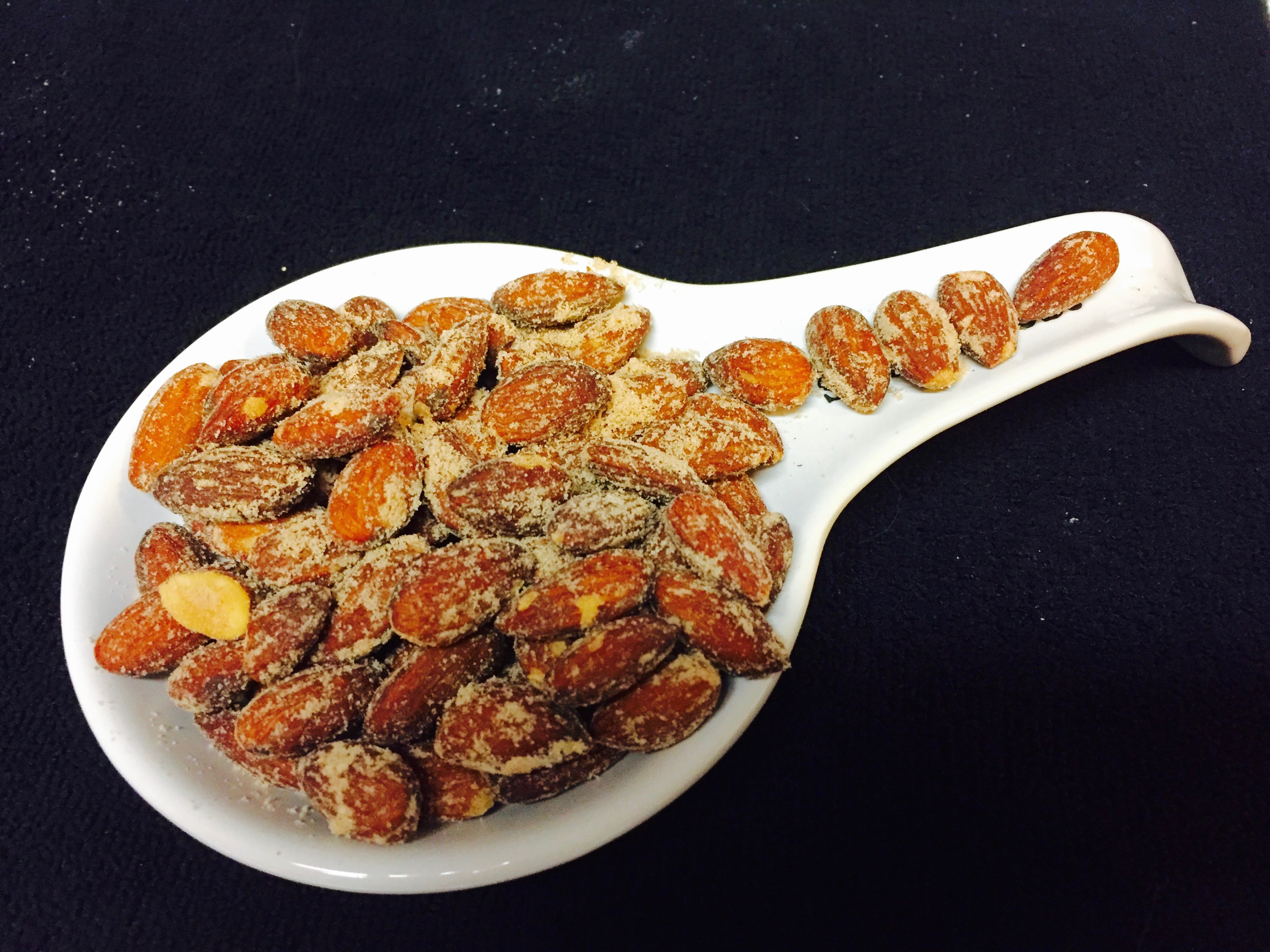
Mark Jansen, President and CEO Blue Diamond Growers, issued a press release TODAY reporting that for the second consecutive year, domestic consumption of California Almonds is driving demand. U.S. shipments have grown 11% over a year ago, and in December they posted a 20% gain.  The U.S. is the most consistent, largest and greatest source of growth for California almonds.

Total global shipments for the month were flat to last year. Year to date, shipments exceed prior year by 6%.  We are now projecting a 2 billion pound crop, which should give the industry just enough almonds to sustain the current growth rate of 6%.

Prices are 25% higher than last year, so we are increasingly seeing which markets will pay premium prices for almonds. Sales weakness continued in two of the largest export markets, China and India. The total European region sits at 21% year to date over last year.  Spain had a particularly strong month receiving nearly 60% more volume than last year.  The Middle East is recovering, replacing last year’s losses with shipments up 28% over prior year for the month and climbing 39% year to date.
With demand for California Almonds firmly in place, prices are expected to remain solid as we progress into the bloom.

Mark Jansen currently serves on the Executive Council for the California Chamber of Commerce, is on the Executive Council for the National Council of Farmer Cooperatives, is Director, International Nut and Dried Fruit Council, and is on the Board of Trustees for the Graduate Institute of Cooperative Learning.

2016-12-07T15:38:45-08:00January 11th, 2014|

FEDERAL MILK ORDER MEETINGS THIS WEEK

Federal Milk Marketing Order Info Meetings in Tulare Jan. 16 and Modesto 17


Western United Dairymen President Tom Barcellos has made arrangements to hold informational meetings, open to the public, with Deputy USDA Administrator Dana Coale and her team on Jan. 16 and Jan. 17.

Coale and her team will be available to answer questions about Federal Milk Marketing Orders that might be considered for the State of California following passage of a Farm Bill.

The first meeting will be held at the Tulare County Ag Commissioner’s Auditorium located at 4437 S. Laspina Street in Tulare at 1 p.m. on Thursday, Jan. 16.

The next day, Friday, January 17th, a meeting will be held with Dana Coale and her team in Modesto at 3 p.m. at the Double Tree Hotel in Modesto, 1150 9th Street.

2016-05-31T19:41:16-07:00January 11th, 2014|

Drought Emergency to Be Declared

Breaking News, But not Unexpected

Governor Brown to Declare Drought Emergency Within 3 Weeks

 According to the California Farm Water Coalition There are other things that can be done to alleviate the effects of drought. Strict water supply cuts a year ago prevented water managers from storing more than 800,000 acre-feet of water in San Luis Reservoir, west of Los Banos. Instead, that water went out to the ocean with no measurable environmental benefit.

Federal fishery agencies have the discretion to allow a more realistic amount of pumping of water that flows through the Delta.

Last year’s lost water could have irrigated 200,000 to 400,000 acres of farmland or served the annual water supply needs of more than 4 million people. Storing water when we have it is the key to having water during dry years like this.

2016-05-31T19:41:16-07:00January 9th, 2014|

PROPOSED DESALINATION PLANT IN SALINAS VALLEY

Salinas Valley Worried about Desal Plans

 
California American Water could threaten the ground water supply of the Salinas Valley where up to 60 percent of the vegetables and leafy greens are grown for the nation.

The water company, which serves about 100,000 people on the Monterey Peninsula, was ordered 20 years ago to reduce using their source of water from the Carmel River by 60 percent by 2016.
 
Norm Groot, executive director of the Monterey County Farm Bureau, commented, “They’re searching frantically to find an alternative source. Unfortunately, they have had twenty years to do that and the voters haven’t really been necessarily sympathetic and voted for their particular projects when proposed.”
“So, now we are to the point of looking at a desalination plant that is supposedly going to replace all that water from the Carmel River,” Groot said. “There are a number of issues there as well—not only the cost—but the energy footprint and a number of other things that really have some of the people here quite concerned right now.”
 
“The test well for the proposed desal plant may be fairy close to the shoreline,” Groot said, “but any water taken from that well could impact the Salinas Valley. I think our biggest concern is what is that cone of depression, which is a scientific term for the influence that a source water intake has in a particular area. And because of the confluence between the lower aquifer, the Salinas Valley Basin, and the shallow aquifer from which they propose to take the water, we really don’t know how large a cone of influence is going to be felt. And since the actual aquifer goes offshore quite a distance, there is potential for some sort of impact there.”
 
“We’ve been involved in the whole CPUC process for the Public Utilities Commission trying to insert our particular viewpoints into the process” Groot explained, “so that everyone is fully aware of the ramifications of placing the source water intakes over the aquifer. And what if pumping is determined to cause harm to source water that includes Salinas Valley, either brackish or fresh water?”


2016-09-07T21:04:00-07:00January 9th, 2014|

CAL POLY FLOAT WINS INNOVATION AWARD AT ROSE PARADE

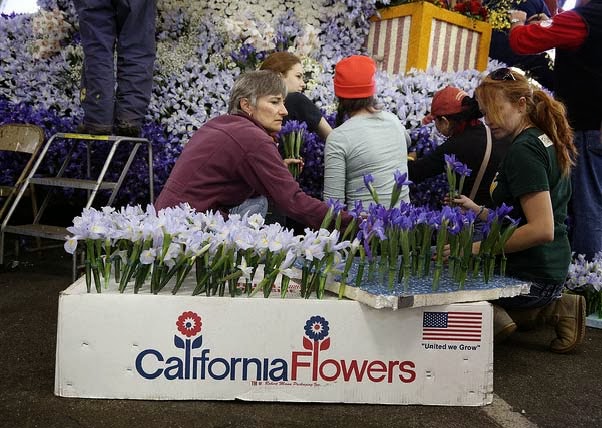
Cal Poly “California Grown” Float Wins Innovation Award at Rose Parade – From the California Cut Flower Commission
A team of 60 Cal Poly college students took home the coveted Crystal City Innovation Award at this year’s Rose Parade in Pasadena, posted by Kasey Cronquist on CDFA Tuesday. The Innovation Award is given to the float that reflects the best use of imagination & innovation to advance the art of float building.

Cronquist, CEO/Ambassador of the California Cut Flower Commission, believes there are three reasons why Cal Poly’s float entry, “Bedtime Buccaneers,” was deserving of an award for their imagination and innovation: design, flower choices and student team.

“This year’s float design was not only pleasing to the eye, but it was built with some very creative animation,” said Cronquist. “Not only were they able to make their bed appear to rock back and forth in that sea of Iris and have canons appearing to fire from under a quilt of roses, but they were also able to make the Iris have a rippling effect that made the Iris appear even more like the ocean it represented.” 

“With over 14,000 stems, no other Rose Parade float had as many home grown roses as Cal Poly’s float,” Cronquist stated. “I know for certain that the origin of flowers used in their design was not a criteria for the Innovation Award. However, it should be. Cal Poly’s commitment to become a certified “CA Grown” float was a great example of the team’s imagination and innovation,” indicating their unique perspective among the floats; “the average team in the parade sourced their roses, carnations and chrysanthemums from South America. However, due to the impact imports have had on our domestic flower farms in the past 20 years, Cal Poly’s team had to think creatively on how to ensure that their design would maintain a threshold of 85% or better fresh cut flowers from California.” In fact their float was pushing 95%.”
 
“Personally,” Cronquist shared, “I believe the fact that this team is a volunteer team of college students makes their entry the most compelling story in the parade. Due to the noisy nature of media coverage during the run up to the rose parade, this is a story that doesn’t receive the kind of attention it deserves. What an accomplishment for a team of young people, competing with corporate titans likes Dole Foods, Honda, etc., to walk away with one of the most coveted of float awards, the Crystal City Innovation Award, while also being ‘CA Grown’ Certified.”

2016-05-31T19:41:16-07:00January 9th, 2014|

California Ag News SJV Grape Symposium Focuses on Raisins

San Joaquin Valley Grape Symposium Focused On Raisins

Over the last 10 years, Fresno County farmers have reported increasing raisin moth populations in organic raisin vineyards. Addressing this concern at the SJV Grape Symposium TODAY was Kent Daane, UC Cooperative Extension specialist in the Department of Environmental Science, Policy and Management at UC Berkeley.

Daane and other UC Researchers updates growers and PCAs on the pest’s biology, management and damage at the San Joaquin Valley Grape Symposium.

Daane and his research associates followed moth populations in organic and conventional fields to document this observed change and determine if there were any specific causes for increases in raisin moth densities.

In a 2013 season study entomologists found that spring to early summer pheromone trap catches of raisin moths were prevalent across numerous vineyards, regardless of management practices. However, overall seasonal damage in 2013 was low.

“The primary difference between vineyard sites with or without raisin moth damage appeared to be well-timed and effective insecticide sprays,” Daane said. “One problem for organic sites may be the availability of insecticide materials that have long enough residual activity to control the larvae of adult moths entering the vineyard, and once the larvae are deep inside the grape cluster they are difficult to control.”

In addition to Daane’s report, the San Joaquin Valley Grape Symposium included the following research updates:

   Rootstocks for raisin production by Sonet Von Zyl, Fresno State University


   Raisin production canopy management by Matthew Fidelibus, UC Cooperative Extension specialist in the Department of Viticulture and Enology at UC Davis, based at the UC Kearney Ag REC in Parlier


   Raisin grape breeding program by Craig Ledbetter, USDA Agricultural Research Service, based in Parlier


   Economics of producing raisins, by Annette Levi, Fresno State University


   Grapevine trunk diseases and grower survey

California Ag Today Editors have included the following presentations in more detail.

Von Zyl spoke about her work in evaluating nematode resistant rootstocks for use with early ripening raisin varieties grown for dried on the vine raisin production

“DOV raisin production relies on two essential components: 1) early maturing varieties and 2) new trellis systems developed specifically for DOV production,” Von Zyl said. Currently two varieties are used for DOV production on high capacity systems namely Fiesta and Selma Pete. New vineyards for raisin production are being planted to one of these varieties due to their comparable production to Thompson Seedless. Both ripen earlier than Thompson Seedless and have potential for mechanical harvesting when DOV farmed. Fiesta has increased slowly since its release because itwas thought to have a large seed trace.  

This has since been proven incorrect and plantings stand at 12,685 bearing and non-bearing acres (California Agricultural Statistics Service, 2010).  Selma Pete acreage stands at 3,143 total (bearing and non-bearing) but interest is high for this variety specifically for DOV production using the open gable trellis system.  In 2010, 6,716 acres of Fiesta and 1,245 acres of Selma Pete were produced using an overhead trellis system. It is conceivable that these two varieties may become thestandards for DOV raisin production as older Thompson Seedless vineyards get removed.

Unlike traditional raisin production, trellis systems are vital to the success of DOV raisin production.  Currently, two trellis systems are most prevalent among DOV growers, the open gable and the overhead trellis systems.   The basic principle of the open gable trellis (syn: Y-trellis) maintains the fruit on both sides of the trellis after cane severing. In   traditional  raisin  production  vineyards,  vines  are  headtrained,  but   for   DOV production it is more desirable to train vines as bilateral, quadrilateral cordons or a split head to facilitate cane severance and pruning.  

Freedom and1103 Paulsen are rootstocks which are commercially available that have some resistance to nematodes and are considered high vigor stocks.   The use of rootstocks that impart vigor and have nematode resistance will be important in DOV vineyard establishment.

Establishing a DOV vineyard is costly.  Setbacks due to weak vines, which do not fill the trellis system, cost growers time and money.  It is conceivable that rootstocks will play an important role in new DOV vineyards. Some of the rootstocks previously mentioned, are currently being evaluated under DOV raisin production using a southside trellis system.

Matthew Fidelibus, Extension Specialist, Department of Viticulture and Enology UC, Davis spoke about the Impact of canopy management practices on the fruitfulness, yield, and quality ofdryon– vine raisin grapes on open gable trellis systems

Most modern dryonvine (DOV) raisin vineyards in California have an overhead arbor or an open gable trellis system.  The overhead arbor has a slightly greater yield potential than the open gable, but is more costly to install and requires morespecialized farming and harvest equipment than theopen gable. Approximately 1/3 of Selma Pete vineyards areon an overhead trellis system (USDA NASS 2012); most of the rest are on an open gable.
The original open gable DOV trellis is comprised of steel posts topped at 4.5 ft with 6 ftwide V- shaped steel cross arm assemblies supporting six fruiting wires, three on each side).  The bottom two wires on each cross arm support fruiting canes. Cordon support wires are affixed immediately below the base of thecross arm assemblies, and a vertical one foot tall post extension is mounted in the centerof the cross arm assembly to support a foliage catch wire.  In spring, moveable rake wires are pulled toward the center of the trellis, thus gathering the renewal shoots emerging from spurs and guiding them toward the center of the trellis where they can be supported by the centermounted foliage catch wire.

Fruiting canes of vines subjected to the center-divided canopy management system are tied to both cross-arms creating a balanced crop load on the trellis, and helping to provide a physical separation of the renewal shoots from the fruitingshoots on canes.  Canopy management practices such as the separation of renewal and fruiting zones may increase productivity if theypromote the exposure of renewal shoots to sunlight (Shaulis and May,  1971). Christensen (1979) showed that Thompson Seedless canes originating from renewal shoots that grew under sun-exposed conditions, sun canes, had better bud break than shade canes, andthe shoots from sun canes were more vigorous and productive than shoots from shade canes.

The specific benefit that centerdivided canopies, or other possible canopy division practices, may have on the exposure of renewal shoots to sunlight, or on bud fruitfulness, has not been determined for Fiesta or Selma Pete on open gable DOV trellises.  Such information is needed to help growers understand which elements of the original open gable design concept are critical to ensuring high yields.

Since the open gable trellis was commercialized, growers and trellis companies have significantly modified or omitted several of theoriginal trellis design features and canopy management practices for various reasons including: to reduce the cost of trellis materials, facilitate pruning, more distinctly separate thefruiting and renewal zones, and to enable the vines to be harvested with smaller, less expensive, andmore widely available, machines. Vineyard trellis systems with a narrower cross arm span have also been modified with a narrower cross arm angle, with many also having a substantially lowered cordon wire. These changes were mounted foliage catch wireand rake wires, thus reducing the cost of trellis materials and installation. Without catch wires, the renewal shoots cannot be guided into the center of the trellis, but the canopy can still be separated into renewal and fruiting zones by pruning in such a
way that canes and spurs are on separate cordons, a pruning style known aswithinrow-alternate- bearing (WRAB) or, more commonly, as the Peacock’ method, after the person who invented this pruning style (Peacock and Swanson, Fidelibus et al. 2007; Figure 3).

Clearly, themove to DOV has inspired creative canopy management practices, but reports of disappointing or declining yields may indicate that someof the practices being implemented may be undesirable. Poor performance may be related to some of the trellis design and vine training changes described above, but the fact that multiple changes were often implemented at once makes it difficult to determine which factor or factors maybe most important. Therefore, we have begun work to determine how different trellis designs and canopy management practices may affect canopy structure, light environment, and productivity of ‘Selma Pete’ and Fiesta grapevines on open gable trellises.

Kearney canopy separation trial. Canopy separation methodaffected the number of leaf layers and the proportion of the leaves on the exterior of the vine canopies (Table 1). The canopies of all vines had similar numbers of horizontal leaf layers when measured in July, but vines with nondivided and centerdivided canopies had fewer exterior leaves, horizontally and vertically, and more leaf layers, vertically, than vines with WRAB canopies (Table 1). Fewer leaf layers should improve light levels in the canopy, an effect that could promote bud fruitfulness and budbreak, and having more leaves on theexterior of the canopy is also desirable as exterior leaves have the greatest photosynthetic capacity due to their better sunlight exposure.

Canopy separation practices, especially WRAB, increased light intensity in the renewal zoneearly in the season, but as thecanopy developed over time, differences between treatments, with respect to light intensity, diminished. (Figure 4). Renewal shoots growing under better light exposure could form dormant buds with greater fruitfulness than those from renewal shoots grown under lower light intensities, and shoots exposed to high light levels generally have lower rates of bud necrosis over winter than shoots exposed to low light conditions. Increased bud fruitfulness and improved budbreak could potentially increase vine yields.

Vines with centerdivided, or nondivided, canopies may retain fruiting canes and spurs on any cordon (A). Vines with canopies separated in the WithinRowAlternateBearing (WRAB) style are pruned so that all the canes are on the cordons between two adjacent vines, with spurs on the othercordons, and fruiting and renewal sections thus alternating down the vine rows (B).

Larry Williams, Department of Viticulture and Enology UC Davis discussed a brief review of mineral nutrition of grapevines and fertilization guidelines for California Vineyards.

Determination of N fertilizer amounts

Once the decision has been made to fertilize the vineyard, theappropriate amount of fertilizer should be applied.  Mineral nutrient budgets (i.e. the amount of nutrients the vine needs for proper growth and development) have been established in various studies around the world.  It was determined that Thompson Seedless grapevines needed approximately 39 kg N ha1 (~ 35 lbs N acre1) for the leaves, 11 kg N ha1 (10.7 lbs N acre1) for the stems (main axis of the shoot) and 34 kg N ha1 (~ 30 lbs N acre1) for the fruit (Williams, 1987). The vineyard density in that study was 1120 vines per hectare (454vines per acre; 12’ rows x 8’ vine spacings) and the trellis system was a 0.45 m crossarm.  The total N (found in the fruit at harvest, leaves as they fell from thevine and pruning wood) in wine grape vineyards using a VSP trellis system varied from 24 to 65 kg N ha1 (21 58 lbs N acre1) over a three year period (L.E. Williams, unpublished data).  The differences in N per hectare (acre) in that study were primarily due to differences in row spacing and final yield.

In anotherstudy (Williams, 1991) it was determined that Thompsons Seedless leaves contained greater than 22 kg N ha1 (~ 19 lbs N acre1) after they fell from the vine and the canes at pruning contained approximately 17 kg N ha1 (~ 15 lbs N acre1).  These values are comparable to other studies using Thompson Seedless.  The results from both studies mentioned above (Williams, 1987; 1991) would indicate that there is a considerable amount of N in both the leaves and canes of a vine and that when both are incorporated into the soil after leaf fall and pruning would contribute to the soil’s organic matterand the availability of N in subsequent years.  Theauthor has found that N from both leaves that fell from the vine after harvest and prunings incorporated into thesoil is taken up the following growing season (unpublished data).  Another interesting aspect of those two studies would be the difference in N within the leaves of thevines at harvest (39 kg N ha1) and leaves after theyve fallen from the vine (22 kg N ha1). The difference in theamount of N in the leaves between the two (~ 15 lbs N/acre) would theoretically be the amount of Nremobilized out the leaves during senescence after harvest and put into thevines N storage pool (~20% of the seasonal total N demand by the vine) indicating the importance of leaves as a source of N for recycling within the vine.  A study is currently underway by the author (funding provided by the American Vineyard Foundation, California Table Grape Commission and California Raisin Marketing Board) to provide better metrics for the remobilization of N out of the leaves after harvest and back into the permanent structures of thevine (N storage reserves). Data should be finalized by the Spring of 2014.

The amountof K needed for growth of grapevines also has been determined.  In the same vineyard used above to develop a N budget for Thompson Seedless grapevines, aK budget was developed (Williams et al., 1987).  Leaves, stems andfruit needed approximately 13, 29 and 50 kg K ha1 (~ 11, 26 and 44 lbs K acre1), respectively, during the growing season.  The amount of K in theleaves and canes at the end ofthe season were equivalent to 9 and 12 kg K ha1.  The amount of Kfound in the fruit at harvest, leaves as they fell from thevine and canes at pruning for two wine grape cultivars, on different rootstocks and at different locations ranged from 25 to 67 kg K ha1 (22 60 lbs K acre1) over a three year period (L.E. Williams, unpublished data).  Differences among K per unit land area were dueto same factors as discussed in the preceding paragraph for N in that study.

The aboveinformation in this section illustrates that there can be significant variation in the requirements of N and K per vineyard.  This is due to differences in row spacings, trellis types, yield and overall growth of individual vines.  Much of theN and K in the leaves and canes are returned to the soil forpossible futureuse. Therefore, a better wayin determining the fertilizer demands of a vineyard would be to calculate theamount of that nutrient removed in the fruit at harvest

Kinds of fertilizers

The choiceof N fertilizers for raisin vineyards in California can be based mostly upon cost (Christensen and Peacock, 2000).  The same mayapply for table grape and winegrape growers.  The nitrate form of N allows the fertilizer to be available to the vines shortly after an application while the ammonium and urea forms require their transformation to nitrate in the soil profile.  The liquid forms of N fertilizers are gaining

in popularity due to their ease of handling and application via drip irrigation (fertigation). Many raisin and table grape growers will use farm manure as a source of N, with its application occurring during the dormant portion of the growing season.  Lastly, the acidification potential of N fertilizers should be considered in a management program particularly in acid soils.  This characteristic of N fertilizers has been outlined (Christensen and Peacock, 2000).

It has been concluded that one form of K fertilizer offers no advantage over the other forms (Christensen and Peacock, 2000).  Thus cost may play a major role in determining which kind to use in California and whether it is to be used in a fertigation program.  For vineyards with Mg deficiencies thechoice of a fertilizer would probably be magnesium sulfate.  The two micronutrients mostly commonly needed in California vineyards are zinc and boron. Foliar and soil applications of the two fertilizers have been usedin California (Christensenet al., 1982).  Soil applications of Zn are more effective under drip than furrow irrigation.  Research has shown that neutral or basicZn products are the most effective Zn fertilizers (Christensen and Peacock, 2000).

Timing of fertilization events

Nitrogen and potassium are required by the grapevine throughout its growth cycle.  It has been shown that the major sink (the organ that requires the most of a particular mineral nutrient) forN is the leaves whilethe fruit is the major sink for K (Williams, 1987; Williams et al., 1987; Williams and Biscay, 1991).  Approximately, twothirds ofthe vine’s annual requirement forN occurs between budbreak and several weeks after berry set.  This is the period when the canopy is formed by the vine.  The remaining third of the vine’s annual requirement of N goes to the fruit after berry set.  It should be pointed out that a portion of the N requirements of a grapevine could be derived from N reserves in the roots and other permanent structures of the vine.

2016-05-31T19:41:17-07:00January 9th, 2014|
Go to Top