About Patrick Cavanaugh

This author has not yet filled in any details.
So far Patrick Cavanaugh has created 1490 blog entries.

USDA LAUNCHES EFFORT TO ASSIST CALIFORNIA PRODUCERS AFFECTED BY DROUGHT

$20 Million Available For Agricultural Conservation Enhancements On Key Agricultural Lands

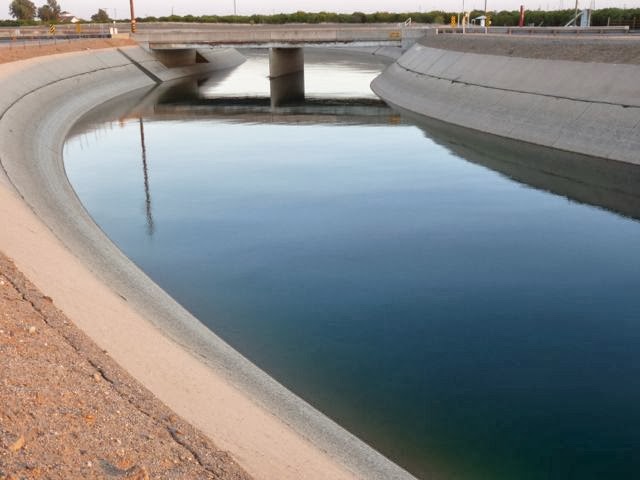
Agriculture Secretary Tom Vilsack announced TODAY USDA will make $20M available for agricultural water conservation efforts throughout California to combat the effects of drought. Interested landowners and managers have until March 3, 2014 to apply for available funds.


“Working with our federal, state, and local partners, we are doing everything within our power to support those farmers and ranchers affected by this intense drought.” said Vilsack. “These funds will help get a suite of scientifically proven conservation techniques on the ground and helping producers. USDA has a long, successful history of helping farmers and ranchers plan for and employ conservation practices that conserve and protect and maximize every available drop of water.”


This announcement is part of broader Obama Administration efforts to help those impacted by the drought. Through the National Drought Resilience Partnership, launched as part of President Obama’s Climate Action Plan, federal agencies are working closely with state, local government, agriculture and other partners on a coordinated response.


USDA is announcing this additional funding through the Natural Resources Conservation Service’s Environmental Quality Incentives Program (EQIP) to help agricultural operators use water more efficiently, stabilize fallowed cropland, and protect their livelihoods for the future. Funds are available statewide to install a number of conservation practices including irrigation efficiency, cover crops, rehabilitation of existing spring developments, protection of grazing lands, and other supporting components.


Funds will be divided between two specific funding pools: cropland and grazing lands. Cropland with a reduced water allocation of at least 85 percent will receive the highest priority.


In order to be considered eligible for EQIP, the applicant must have a vested interest in agricultural production and meet other program eligibility requirements. For additional information, eligible landowners are encouraged to contact their local NRCS Service Center. Service center locations and more information on the drought initiative can be found at www.ca.nrcs.usda.gov.
2016-05-31T19:41:07-07:00February 4th, 2014|

FDA CHURNING OUT REGULATORY ANNOUNCEMENTS

High-Risk Foods Identification, Food Safety, Product Tracing, Food Defense, Preventive Controls

Food and Drug Administration (FDA) must designate high-risk foods that require additional recordkeeping to enable rapid and effective track and trace, (product tracing), during a foodborne illness outbreak or other event.


Announced TODAY, FDA plans to:

1.    Publish a list of these high-risk foods (HRFs) and

2.    Issue a proposed rule under section 204(d)(1) of the FDA Food Safety Modernization Act (FSMA) to establish the recordkeeping requirements for the designated HRFs.


Designation of HRFs must be based on the historical public record of any outbreaks and cases of foodborne disease, as well as a number of vulnerable food- and processing-related factors associated with that HRF.


A product tracingsystem involves documenting the production and distribution chain of products so that in the case of an outbreak or evidence of contaminated food, a product can be traced back to a common source or its distribution channels.


When an outbreak of foodborne illness occurs or contaminated product is identified, product tracing systems enable government agencies and those who produce and sell food to remove a product from the marketplace and alert the public if a product has already been distributed.


Many producers, manufacturers and retailers have product tracing systems in place, but they vary depending on the amount of information the system records, how far forward or backwards in the supply chain the system tracks, technologies used to maintain records and the precision with which a system can pinpoint a product’s movement.

******************

Food Defense is the effort to protect the food supply against intentional contamination due to sabotage, terrorism, counterfeiting, or other illegal, intentionally harmful means. Potential contaminants include biological, chemical and radiological hazards that are generally not found in foods or their production environment. Food defense differs from food safety, which is the effort to prevent unintentional contamination of food products by agents reasonably likely to occur in the food supply (e.g., E. coli, Salmonella, Listeria).


FSMA now requires FDA to issue regulations to protect against the intentional adulteration of food. For example, FDA is required to issue regulations specifying appropriate science-based mitigation strategies or measures to prepare and protect the food supply chain from intentional adulteration at specific vulnerable points, as appropriate.


In addition, FSMA requires FDA to issue regulations regarding food hazards, including those hazards that may be intentionally introduced, to establish standards for conducting a hazard analysis, documenting hazards, implementing preventive controls, and documenting the implementation of preventive controls.


Further, FSMA requires FDA to issue regulations to establish science-based minimum standards for the safe production and harvesting of raw fruits and vegetables to minimize the risk of serious adverse health consequences or death, including from hazards that may be intentionally introduced. This shift from the current system challenges the agency and its stakeholders to manage substantive information gathering, analyze available data and engage stakeholders to better understand the benefits and costs of such regulation.


Prior to FSMA, there were no requirements that food facilities implement mitigation strategies or measures to protect against intentional contamination. FDA has guidance, tools, and resources for industry on food defense. The guidance represents the agency’s current thinking on the measures that food establishments may take to minimize the risk that food under their control will be subject to intentional contamination. For more information on the guidance, tools, and resources available to industry, visit the FDA Food Defense page.

******************

The FDA is extending the comment period for its ‘‘Current Good Manufacturing Practice and Hazard Analysis and Risk-Based Preventive Controls for Food for Animals’’ document (the proposed preventive controls rule for food for animals) to March 31, 2014.


You may submit Electronic comments to the Federal eRulemaking Portal: http:// www.regulations.gov. Follow the instructions for submitting comments.

******************

FDA is granting an extension of the comment period to March 31, 2014, for the proposed preventive controls rule. To satisfy requirements of the FDA Food Safety Modernization Act (FSMA), FDA drafted a document entitled, ‘Qualitative Risk Assessment of Risk of Activity/Animal Food Combinations for Activities (Outside the Farm Definition) Conducted in a Facility Co-Located on a Farm’’ to provide a science-based risk analysis of those activity/ animal food combinations that would be considered low risk.


FDA used the results of the draft to propose to exempt certain animal food facilities (i.e., those that are small or very small businesses that are engaged only in specific types of on-farm manufacturing, processing, packing, or holding activities identified as low-risk activity/animal food combinations) from the proposed requirements of the Federal Food, Drug, and Cosmetic Act for hazard analysis and risk-based preventive controls (the proposed preventive controls rule).


FDA is providing additional time to allow interested persons an opportunity to consider the interrelationship between this proposed rule and the proposed rules entitled ‘‘Foreign Supplier Verification Programs for Importers of Food for Humans and Animals’’ (78 FR 45729, July 29, 2013) and ‘‘Accreditation of Third-Party Auditors/Certification Bodies to Conduct Food Safety Audits and to Issue Certifications’’ (78 FR 45782, July 29, 2013).


Interested persons may submit either electronic comments regarding the proposed rule to http://www.regulations.gov.

2016-05-31T19:41:07-07:00February 4th, 2014|

VALLEY CITRUS INDUSTRY EVALUATES FREEZE DAMAGE

Citrus Growers Spent $49M, Lost $441M

In early December, the San Joaquin Valley citrus industry was hit with seven consecutive nights of subfreezing temperatures.  The “event” may have concluded in mid-December but the industry’s battle against Mother Nature continued through early January, reported

Citrus Mutual TODAY.


Valley citrus growers report that continuous cold mornings have required extensive use of frost protection devices. Mandarin producers report using wind machine for at least 5 hours per night in order to raise grove temperatures following the freeze event, and lasting through the first week of January.  The more cold tolerant Navel variety incurred less damage, although producers do report running wind machines an average of 20 hours in the days following the main freeze event. 


In summary, California Citrus Mutual estimates that the Valley citrus growers have collectively spent $49 million to protect the 2013/2014 crop. 


Production in other major citrus producing counties such as Ventura, Riverside, Imperial, and Monterey has not been affected by cold temperatures season-to-date. 


In the San Joaquin Valley, however, freeze damage has become evident.   Kern County, specifically, has seen a greater degree of damage than other areas in the Valley.  This is attributed to the early timing of the freeze event and the level of volume still on the tree at the time. 


“What has made this year complicated for assessing damage is that Mother Nature did not treat all areas and producers equally,” says Citrus Mutual Chairman and General Manager of Orange Cove – Sanger Citrus Kevin Severns. “There are areas in Kern and Madera Counties where the Mandarins are completely wiped out, and others where damage is as great as 40-50%.”


The same can be said for the Valley’s Navel orange crop.  “It’s a mixed bag,” continues Severns. “We know of one grower who lost 100% of his tonnage, whereas most producers lost 10-20%.”


As was originally anticipated, a comprehensive industry survey reflects significant damage to the Valley’s Mandarin crop. At the time of the freeze, approximately 20% of the crop had been harvested.   It is estimated that Valley-wide 40% of the remaining tree crop was lost due to freeze damage.  This equates to a loss of 4.7 million 40-pound cartons and $150 million in lost revenue.


The more freeze tolerant Navel crop is estimated to have incurred a 30% loss due to freeze damage Valley-wide, which equates to 22 million 40-pound cartons and $260 million in lost revenue. 


Valley lemon produces fared better than one would expect with a 20% loss due to freeze damage, or 1 million 40-pound cartons, a $24 million loss.


California Citrus Mutual currently estimates that the Valley citrus producers incurred approximately $441 million in lost revenue due to freeze damage. 


California Citrus Mutual President Joel Nelsen

California Citrus Mutual President Joel Nelsen


“A slight increase in price might recover some loss, however the industry is wary of fruit becoming too expensive,” says Citrus Mutual President Joel Nelsen. “History tells us that higher prices result in demand for offshore citrus or alternative commodities.”


Consumers can, however, expect a shorter season for California citrus.  Currently, the industry expects to continue shipping fruit to the market place through mid-May, versus a traditional availability that extends into July.


“The industry is now faced with increased costs associated with quality inspections,” concludes Severns. “Fruit is moving through the packinghouses at a much slower rate as we employ freeze detection technology as well as human inspection protocol.


California Citrus Mutual is a non-profit trade association of citrus growers, with approximately 2,200 members representing 70% California’s 285,000-acre, $2 billion citrus industry. The mission of California Citrus Mutual is to inform, educate, and advocate on behalf of citrus growers. The Exeter, California-based organization was founded in 1977.

2016-05-31T19:41:07-07:00February 3rd, 2014|

THREE VACANCIES ON CDFA FEED INSPECTION ADVISORY BOARD

Apply by Feb. 28th

The California Department of Food and Agriculture TODAY is announcing three vacancies on the Feed Inspection Advisory Board. Two vacancies are for commercial feed industry representatives and one vacancy is for a public member.

The board makes regulatory and enforcement recommendations to the department to help ensure that commercial feed inspections contribute to a clean and wholesome supply of milk, meat, and eggs.

The commercial feed industry representative applicants should hold a current California Commercial Feed License. The term of office for board members is up to three years. Members receive no compensation, but are entitled to payment of necessary traveling expenses in accordance with the rules of the Department of Personnel Administration.

Individuals interested in serving on the Feed Inspection Advisory Board should send a resume by February 28, 2014, to the CDFA – Feed and Livestock Drugs Inspection Program, 1220 “N” Street, Sacramento, California 95814-5607, Attention: Maria Tenorio.


For further information on the Feed Inspection Advisory Board and vacancies, contact Maria Tenorio at (916) 900-5022 or email maria.tenorio@cdfa.ca.gov

2016-05-31T19:41:08-07:00February 3rd, 2014|

Farmers and Others Give Testimony on Water Bond


[blox_row columns=”1/1″][blox_column width=”1/1″][blox_text animation=”none”]

Scores Voice Concern at Hanford Water Bond Hearing

By Patrick Cavanaugh, Editor

[/blox_text][/blox_column][/blox_row][blox_row columns=”1/2+1/2″][blox_column width=”1/2″][blox_text animation=”none”]

A packed crowd in Hanford at special hearing on proposed Water Bond.

A packed crowd in Hanford at special hearing on proposed Water Bond.

[/blox_text][/blox_column][blox_column width=”1/2″][blox_text animation=”none”]

It was the 12th regional hearing for the California Assembly Committee on Water, Parks and Wildlife, and by far the most passionate in Hanford California, at the Kings County Government Center Friday.

On the table is a Water Bond proposal that is far less than what was passed by a bipartisan vote by the California Legislature in 2009. The most glaring change is a $1.5 billion dollar proposal for storage—half of the $3 billion  that was in the original proposal.
Several hundred concerned citizens packed the hearing room as well as an overflow room. And more than 50 members of the public stood up to give personal testimonies regarding their concern of the drought and the need for sensible solutions. The hearing started at 5pm and went to 8 pm.

[/blox_text][/blox_column][/blox_row][blox_row columns=”1/1″][blox_column width=”1/1″][blox_text animation=”none”]

Anthony Rendon

Anthony Rendon

“We have heard you and appreciated what was said,” said Assembly Member Anthony Redon, Chair of the committee from Los Angeles. “This was by far the biggest, most passionate crowd that we have encountered during our hearings.”

[/blox_text][blox_text animation=”none”]

“2013 was the driest year in history and Governor Brown declared a statewide drought. A failure to prepare is unacceptable and we cannot keep kicking the can down the road in terms of water security. California’s population will be almost 50 million by the year 2020,” said Rendon. “We are on the edge of disaster. Now is the time to do something to help protect our citizens, farmers and economy,” noted Rendon.

In 2009 the Assembly passed an $11.14 billion proposal, which has twice since been delayed from being placed before voters. This past year, the Assembly took an entirely new approach to developing a water bond than it did in 2009. The 2013 process included convening 13 public hearings—including 3 in the Assembly, 2 in the Senate and 8 regional hearings across the state.

Rendon said, “The water working group in the process reflects the diversity of California, and has produced, to date, a $6.5 billionwater bond tailored to state-wide needs for water infrastructure. That proposal includes $1 billion for maintaining and improving drinking water quality, $1.5 for protecting rivers and wetlands, $1.5 billon to fund integrated water management, $1 billion to protect the California Delta that is critical to the state’s water supply, and $1.5 billion for the development of water storage projects.”

“This version of the bond proposal is the first step in establishing state priorities for water funding. The amounts can change but the principles will endure. Ultimately these informational hearings and ongoing discussions with Governor Brown and the Senate will eventually dictate what goes before voters for approval.”

Following Rendon’s remarks, there was testimony from an expert witness panel of the community. They included:

·      Dave Orth, General Manager of the Kings River Conservation District;

·      Maria Herrera, Director of Community Advocacy, Community Water Center;

·      Bent Walthall, Assistant General Manger, Kern County Water Agency;

·      Tony Azevedo, Manager, Stone Land Company;

·      Mario Santoyo, Executive Director, California Latino Water Coalition.

“In 2009 our priorities were a bit interesting for an agricultural water agency,’ said Walthall. “Our first priority was the Delta ecosystem, and that’s because the Kern County Water Agency was one of the proponents of the Bay Delta Conservation Plan (BDCP), which involves the Twin Tunnel plan, a major focus of our agency.”

Brent Walthall

Brent Walthall

“Also, much of our emphasis on the 2009 proposal was on the public financing for the state and our involvement with the BDCP, other water agencies and  our federal partners at a equal level,” said Walthall. “And we were very much involved in the development of the Delta Plan, an important step in helping the Delta Work as a comprehensive unit rather than 300 different public agencies.

“Today, things are very different,” said Walthall. “As everyone has noted here, it’s all drought–all the time. And that is where we now focus our attention. To be blunt, it makes it very difficult to focus on the Water Bond. And the reason is simple: A wildly successful Water Bond this year still doesn’t address the water problems thisyear,” said Walthall “And for most of us, the house is on fire. And we are working on putting out  the fire, instead of buying fire insurance for next year. Nonetheless, the Water Bond is still important because this will not be the last drought in California.

[/blox_text][blox_text animation=”none”]

Following Walthall’s testimony was David Orth, the general manager of the Kings River Conservation District, with 1.2 million acres in total service area in the Kings River watershed which overlies 28 water rights holders on the Kings River system. The District works very closely with 14 incorporated cities.

David Orth

David Orth

“We have more than 100 disadvantaged communities in the top half of our district alone, many of which are struggling with drinking water issues.”

“We believe that there should be significant investments in both surface and groundwater storage. “We also believe that the $3 billion in funds for storage in the 2009 proposal is necessary to make significant investments in expanded storage capability.”

Orth also spoke about Integrated Regional Water Management (IRWM), which was adopted by the California Legislature in 2002 and added to the California Water Code. “It was set up to encourage local agencies to work together to maximize our local and regional capabilities,” said Orth. 

“The voters of previous water bonds have significantly invested in IRWMs, allowing significant funding to come into local regions such as ours to invest in infrastructure in terms of ground water storage, groundwater management capabilities, drinking water supply improvements, and water use efficiency,” said Orth. “And there has been a tremendous amount of success with that investment locally.”

“Our major goals are to address the overdraft within the Kings River Basin, which has an annual overdraft of 120,000 acre feet per year, which is more than it can sustain. Interestingly, the amount of surface water that leaves our Basin during flood release is greater than 120,000 acre feet on average; in fact, it’s closer to 200,000 acre feet. So investments in storage, both surface and groundwater, are the ways that we can attain a balance in the Basin, combined with significant investments in local water use efficiency.”

[/blox_text][blox_text animation=”none”]

“Addressing water quality, specifically for disadvantaged communities, is a high priority of our focus,” said Orth.

“Over the last 11 years, we have received $54 million in state and private grant funding and have leveraged it to nearly $90 million in local projects, enabling us to create 20,000 acre feet more in recharge capacity,” Orth noted. “And we have future projects on our list that will either reduce demand or capture additional flows that will provide another 100,000 acre feet of demand reduction.”

“If we can achieve proper funding support in the Water Bond, then we can achieve balance in our basin in a very short period of time,” Orth said.

Following Orth was Maria Herrera, Director of Community Advocacy, and Community Water Center. The Center, based in Visalia, primarily works with disadvantaged communities in the San Joaquin Valley to insure that the citizens in those communities have access to safe, clean and affordable drinking water.

She stated that many communities are still receiving their water from very old infrastructures, with some above-ground piping more than 100 years old. In addition,  much of the groundwater in many of these communities has high nitrates and other contaminants, which affect their drinking water.

“It’s not just failing infrastructure,” said Herrera. “A large number of low income, farm working communities served by private wells are also struggling with water quality problems, both on the drinking water side but also on failing septic systems. We must keep funding in the Water Bond to help with improving all these systems.”

Following Herrera, was Tony Azevedo, a third-generation Kings County farmer and Manager of Stone Land Company, based in Stratford Calif.  He is also a board member of the California Water Alliance.

Tony Azevedo

Tony Azevedo

“Water is not one dimensional, this bond should not be one dimensional, and we as farmers do not operate as one dimensional. Being a farmer in a federal water district, we must have Delta sustainability and we must have water storage in the system, as weather patterns are cyclical.  Just four years ago, we had more water than we knew what to do with, and we could not capture it all. And here we are, four years later, and our system is empty.”

“We have communities that are predicted to be out of water this summer, and that’s unthinkable. We definitely have a wreck on our hands, and we need a bond that is done right. The bond has to be big enough to do the job. We need a bond that will work for our population growth and our agricultural industries. Had we passed the bond four years ago in 2009, we would be well on our way into infrastructure improvements today.”

Mario Santoyo, Executive Director, California Latino Water Coalition was the last expert witness. He focused squarely on the critical need for the Temperance Flat Reservoir and insisted that $3 billion is the minimum needed to get such a project underway.

[/blox_text][blox_text animation=”none”]

Mario Santoyo

Mario Santoyo

“No one wants to say it here, but I will,” said Santoyo. “A real water bond builds you real infrastructure, not little projects that kind of help you day-to-day. We need something to help the state, long-term. This is what our leaders did in the 20s, 30s, 40s and 50s,” said Santoyo. “That’s why we have what we have in California. If they had not built the Central Valley Project, (CVP), if they had not built the State Water Project, had they not built the big reservoirs, we would not be the California we are today,” he said.

“There were leaders early on who made these big and hard decisions; what we are asking of the Assembly Committee is to be the same level of leaders, and make those tough decisions,” noted Santoyo.

[/blox_text][blox_text animation=”none”]

Santoyo said the Committee should realize that they are holding the meeting in the Central Valley, which has been hit the hardest in terms of water shortages. “There is no question about it. The people you see in this room and in the overflow rooms have been hit so hard that they have been put into the unemployment lines. Their businesses have shut down, their farms have been fallow,” he said.

“Yes, we are in a drought, and we need to worry about it; yet, if we do not fix this on a long-term basis, we will continue to have this fire over and over again. So I would say, the priority from the Committee’s perspective is the Water Bond,” noted Santoyo.

“Above-ground storage is the foundation of all significant water projects. If you don’t have above-ground storage then you really don’t have a water project,” explained Santoyo. “If you look at Shasta, that’s what provides the water to the CVP; if you look at Oroville, that’s the basic supplier of State Project.”

“Right now, our water supplies are way below what the driest year has ever been, and that was in the 1920s. We are in a crisis. We are in a time where there is no water, so the real question becomes what do you have in savings? There are no savings that will help us this year, and that’s why we are in trouble. The point is above-ground storage is the savings account for these kinds of years,” he said.

Santoyo then gave a detailed explanation of what Temperance Flat Reservoir could to for the state. He said it would be an expansion of the existing reservoir in Millerton Lake (Friant Dam). He showed a chart that reflected both the frequency and the volume of flood releases that occur in the Millerton Lake Reservoir. “It happens a lot and in a big magnitude, and nearly every time there is a flood release, it is more than 1 million acre feet going to the ocean,” he said.

Santoyo explained that this happens because the existing reservoir is about .5 million acre feet in total, but nearly every year, 1.8 million acre feet in runoff occurs, so you can see that the numbers do not balance. What this means is about 450,000 acre feet are lost to the ocean on average each year, essentially one full reservoir.

“If you look at the past 30 years, 14 million acre feet has gone to the ocean, which represents 90 years’ worth of water supply for the city of Fresno. If we could save the inflow, we would not be in the crisis we are in today,” he said.

Santoyo noted that Temperance Flat would be the only reservoir (if built) that could move water north into the Delta and south of the Delta. No other reservoir can do that, and it’s important because it would provide public benefits to people in the Delta and those living south of the Delta, including Los Angeles and San Diego.

“We are talking about integrated operations where the San Luis Reservoir and Temperance can work together and move water back and forth so as to optimize the storage in both of them and reduce losses,” he said.

This is especially important should there be a Delta failure due to a seismic event or other situation, preventing Southern California from accessing water from the Delta. So there must be a secondary source as a backup, and Temperance Flat would be the solution.

“It is so critical that we do not have less than $3 billon for above-ground storage.  As much as I would like to say we needed $5-plus billion for water storage, the reality is that we negotiated it to $3 billion, and it would be a good kick-start to get the projects built,” he said.  “Most people note that $3 billion is where the line is drawn.”

And of course we will also need continuous appropriations to continue investing in these big projects. It will take billions and billions to complete and maintain these projects, and to be able to get funding from the state requires financial commitment from the beneficiaries (water users.) Unless they are assured that this project is moving forward, it’s difficult for them to sign that dotted line.

“In fact, Senator Diane Feinstein has been very clear from day one that continuous appropriations must be in the package,” said Santoyo.

Following Santoyo’s comments were more than fifty public comments from farmers, farm bureau representatives, local city councilmen and women, local county supervisors, farm organizations, and concerned citizens.

[/blox_text][/blox_column][/blox_row][blox_row columns=”1/1″][blox_column width=”1/1″][/blox_column][/blox_row]

2016-05-31T19:41:08-07:00February 1st, 2014|

CDFA TO DISCUSS FARM BILL, AG IMMIGRATION THIS WEEK

CDFA, Speakers To Discuss Farm Bill and Ag Immigration-Feb. 4th in Sacramento


The California State Board of Food and Agriculture will discuss the pending 2014 Farm Bill and agriculture immigration issues at its upcoming meeting on February 4th in Sacramento. This meeting will be held from 10:00 a.m. to 2:30 p.m. at the California Department of Food and Agriculture, 1220 ‘N’ Street – Main Auditorium, Sacramento, CA 95814.


“As Congress prepares to vote on a bi-partisan farm bill, we look forward to the passage of this important legislation,” said CDFA Secretary Karen Ross. “The farm bill is critical to California for a variety of reasons – but most timely, this legislation will provide much needed assistance in addressing drought conditions within our state.”


Farm bill programs provided by the USDA Farm Service Agency, the Risk Management Agency, the Natural Resource Conservation Service, and the Rural Development Agency can directly help farmers and rural communities through conservation improvements, farm loans and facility loan programs.


Covering such issues as research, conservation, nutrition, commodities and rural development – the farm bill is omnibus multi-year legislation for major food and farm programs. The legislation funds critical programs such as nutrition assistance (food stamps), technical assistance for farmers and ranchers, research, invasive species prevention and management, and initiatives that support food production and environmental conservation.


The current farm bill, the Food, Conservation, and Energy Act of 2008 expired in December 2013, necessitating action by Congress.


The state board will also be discussing immigration issues, including the status of federal immigration reform and other factors related to rural communities and farms.


Invited speakers include: Donald Grady, Office of Congressman Jim Costa; Sandra Schubert, California Department of Food and Agriculture; Rachel Kaldor, Dairy Institute; Linda Patterson, California Department of Social Services; Michael Dimock, Roots of Change; Craig Regelbrugge, Agricultural Coalition for Immigration Reform; Diane Charlton, University of California, Davis; Cornelius (Corny) Gallagher, Farm Foundation/California Bankers Association; and Joseph McIntyre, Ag Innovations Network.


“Up to two thirds of our agricultural workforce in California are undocumented residents performing skilled and valuable labor in fields across this state. Regardless of where you are on the immigration debate – this is a reality in California,” said Craig McNamara, president of the California State Board of Food and Agriculture. “As the largest agricultural state in the nation, California’s farmers and ranchers have a role in shaping the national discussion on immigration reform.”


The California State Board of Food and Agriculture advises the governor and the CDFA secretary on agricultural issues and consumer needs. The state board conducts forums that bring together local, state and federal government officials, agricultural representative and citizens to discuss current issues of concern to California agriculture.


Follow the board on Twitter at: www.twitter.com/Cafood_agboard


2016-05-31T19:41:08-07:00January 31st, 2014|

Support H.R. 3964

H.R. 3964 Going to House Vote Next WeekSacramento-San Joaquin Valley Emergency Water Delivery Act


In light of the drought emergency in California, the House leadership has scheduled a vote for next week on H.R. 3964, the comprehensive water fix introduced in the House by the entire California GOP delegation.

The bill has already provoked opposition from Governor Brown’s administration and from the usual suspects who have resisted every significant effort to bring relief to drought-stricken Californians.

Nevertheless, Speaker of the House John Boehner understands the situation’s urgency and is determined to quickly submit this bill for a vote.


2016-05-31T19:41:08-07:00January 31st, 2014|

USDA ANNOUNCES WINNERS OF THE 2014 AGRICULTURAL OUTLOOK FORUM STUDENT DIVERSITY PROGRAM

Two California Collegians Win USDA Ag Outlook Forum Student Diversity Program


Posted TODAY, Agriculture Secretary Tom Vilsack announced the selection of 30 university students to attend USDA’s 2014 Agricultural Outlook Forum, titled “The Changing Face of Agriculture,” to be held Feb. 20- 21, 2014, at the Crystal Gateway Marriott Hotel in Arlington, Va. Twenty university juniors and seniors were chosen on the basis of their essays on “Agriculture as a Career,” and 10 graduate students were selected for their response to “The Greatest Challenge Facing Agriculture over the Next Five Years.”


“The future of agriculture and rural America depends on the upcoming generation of leaders in farming, ranching and conservation, and the students selected to attend the Agricultural Outlook Forum are among the best young leaders our country has to offer,” said Vilsack. “Participating in the Agricultural Outlook Forum will expose these students to a variety of perspectives on this country’s most pressing agricultural challenges and lay the groundwork for bright futures in food, fiber and forestry.”


The student winners from California are undergraduates:


Meredith Frisius, California Polytechnic State University and Ruben Sanchez, California State University, Bakersfield.


USDA’s Agricultural Outlook Forum Student Diversity Program is designed to introduce students to contemporary agribusiness, future trends, scientific research, and agricultural policy in today’s real world environment. The students are from land-grant, Hispanic-serving, and non land-grant agricultural and renewable resources universities.


Since the program’s start in 2007, annual sponsorship has been provided by CHS, Inc. and Farm Credit. USDA’s Economic Research Service, Agricultural Research Service, and Natural Resources Conservation Service also provide support. The University of Maryland Eastern Shore partners with USDA to make the program possible.


Registration for the public, two-day event is $375. Plenary speeches will be webcast after 6:00 p.m. EST on Feb. 21. Program details and registration information are available at www.usda.gov/oce/forum.

2021-05-12T11:06:02-07:00January 31st, 2014|

FDA PROPOSES RULE TO PREVENT FOOD SAFETY RISKS DURING TRANSPORTATION

Proposed Regulation Marks Seventh And Final Major Rule Under FDA Food Safety Modernization Act


The U.S. Food and Drug Administration TODAY proposed a rule that would require certain shippers, receivers, and carriers who transport food by motor or rail vehicles to take steps to prevent the contamination of human and animal food during transportation.


Part of the implementation of the Sanitary Food Transportation Act of 2005, the proposal marks the seventh and final major rule in the FDA Food Safety Modernization Act’s (FSMA) central framework aimed at systematically building preventive measures across the food system. The proposed rule is open for public comment through May 31, 2014.


“This proposed rule will help reduce the likelihood of conditions during transportation that can lead to human or animal illness or injury,” said Michael R. Taylor, the FDA’s deputy commissioner for foods and veterinary medicine. “We are now one step closer to fully implementing the comprehensive regulatory framework for prevention that will strengthen the FDA’s inspection and compliance tools, modernize oversight of the nation’s food safety system, and prevent foodborne illnesses before they happen.”


The proposed regulation would establish criteria for sanitary transportation practices, such as properly refrigerating food, adequately cleaning vehicles between loads, and properly protecting food during transportation.


The proposed rule would apply to shippers, carriers, and receivers who transport food that will be consumed or distributed in the United States and is intended to ensure that persons engaged in the transportation of food that is at the greatest risk for contamination during transportation follow appropriate sanitary transportation practices. For example, the proposed rule would require that shippers inspect a vehicle for cleanliness prior to loading food that is not completely enclosed by its container, e.g., fresh produce in vented boxes, onto the vehicle.


The proposed rule would also apply to international shippers who transport food for U.S. consumption or distribution in an international freight container by air or by oceangoing vessel and arrange for the transfer of the intact container onto a motor vehicle or rail vehicle in the United States.


The proposed rule would not cover shippers, receivers, or carriers engaged in food transportation operations that have less than $500,000 in total annual sales. In addition, the requirements in the proposed rule would not apply to the transportation of fully packaged shelf-stable foods, live food animals, and raw agricultural commodities when transported by farms.


The requirements would also not apply to shippers, receivers, or carriers who are engaged in transportation operations of food that is transshipped through the United States to another country, nor to food that is imported for future export and that is neither consumed nor distributed in the United States.


The FDA is proposing staggered implementation dates for the proposed rule based on business size, ranging from one to two years after publication of the final rule.


The FDA will discuss the proposed rule at three upcoming public meetings: Feb. 27, 2014 in Chicago; March 13, 2014 in Anaheim, Calif.; and March 20, 2014 in College Park, Md.


For more information:


Federal Register Notice for the Proposed Rule “Sanitary Transportation of Human and Animal Food”

Fact Sheet

FDA Food Safety Modernization Act (FSMA)


The FDA, an agency within the U.S. Department of Health and Human Services, protects the public health by assuring the safety, effectiveness, and security of human and veterinary drugs, vaccines and other biological products for human use, and medical devices. The agency also is responsible for the safety and security of our nation’s food supply, cosmetics, dietary supplements, products that give off electronic radiation, and for regulating tobacco products.


2016-05-31T19:41:08-07:00January 31st, 2014|

EPA SEEKS PUBLIC COMMENT ON EVALUATING PESTICIDE SPRAY DRIFT GUIDANCE DOCUMENT

Submit Your Comments on EPA Spray Drift Guide TODAY


EPA announced TODAY the availability of two draft guidance documents for public comment. These documents describe how off-site spray drift will be evaluated for ecological and human health risk assessments for pesticides.


EPA is seeking to strengthen its protections for people and the environment from exposure to pesticides that drift from fields to nearby areas, including homes, schools and playgrounds.


The Agency, according to their statement, has a long-standing history of robust, routine assessments on every chemical to protect consumers from pesticide risks from treated food, workers who apply pesticides, and consumers who use pesticides in and around homes. These new approaches add to these routine assessments and will allow the Agency to estimate off-site drift, another step to protect communities living near fields where crops are grown from these exposures.


The January 29, 2014, Federal Register Notice specifically seeks public input on these approaches that include:


  • a policy for conducting human health risk assessments associated with the potential for exposure from off-site drift during pesticide applications
  • an updated method for estimating environmental exposures associated with spray drift


The 60-day public comment period will close on March 31, 2014. Following the public comment period, EPA will analyze the comments, make appropriate modifications to these policies and finalize them. The policies will then be used in pesticide risk assessment.


For more information, see Docket EPA-HQ-OPP-2013-0676-0001 at www.regulations.gov

2016-05-31T19:41:08-07:00January 31st, 2014|
Go to Top