About Patrick Cavanaugh

This author has not yet filled in any details.
So far Patrick Cavanaugh has created 1490 blog entries.

JCAST Students Claim Back-to-Back State Championships at Discussion Meet

Source: Eddie Hughes; Fresno State News and Fresno County Farm Bureau 

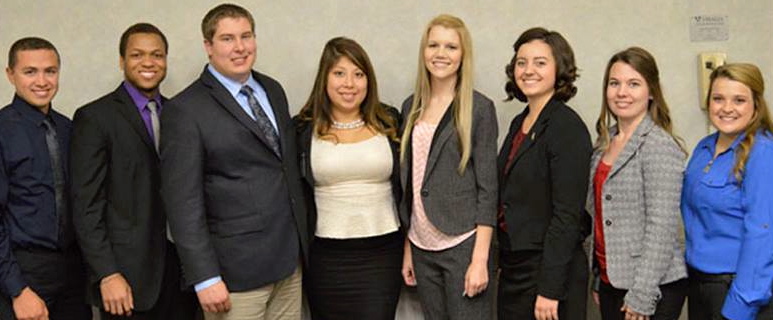
Fresno State senior Levy Randolph of Hemet earned the individual state championship in the California Farm Bureau Federation’s Young Farmers and Ranchers Collegiate Discussion Meet on March 1 in Visalia.

Randolph, an Agricultural Education major, was one of eight students who represented Fresno State’s Jordan College of Agricultural Sciences and Technology at the meet. Randolph now advances to compete in February 2015 at the American Farm Bureau Federation’s Young Farmers and Ranchers Leadership Conference in Nashville.

The discussion meet competition was designed for young members of the farm bureau to participate in a progressive and collaborative discussion. Participants are judged on content, cooperative attitude, presentation and knowledge of the pre-determined speaking topics.

Competitors discuss pressing issues of the agriculture industry and strive to cultivate solutions from their 20-minute discussion.

This was Fresno State’s fourth team championship all-time and Randolph will be the fifth Bulldog to represent California at the national competition.

Randolph’s winnings included an expense-paid trip to the national competition and a cash prize of $1,250.

Joining Randolph in the final round of competition was Fresno State Agricultural Communications major Jodi Raley of Tollhouse. Raley earned a $500 cash prize. Audra Roland, an Agricultural Business major from Tollhouse, made it to the semifinals.

Dr. Steven Rocca, professor of Agricultural Education and Communications, has coached the competition since 2006. “Our students’ hard work and dedication led to the overall team win,” Rocca said. “We are thrilled that one of our students earned the state championship, enabling our team to become back-to-back champs. The skills these students learn will be valuable tools in their future as our agricultural leaders.”

Additional members of the team include: Ana Lopez, an Animal Science/Pre-Veterinary major from Tulare; Victor Evans, an Agricultural Education-Teacher Preparation major from Fresno; Kyle Mendes, an Agricultural Education-Teacher Preparation major from Modesto; Rachel Wright, an Agricultural Communications major from Tollhouse; and Mallory Harrison an Agricultural Communications major from Bakersfield.

The Young Farmers and Ranchers are active agriculturalists, ages 18 to 35. Members develop leadership skills through community service, service-learning and maintaining active involvement in their county farm bureaus.

The Jordan College of Agricultural Sciences and Technology (JCAST) offers education needed to be a leader in agriculture and related sciences. They offer programs in the traditional areas of agriculture, including animal science, plant science, agricultural education, viticulture and agricultural business. 

JCAST also offers excellent programs in areas uniquely related to agriculture, including industrial technology, food science and nutrition, enology, child development, family science and fashion merchandising. 
2016-05-31T19:38:51-07:00March 7th, 2014|

Citrus Showcase Had Strong Showing

Citrus Showcase News

Area-Wide ACP Spraying To Start Soon

By Patrick Cavanaugh, Editor

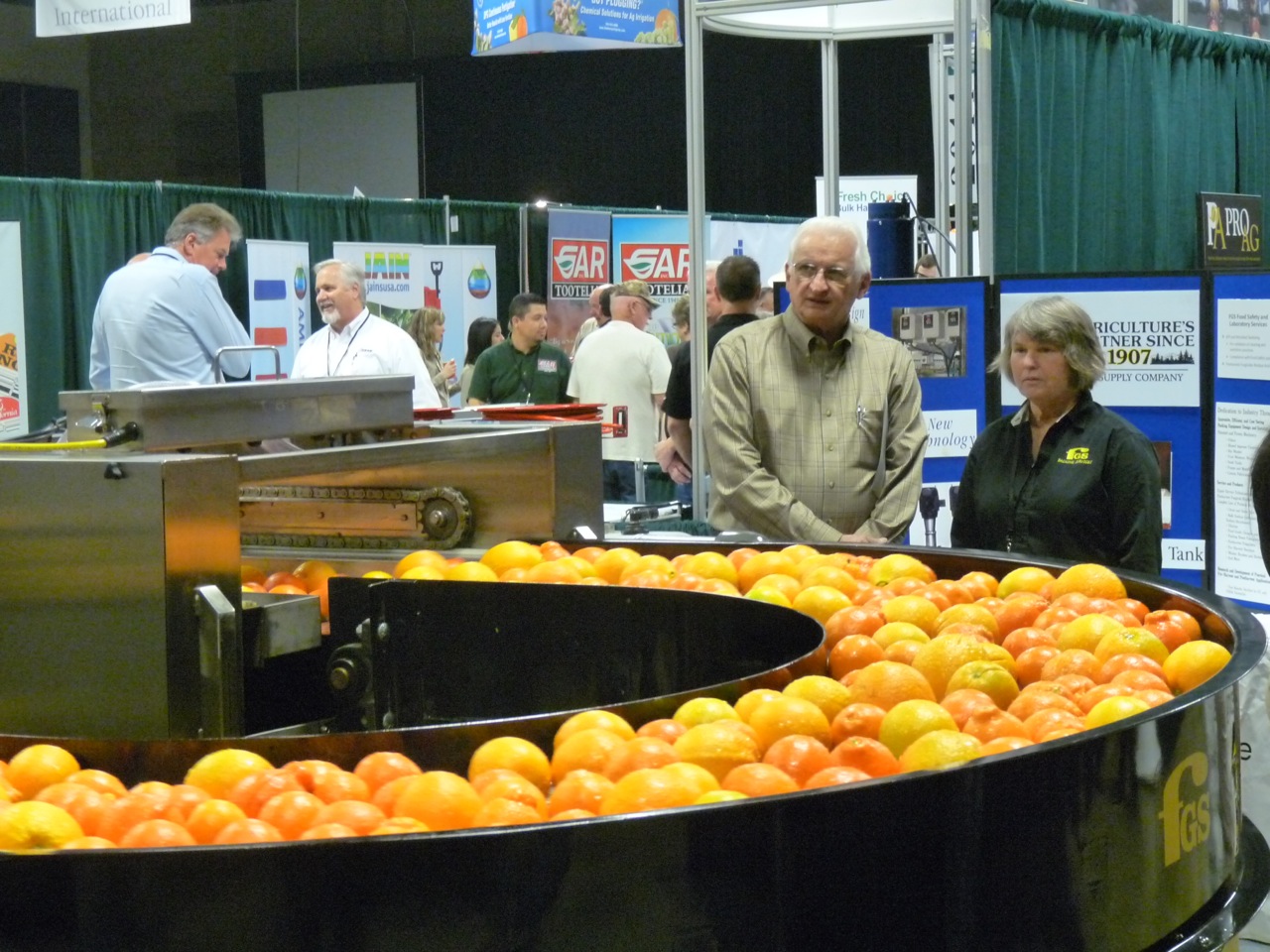
The 2014 California Citrus Showcase in Visalia, hosted by the Exeter based California Citrus Mutual, brought a record crowd.

“It was the largest event we have had in our 15 years,” said Joel Nelson, President of the California Citrus Mutual, the organization that hosts the annual event. “We had about 100 exhibitors and about 650 people for lunch, and roughly 1,000 growers who meandered though the entire show throughout the course of the day,”  Nelson said.

There were also six workshops that focused on the Asian Citrus Psyllid, the vector of the fatal HLB disease, water quality and even GMO research to help find HLB resistant citrus stock.

“What we wanted to do  was  give our growers a bit of optimism,” said Nelson. “Our citrus industry has been hit with so many challenges, not withstanding the ACP/HLB issue, the  disease that is ravaging Florida; the freeze in December and now the drought conditions.”

“We wanted the industry to be aware that there are opportunities to fix these problems that are facing our industry, and I think that the growers left here much more positive than when they came in,” said Nelson.

Joel Nelson and Felicia Marcus

Joel Nelson, President of California Citrus Mutual, with Felicia Marcus, Chair of the State Water Resources Control Board

Some of the highlights of the half-day event included:

The keynote speaker for the inaugural Citrus Showcase Breakfast was Felicia Marcus, Chair of the State Water Resources Control Board. “This is a scary and uncertain drought, and it is going to be painful,” Marcus said.

“There is no question that we would not be where we are today if we had more storage,” Marcus said. “We are concerned with climate change when we could be facing the regular loss of half of our storage…snow in the mountains.”

She also said that nitrates in the ground water are a legacy issue.

Another big topic centered on what can be done to suppress the ACP, which will help prevent HLB infected trees.

The San Joaquin Valley Citrus Industry has been discussing area-wide treatment of orchards, on top of the mandated treatments when a psyllid is found.

Kevin Severens

Kevin Severns

“As it stands right now, there would be logical areas where geographically it would make sense to have that as a treatment zone,” said Kevin Severns, a grower and  the new Chairman of California Citrus Mutual.

“There will be area captains in each of the zones, such as a grower or other person well-known in the area. They would work with an area-wide coordinator, and the state-wide coordinator will be responsible for coordinating treatment,” Severns said.

The spray timing would be when new growth flushes occur on citrus trees, a time when the ACP is attracted too.

Attendees also heard from Mike Sparks, President of the Florida Citrus Mutual, who painted a grim picture of what has happened to the Florida citrus industry and described its uncertain future.

“The losses due to HLB over the last seven years have been more than $70 million, said Sparks. “Before HLB disease hit us, the Florida Citrus industry was at 815,000 acres. Today the acreage is at 525,000.  And we are losing orange juice processing plant infrastructure due to the low volume, pegged at only  115 million boxes, down from 133 million boxes last season.”

“Every orchard in the state is infected and growers are doing every thing they can to reduce ACP numbers and remove HLB-infected trees,” said Sparks.

Mike Sparks President Florida Citrus Mutual

Mike Sparks

There is particular concern for orchards that have been abandoned.

“The cost of production in order to fight ACP with sprays continues to go up, while production goes down. We know this is not sustainable,” said Sparks.

“Over the years, Florida citrus growers have had to deal with freezes, citrus canker, and even powerful hurricanes that have wiped out orchards. At least those orchards could be replanted and production would resume. HLB, is a far different threat. It has put growers to their knees,” Sparks said.


2016-05-31T19:38:51-07:00March 7th, 2014|

State Failed to Analyze Effects of Kern Water Bank

Source: Bettina Boxall; LA Times

resnick-stewart_pic

Stewart Resnick

A court ruling issued Wednesday could throw obstacles to the operation of a Kern County groundwater bank that has helped billionaire Stewart Resnick build a nut empire in the southern San Joaquin Valley.

In the latest development in a two-decade legal fight, a Sacramento County Superior Court judge found that the state Department of Water Resources didn’t properly analyze the environmental impacts of the Kern Water Bank, which is partly controlled by Resnick’s Paramount Farms enterprise.

Judge Timothy Frawley will hold a hearing to determine the next step in the case. Environmental groups intend to argue that the water bank should be shut down while the state prepares a new environmental report.

“These guys have spent 16 years avoiding this moment. It’s always been a possibility that a court would come in and shut it down,” said Adam Keats, an attorney with the Center for Biological Diversity, which represented plaintiffs in one of two related lawsuits that Frawley decided.

Representatives of Resnick and his wife, Lynda, who also own Fiji Water and POM Wonderful pomegranate juice, referred requests for comment to the water bank, whose attorney could not be reached.

The legal challenges sought to undo changes to the State Water Project that were made as part of a 1994 deal, known as the Monterey Agreement, between the Department of Water Resources and agencies supplied by the project. An earlier round of lawsuits forced the state to issue a new environmental review of the pact, which opponents argued was again insufficient.

Frawley ruled against them on all but one issue involving the water bank.

On that count, the judge concluded that the state’s environmental report failed to adequately assess the effects of the bank’s operation, particularly on groundwater and water quality.

Some neighboring water districts and environmental groups contend that the bank — originally developed by the state, but later ceded to private control — is harming the aquifer.

They also argue that because the groundwater bank is replenished with supplies from the Sacramento-San Joaquin River Delta, the operation is increasing demand for water from the environmentally fragile delta.

The Monterey Agreements, made behind closed doors, were intended to settle disputes between contractors of the State Water Project, which supplies Southern California cities and some irrigation districts in the southern San Joaquin Valley.

The deal has been controversial since its inception and opponents have spent years trying to overturn its provisions.

In his decision, Frawley rejected most of their most recent claims, finding that except for the water bank, the state’s review met legal requirements.

Next, he has to decide what happens to the bank while the state launches yet another environmental evaluation. “That’s the big question we’re all going to be fighting over,” Keats said.

Paramount Farms is the world’s largest grower and processor of almonds and pistachios; in tandem with their Grower Partners, they farm 125,000 acres that deliver 450 million pounds of nuts.

2016-05-31T19:38:52-07:00March 6th, 2014|

Water Board urged by California U.S. Lawmakers to Delay Severe Water Cuts

California Senators Dianne Feinstein and Barbara Boxer and Congressmen John Garamendi and Jim Costa sent a joint letter on March 5, yesterday, to Tom Howard, Executive Director, California State Water Resources Control Board urging them to delay issuing a proposed order prioritizing water deliveries throughout the state, expected to be handed down as early as next week, until at least March 21.

In their statement, posted by the Bay Planning Coalition, the lawmakers urge the Water Board to delay its “extraordinarily far-reaching proposed order”. . . “to make sure it is correctly calibrated to minimize the potentially devastating effects on many Californians.”

No Water LogoThey acknowledge the coordinated efforts between difference levels of government, but urge the Board to “avoid catastrophic reductions of water deliveries to California agriculture”.

Continuing, allowing more time would provide the Water Board with the best available information for these “complex water delivery decisions that could affect large parts of California, especially those regions that are integral to our nation’s agricultural economy.”

“We acknowledge that the Board is eager to issue a decision so that senior water rights holders do not plant crops with the expectation of receiving a 40 percent CVP water allocation when public health and safety considerations may require a significant cutback.”

Finally, they ask that the water decision “be formulated with great care so that its burdens do not unduly fall on those who have already had to give up a great deal.”

2016-05-31T19:38:52-07:00March 6th, 2014|

Ag One – Raising Scholarship Money for Students Since 1979

In 1979, several faculty, alumni and friends of the Jordan College of Agricultural Sciences and Technology had a million-dollar idea — to start a foundation that would benefit, promote and support the college and its programs.

The supporters set out to raise $1 million in endowed scholarships.

Today, the Ag One Foundation has raised more than $16 million in endowed funds.

Over the years, donors, board members and volunteers have made it possible to award some 3,250 students with more than $2.3 million in scholarships and grants.

For the 2013-2014 academic year, Ag One will provide nearly $500,000 to deserving students and programs.

Upcoming Events:

If you’d like to contribute to Ag One’s efforts, look into their membership opportunities today!

2016-05-31T19:38:52-07:00March 6th, 2014|

Multidrug-Resistant Salmonella Heidelberg Infections Again Linked to Foster Farms Chicken

Centers for Disease Control and Prevention reports that the investigation continues into Salmonella Heidelberg infections likely related to Foster Farms chicken.

The CDC reports that last year’s Salmonella outbreak associated with Foster Farms poultry appeared to be over around mid-January 2014 when the number of reported  infections from all seven outbreak strains of Salmonella Heidelberg returned to baseline levels; however, the CDC investigation still  continued.salmonella (Food Safety News)

Ongoing surveillance identified in February that infections from two of the previously rare outbreak strains have again exceeded the number of infections expected to be reported to PulseNet*during this time of year. Investigations conducted by local, state, and federal officials indicate that consumption of Foster Farms brand chicken is the likely source of this outbreak of Salmonella Heidelberg infections.

As of February 28, 2014, a total of 481 persons infected with seven outbreak strains of Salmonella Heidelberg have been reported from 25 states and Puerto Rico, since March 1, 2013.

38% of ill persons have been hospitalized, and no deaths have been reported.

  • Most ill persons (76%) have been reported from California.
  • Information about illnesses is available from 472 persons.
  • The dates the illnesses began range from March 1, 2013 to February 11, 2014.
  • Ill persons range in age from less than 1 year to 93 years, with a median age of 18 years.
  • Fifty-one percent of ill persons are male.
  • Among 394 persons with available information, 151 (38%) reported being hospitalized.
  • Thirteen percent of ill persons have developed blood infections as a result of their illness.
  • Typically, approximately 5% of persons ill with Salmonella infections develop blood infections.
  • No deaths have been reported.
  • Illnesses that began after January 29, 2014, might not be reported yet due to the time it takes between when a person becomes ill and when the illness is reported. This takes an average of 2 to 4 weeks.
  • Antibiotic resistance testing results are not yet available from recent ill persons or from recent food samples. Results of this testing will be reported when they become available.
  • It is not unusual for raw poultry from any producer to have Salmonella bacteria. CDC and USDA-FSIS recommend consumers follow food safety tips to prevent Salmonella infection from raw poultry produced by Foster Farms or any other brand.salmonella-food-poisoning-concept-awareness-prevention-33467602

*Since 1996, PulseNet has connected foodborne illness cases together, using DNA “fingerprinting” of the bacteria making people sick, in order to detect and define outbreaks. PulseNet has detected thousands of local and multi-state outbreaks since it began, leading to prevention opportunities and continuous improvements in our food safety systems that might not otherwise have occurred. Since “foodborne illnesses do not respect any borders,” PulseNet International performs a similar role for worldwide foodborne illnesses.

2016-05-31T19:38:52-07:00March 6th, 2014|

USDA FSIF Investigates Rancho Feeding for Selling Cattle with Eye Cancer

Sources: Ricardo Lopez, Los Angeles Times; Jeremy Hay, The Press Democrat (Santa Rosa), with Staff Writer Robert Digitale.

Rancho Feeding Corp., the Bay Area slaughterhouse that recalled nearly 9 million pounds of beef products last month, sold some meat that came from cows with eye cancer, according to documents, follow-up correspondence and inspection reports obtained by the Los Angeles Times under the Freedom of Information Act.

In a Jan. 14 suspension letter, the USDA Food Safety and Inspection Service said that an investigation of Rancho Feeding showed the company sold cattle “likely affected with epithelioma of the eye,” and tolerated unsanitary conditions at the slaughterhouse. Less than a month later, the recall was expanded to include a year’s worth of beef — 8.7 million pounds.

Regulators said they found two cattle heads with cancer that had made it to market showing no signs they had been inspected. The cattle heads did not have the USDA’s mark of condemnation, which would prevent them from being sold, the letter said. They also had intact lymph nodes, which normally would be dissected for inspection. Federal law prohibits the sale of diseased animals for human consumption.

A Press Democrat (Santa Rosa) reported a source said federal officials believe someone at Rancho devised a way to get the carcasses of cancerous cows past a USDA supervising veterinarian, obtain USDA certification for distribution and sell the meat under the Rancho brand. The USDA has not released names of the inspector or veterinarian assigned to Rancho Feeding.

Back in August, an inspector noticed fecal contamination on a carcass. A month before, an inspector noted an excessive number of flies in the slaughterhouse. Other infractions included unsanitary practices by slaughterhouse employees such as failure to properly disinfect surfaces and sanitize knives.

Regulators have been aggressive in investigating the company, which they have accused of processing and selling “diseased and unsound animals” without a full federal inspection. In a rare move, the USDA’s inspector general has launched an investigation looking for evidence of criminal wrongdoing by Rancho Feeding.

Despite the regulatory investigation, the allegations of wrongdoing and the closure and sale of the company, there have been no reported illnesses linked to the company’s meat. Food experts said consumers are unlikely to get sick from eating the beef.

Rancho Feeding, the last slaughterhouse in the Bay Area, is cooperating with federal investigators, and the owner released a statement that he is, “very sorry for any impact that this situation has caused to his customers and the meat-buying public.”

Rancho Feeding was recently bought by Marin Sun Farms, an artisanal Marin County farm specializing in pasture-raised livestock.

2016-05-31T19:38:52-07:00March 6th, 2014|

1200 California Farmers Urge D.C. Delegation to Fix Water Supply

Posted  on March 5th by the California Farm Water Coalition , an open letter dated February 24, 2014, from 1200 California farmers was written to senators and representatives in the U.S. Congress to “outline the immediate threat that the drought poses to California’s $44.7 billion agricultural sector, and to respectfully insist that members of the California Congressional Delegation set aside their regional, ideological and political differences and work together to address the water supply crisis.”

The letter said, “The stakes could not be higher and time is of essence.” . . . “What happens this year will fundamentally change the face of California’s agriculture forever.”

Signers of the letter were described as, “family farmers who have been good stewards of the land for generations, but are now facing catastrophic losses from which they may not recover.” These farmers are also concerned about the thousands of men and women working in the diverse who also face the uncertainty the drought means for their families.

While the farmers called the current drought a “natural disaster”, they also said that California’s water projects, the Federal Central Valley Project and the State Water Project, which were designed to provide reliable water supplies, even during droughts, and which met this challenge through previous droughts, no longer work as they were designed to work.

No Water Logo

They stated that California’s reservoirs in 2011 were filled to overflowing by a year of heavy rains and in 2013 were above average. But currently, California’s reservoirs are empty, the consequences of which are lost water supplies, depleted groundwater and higher farming costs and damage to aquifers “as the result of short-sighted and unbalanced application of environmental regulations.”

Acknowledging that laws to protect the environment are necessary, as farmers too are caretakers of the land, the signers pointed to the managing agencies, claiming they spent all of the stored water with no consideration for the future. “Operating the Projects in this manner is quite simply unsustainable.”

The authors of the letter were in complete agreement that the current two separate bills, one in the House and the other in the Senate, are “of absolutely no value. What’s needed is a single bill that can be enacted by Congress and signed into law by the President within the next few weeks. Anything less will be your collective failure.”

Continuing, “You cannot allow partisan or personal animosities to interfere with you doing your job.” . . . “You must set aside those distractions, show courage, vision and leadership, and roll up your sleeves to work together as professionals to resolve this complex problem.”

They concluded, “We need you – all of you, northern and southern, Republican and Democrat, House and Senate – to come together and find a way to fix this broken system, now, before it breaks us all.”

And, finally, “Get it done.”


Thanks to California Farm Water Coalition.

2016-05-31T19:38:52-07:00March 6th, 2014|

Ag Secretary Vilsack’s Comments on 2015 USDA Budget and 2014 Farm Bill In a Nutshell

USDA Agriculture Secretary Tom Vilsack stated yesterday that the President’s 2015 USDA budget proposal and the tools provided in the 2014 farm bill:

  • Achieve reform and results for the American taxpayer
  • Foster opportunity and long-term, sustainable economic growth for the men and women living, working and raising families in rural America, where 85 percent of our nation’s persistent poverty counties are located.
  • Equip our farmers and ranchers with the tools they need to survive and thrive
  • Support innovation through strategic, future-focused investments.

Economically, the 2015 budget:

Agricultural Secretary Tom Vilsack

Agricultural Secretary Tom Vilsack

  • Supports farmers, ranchers and growers as they achieve net farm income well above the average of the previous decade
  • Assists mid-sized farms and livestock producers who continue to face challenges as a result of prolonged drought.

Implementation of the 2014 Farm Bill should:

  • Restore disaster assistance
  • Invest in programs to help and train beginning, small and socially disadvantaged farmers and ranchers
  • Invest in programs that will build the skills they need to get back into the workforce.
  • Provide much-needed stability for producers moving forward
  • Support hardworking Americans as they find and keep jobs and transition out of nutrition assistance programs

Last fiscal year, farm and ranch exports reached a record $141 billion and supported nearly one million American jobs. 
To help America’s producers break into new exports markets for farm and ranch products, and building off of President Obama’s recently announced “Made in Rural America” export initiative, USDA will continue funding for trade promotion and market expansion.

Supported by the recently signed 2014 Farm Bill, the budget:

  • US_Department_of_Agriculture circular logoEstablishes Regional Hubs for Risk Adaptation and Mitigation to Climate Change at seven locations around the country
    • The Southwest Climate Hub is: Rangeland Management Unit/JornadaExperimental Range, Agricultural Research Service, Las Cruces, N.M.
    • The Southwest “Sub-hub” is in Davis, California
  • Makes targeted investments in bio-based product manufacturing, local and regional food systems, and specialty crops and organic production.
  • Adds about 23 million acres of land to USDA conservation efforts Sustains 25 million acres enrolled in the Conservation Reserve Program, ensuring clean air, clean and abundant water and critical wildlife habitat for generations to come.
  • Makes strategic investments that further innovation and encourage creative approaches to solving rural America’s most pressing challenges
  • Increases funding by $325 million for our premier competitive grants program to support the cutting edge research that will help producers adapt and succeed in the face of modern challenges, including a changing climate
  • Provides $25 million each to three public-private innovation institutes that focus on bio-based product manufacturing, pollinator health, and anti-microbial resistance research, respectively.
  • Recognizes fiscal realities; it supports USDA’s ongoing efforts to modernize and update the way we do business.
  • Builds on our efforts through the Blueprint for Stronger Service, which in recent years has saved the American taxpayer a total of $1.2 billion while ensuring that USDA customers receive the best possible service
  • Continues to support our leaner workforce to find ways to implement increasingly complex programs with fewer resources.

The security of our nation’s food and fiber supply depends on what we do today to support a rural America that is increasingly nimble, diverse and responsive to changing consumer tastes.

2016-05-31T19:38:52-07:00March 6th, 2014|

Fresno State explores new opportunities in agriculture

Commentary by Joseph I. Castro

Source: California Farm Bureau Federation

At the end of my first 100 days as president of California State University, Fresno, I announced the formation of the President’s Commission on the Future of Agriculture and charged it with the task of identifying opportunities and strengthening industry partnerships to make Fresno State’s agricultural programs and facilities among the best in the nation.

There is no doubt that California agriculture has transformed itself over the decades, born of a necessity to address endless challenges such as the current, devastating drought.

Fresno State, located in the heart of the No.1 producing region in the nation, is geographically poised to take the lead in making sure the agricultural industry has the tools it needs to be cutting edge and remain economically successful, whatever the challenges that lie ahead.

I created this commission to fulfill my vision for Fresno State to become the front-runner in providing California agriculture with its future employees, industry leaders and innovators in production agriculture and food processing.

Fresno State’s Jordan College of Agricultural Sciences and Technology is proud of its programs that provide quality education and applied research in agriculture and food technology, but we can do more.

We must help our students excel in a changing agriculture and food industry, and ensure Fresno State will be even stronger for the next generation of students.

My commission is designed to do just that: identify industry needs and make recommendations on how Fresno State’s agricultural programs—defined to include intersections with science, math, engineering, business and other areas—can be among the very best.

Co-chaired by dairyman, attorney and industry leader George Soares of Hanford and Fresno State Interim Provost Andrew Hoff, the commission includes agribusiness and industry leaders from throughout the valley, plus university representatives, who are charged specifically to:

  • Review Fresno State’s academic, applied research and public service programs that are focused on agriculture and/or serve the needs of the agricultural industry;
  • Identify areas of opportunity where Fresno State’s agricultural programs and facilities can be among the best in the nation;
  • Recommend strategies to strengthen partnerships among Fresno State, government agencies, private foundations, individual philanthropists and the agricultural industry in support of campus agricultural programs.

Commission members include Darius Assemi, Granville Management Inc., Fresno; Kim Ruiz Beck, Ruiz Food Products Inc., Dinuba; Barry Bedwell, California Grape and Tree Fruit League, Fresno; Carol Chandler, Chandler Farms, Selma; Octavia Diener, Fresno State Foundation Board, Fresno; Ryan Jacobsen, Fresno County Farm Bureau, Fresno; David Mas Masumoto, Masumoto Farms Inc., Del Rey; Marvin Meyers, Meyers Farming, Firebaugh; Dennis Parnagian, Fowler Packing Co., Fresno; Pat Ricchuiti, P-R Farms Inc., Clovis; Mario Santoyo, Friant Water Authority, Lindsay; Bill Smittcamp, Wawona Frozen Foods, Clovis; Peter Weber, Regional Job Initiatives, Fresno; and Dennis Nef, Susan Elrod, Ram Nunna and Lynn Williams, all of Fresno State.

The commission has met and is actively engaged in examining ways for the Jordan College to achieve its full potential.

A preliminary report of the commission’s findings and recommendations will be available in early May.

This is an exciting time for Fresno State agriculture, its students, faculty, alumni and industry partners.

I encourage our alumni and friends of the university, in particular, to become part of this very important effort. I hope you will contact me with your ideas and suggestions.

(Joseph I. Castro is president of California State University, Fresno. He can be contacted on Twitter via @JosephICastro.)


2016-05-31T19:38:52-07:00March 6th, 2014|
Go to Top