About Patrick Cavanaugh

This author has not yet filled in any details.
So far Patrick Cavanaugh has created 1490 blog entries.

Federal Government announced that the production of food and fiber in California are no longer important.

Statement by CCM President Joel Nelsen

Today the Federal Government announced that the production of food and fiber in the nation’s number one agricultural state and the highest producing agricultural counties are no longer important.

Two agencies, the Bureau of Reclamation and the National Marine Fisheries Service have determined they can’t create a solution that allows an affordable food supply to be the strength of this nation.

They tie themselves up in knots relative to “what if” scenarios while trying to convey a desire to create a solution when in fact their solution has been and continues to be zero.

Over a million acre feet of water was added to storage since the Armageddon announcement earlier this year and yet not one drop can be made available to senior water right holders thereby forcing the Eastside of the San Joaquin Valley to go dry?

As managers they are woefully inadequate to be a positive influence inasmuch they have repeatedly allowed water to be released or not captured in the past several months that could have lessened the extensive nature of this drought.

They made the decisions to lose water; they made the decisions to keep water; and they made the decisions that negatively impact thousands of people all the while occupying an office hundreds or thousands of miles away from the impact center.

Ronald Reagan was right: “Government is the problem.” Now will the state and the Brown Administration allow the federal government to create a food, fiber, and economic disaster in this state and thus follow the leadership model perfected by two federal agencies?

Or will they and our elected officials not allow bureaucracies to do nothing and subsequently provide a solution path that undoes this unprecedented decision?

Former President Dwight Eisenhower was also correct when he stated it is real easy to farm when you are thousands of miles away from the property which for a bureaucrat is piece of paper and their plow is a pencil.

“This has to be one of the more ridiculous statements and decision ever made by any administration.”

2016-05-31T19:35:33-07:00May 14th, 2014|

California Certified Crop Adviser Exam Signup Open

Crop advisers in California and Arizona have the opportunity to register for the August 1, 2014 Certified Crop Adviser (CCA) Exam until June 20, 2104.  The exam will be given in Sacramento, Salinas, Tulare and Yuma.

Registration for the exam is available at  https://www.certifiedcropadviser.org/exams/registration.

There are over 850 active CCAs in California and Arizona that are playing an important role in helping growers with the efficient and environmentally sound use of fertilizer and crop management.

Many California CCAs recently completed the University of California/California Department of Food and Agriculture Nutrient Management Training Course which qualified them to complete nitrogen management plans for growers that are or will be required by the various California Regional Water Quality Boards.

“The California CCA program is the fastest growing CCA program in North America with more 200 individuals taking the January exam and we expect a large group to take the upcoming exam.

An exam preparation course has been scheduled in Sacramento on July 8 to help candidates prepare for the test”, said California CCA Chairman, Mike Huffman, The Lyman Group.   Registration for the exam prep course is available at https://capcaed.com/continuing-ed-seminars/july-8-2014-sacramento-ca-cca-exam-prep-workshop/.

More information on the California CCA program is at www.cacca.org.   You can contact Steve Beckley at (916)539-4107 or sbeckley@aol.com for more information.  The California CCA Program is also on Facebook.

2016-05-31T19:35:33-07:00May 13th, 2014|

Central SJV Growers Frustrated Re: 100% Water Allocations in Northern California

Cannon Michael: There is a Complete Lack of Common Sense

Water Allocations Unfairly Distribute Suffering in the Central Valley


Feather River growers in Northern California have 100 percent water allocations and it’s very frustrating to Central Valley Farmers.

“True, it’s a drought year but there have been opportunities to get water south of the Delta that have been completely blown by mismanagement, over-regulation, a complete lack of common sense, and lack of understanding what the real needs are,” said Cannon Michael, a 6th generation California farmer in Merced County.

“The California Water Resources Control Board, and the Bureau of Reclamation have sent more than 1.8 million acre feet of water out the Golden Gate only for a possible need for fish. When you have such a dramatic need for humans, it’s just insanity; and at a some point, it all has to catch up with a lot of people,” said Michael, who has had to set aside 15 percent of his farm due to no water.

“The people who are regulating and the people who are legislating have insulation from this for a little while, but it eventually is going to catch them,” Michael said. “The problem for me is that these regulations hurt the poorest of the people and the minority community, who are already having a tough time.”

“These regulations and low water allocations are taking away valuable fresh food and milk, and all the things people need for life. It’s taking away jobs and will displace thousands of workers who will have to get in food lines to survive. And this is completely unnecessary,” said Michael.

“There could have been way more water allocations exported safely this year. There were no fish at the pumps and we have the data to prove it,” said Michael.

“We had good storms in February, March and April, but the majority of that water went out the Bay; it wasn’t even close,” said Michael.

“There are too many left-leaning decisions from the California Water Resources Control Board to the 9th Circuit Court in San Francisco, which made a recent ruling that hurt agriculture, agreeing that the Bureau of Reclamation did not consider the safety of the Delta Smelt several years ago when it exporter water south. And then on top of everything, Governor Brown pulls the funding from ag education. It is a constant barrage against agriculture, and when will it ever be enough?” asked Michael.

“There is no respect for California agriculture. There are so many people spinning lies about our industry. Do they want all the specialty crops that they enjoy eating coming from other countries? Again, it’s insanity,” he said.

And Michael said the farmer is always, always held accountable while the environmental community is never held accountable. “There is no accounting for what they use the water allocation for when it’s released it to the ocean. There is no report on what good it’s doing. They are not at all held to the same standards as California Farmers.”

2016-05-31T19:35:33-07:00May 13th, 2014|

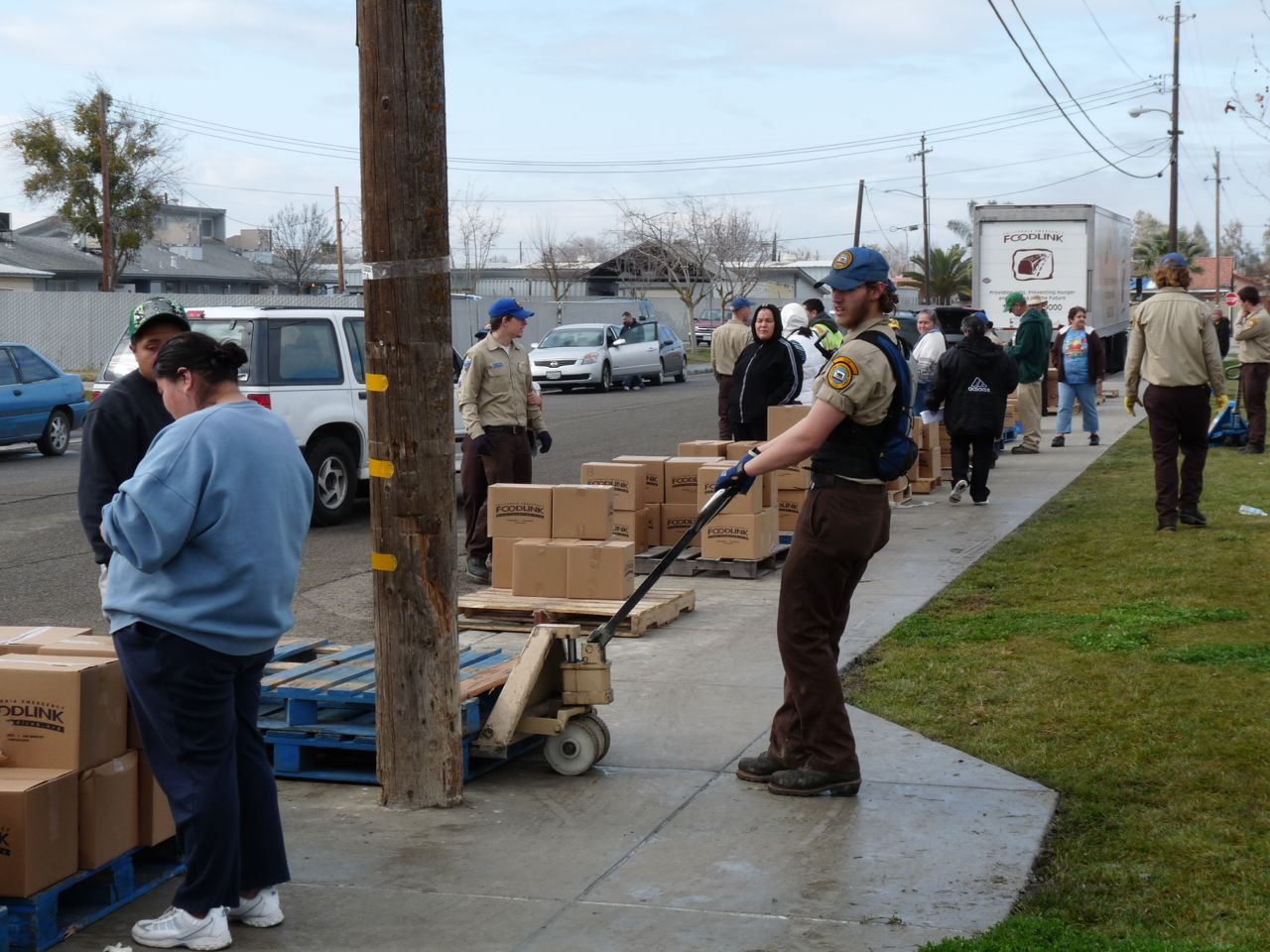
Upcoming Community Food Bank Distribution Sites

Emergency Food Bank Distribution Sites

For more information, contact: Communityfoodbank.net

Firebaugh:        Dunkle Park, 1526 Q Street — Tuesday, May 13, May 27, June 10 and June 24.

Mendota:          Westside Youth Center, 1709 Seventh Street — Wednesday, May 14, May 28, June 11 and 25.

San Joaquin:   Salvation Army San Joaquin, 21962 Railroad Avenue — May 19, June 2 and June 16.

Huron:              John Palacios Community Center, 16856 Fourth Street — May 21, June 4 and June 18.

Orange Cove:   Iglesia Buen Pastor, 863 11th Street — May 23, June 6 and June 20.

2016-05-31T19:35:33-07:00May 12th, 2014|

Great-Grandmother Wins Dixon May Fair Hogcalling Contest

Great-Grandmother Wins the Hogcalling Contest with Determined Voice

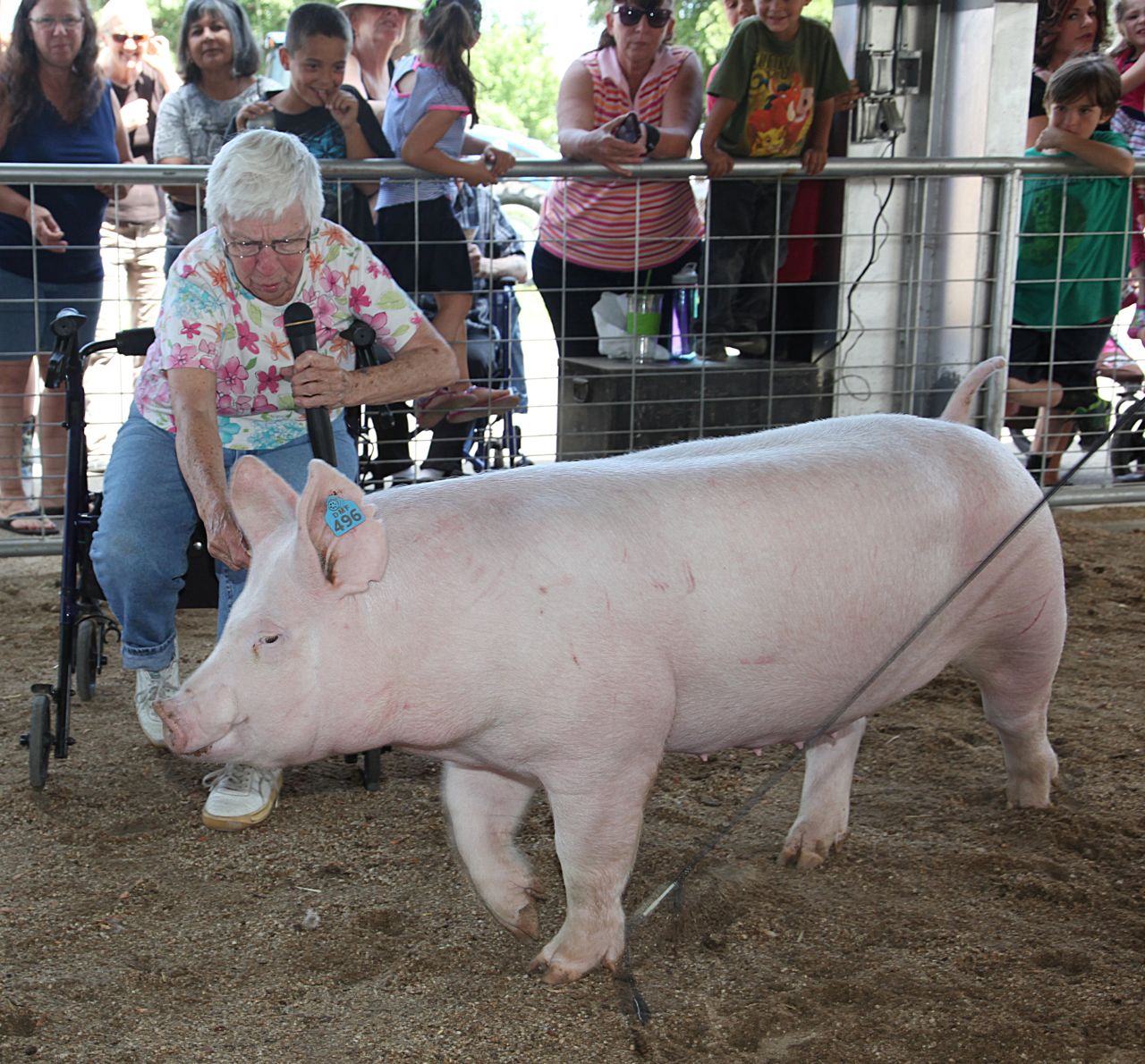
DIXON–Great-grandmother Helen Lang, 89, of Cordelia won the 2014 Dixon May Fair Hogcalling Contest “hams down.”

Lang coaxed a hog over to her wheelchair with a firm and determined voice. The hog readily obeyed.

“My dad used to raise Hampshire pigs,” she said. “And now my great-grandchildren do.”

Lang, who has been attending the Dixon May for more than 50 years, this year decided to enter the 12th annual hogcalling contest. Three of her great-grandchildren did, too: Christopher Lang, 9, his brother, Gabriel Lang, 3, and their cousin, Xavier Copeland, 11.  Christopher and Xavier, both members of the Suisun Valley 4-H Club, raised hogs for the fair. All three boys won awards in the hogcalling contest.

Emcee Donnie Huffman, president of the Friends of the Dixon May Fair and a former 4-H swine leader, urged the contestants to “bring home the bacon” and to get the hogs “hamward bound” and into “four-squeal drive.”

The judges scored the contestants on originality, creativity, audience appeal and hog response. The judges were Hendrick Crowell of Fairfield and Mary Harris of Vacaville, past presidents of the Dixon May Fair Board of Directors (Harris is also a current director); “Boss Hog” Nick Stacey of Dixon, the longest reigning hogcalling champion–eight years; and JoAnn Giannoni of Dixon, secretary of the Friends of the Dixon May Fair and one of the organizers.

Butler Amusements provided carnival tickets to the youth winners. The Dixon May Fair provided four tractor-pull tickets. Giannoni and co-coordinator Kathy Keatley Garvey provided pig-related prizes.

The contestants yelled everything from “Soo-eey” to “C’mon, piggy.” Contestant Mary Jane O’Neill, wearing a red rose in her hat, sang “The Days of Swine and Roses,” but the hog expressed no interest in trotting over to her.


The list of winners:

Adults, 18 and over:
 Helen Lang of Cordelia, first; Brianna Boyd of Dixon, second; Silvia Forcier of Dixon, third; and Mary Jane O’Neill of Davis, fourth.

Ages 6 through 13: 
Nathan Schittl, 7, of Vacaville, first; Xavier Copeland, 11, of Fairfield, second; Christopher Lang, 9, of Fairfield, third; and  Morgan Green, 9, of Vallejo, fourth.

Ages 5 and under:

Chloe Granillo, 3, of Dixon, first; Garrison Cruz, Dixon, second; Vinny Sicca of Vacaville, third; and Gabriel Lang, 3, of Fairfield.


Among the Dixon 4-H’ers providing the hogs were Cody and Morgan Meitrott, Amanda Phillips, Hannah Harvey, and Elizabeth and A. J. Granillo. Harvey’s hog was earlier named the 4-H Grand Champion.


In the age group, 14 through 17, all who initially signed up “chickened out.”


The Dixon May Fair ended a four-day run on Sunday, May 11.

2016-05-31T19:35:33-07:00May 12th, 2014|

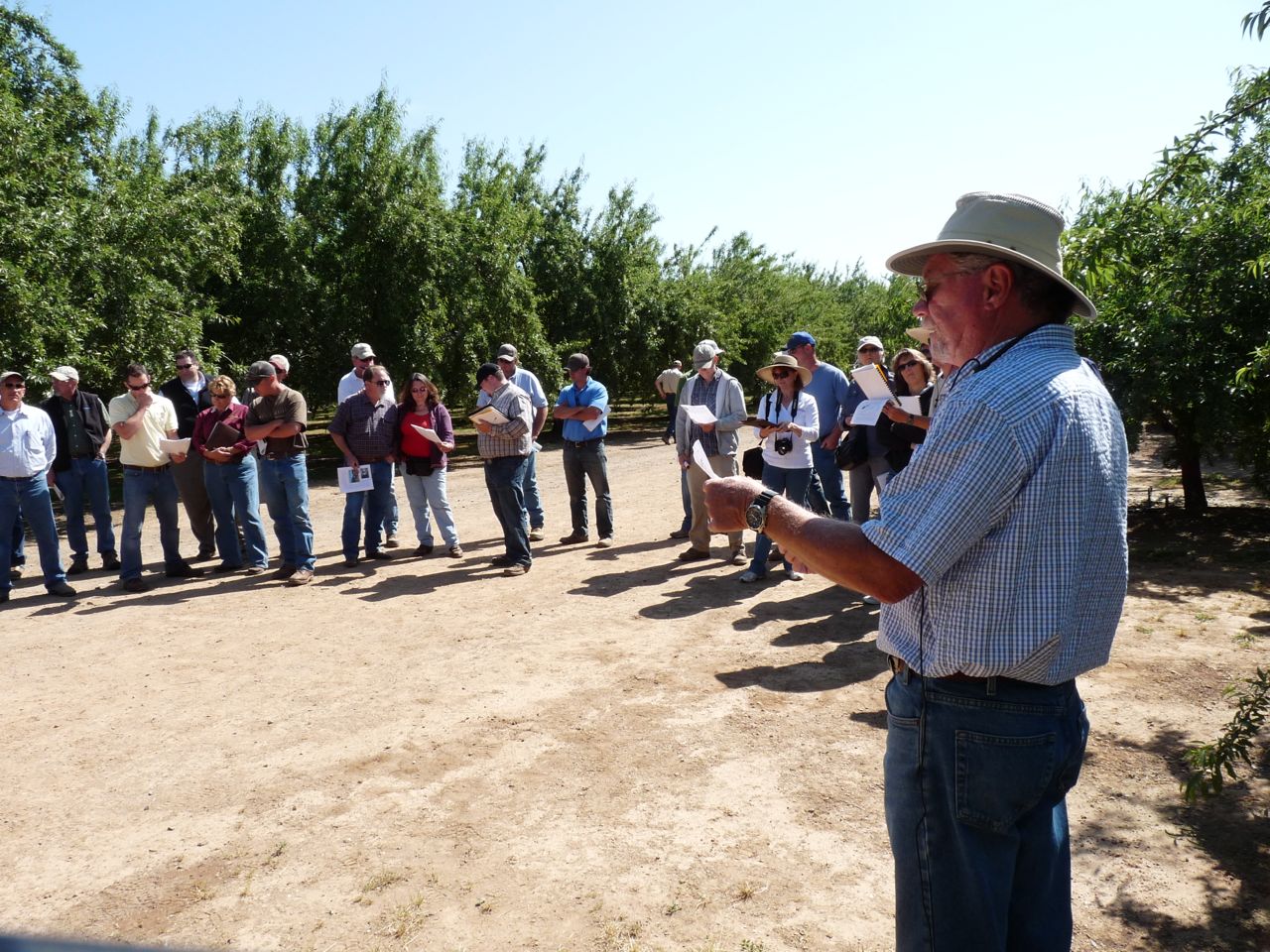
Annual Nickels Field Day May 14

Report Title

NICKELS SOIL LAB ANNUAL FIELD DAY

Wednesday, May 14, 2014 Marine Avenue, Arbuckle, CA

Popular Nickels Field Day will focus on research.


8:30 am — Registration
Coffee and Danish provided by Farm Credit Services of Colusa-Glenn, ACA

9:00 am — Field Topics:

Monitoring soil moisture to guide irrigation decisions

Larry Schwankl, Cooperative Extension Specialist, LAWR, UC Davis

How well is your irrigation system performing?

Kevin Greer, Tehama Co. Resource Conservation District Mobile Irrigation Lab Post-harvest canopy health and yield the next season

Ted DeJong, Professor, Plant Sciences Department, UC Davis

Applying crop evapotranspiration estimates in on-farm water management

Allan Fulton, UCCE Water Resources Advisor, Tehama, Glenn & Colusa Counties Measuring crop stress to make irrigation decisions

Rick Buchner, UCCE Farm Advisor, Tehama County

Almond orchard hedging

Bruce Lampinen, Cooperative Extension Specialist, Plant Sciences Dept., UC Davis

Rootstock trial review

Franz Niederholzer, UCCE Farm Advisor, Colusa/Sutter/Yuba Counties

Nitrogen cycle inhibitors

Martin Burger, Research Scientist, LAWR, UC Davis

12:15 pm – Lunch by reservation, proceeds to benefit the Pierce FFA Program RSVP to the UCCE Colusa Office at (530) 458-0570

$12 prepaid, $15 at the door

Luncheon talk:

Active Groundwater Management – An Assessment of the Sacramento Valley’s Groundwater Resources

David Guy, President, Northern California Water Association
Paul Gosselin, Director, Butte Co. Department of Water and Resource Conservation

Program organized by:
Franz Niederholzer, UC Cooperative Extension, Farm Advisor, Colusa/Sutter/Yuba Counties

UCCE Colusa County • 100 Sunrise Blvd., Suite E • Colusa, CA 95932
Office 530.458.0570 • Fax 530.458.4625 •
lcpingrey@ucanr.edu • Website:  cecolusa.ucanr.edu


2016-05-31T19:35:33-07:00May 11th, 2014|

California Program Helps Needy Families Buy Fresh Produce at Farmers Markets

Source:  Claire Fleishman

With tight budgets and children to feed, recipients of federal nutrition assistance were rarely seen at farmers markets, where the words “affordable” and “fresh” didn’t often mix. That is changing, thanks to a state program that is in line to get a big boost in federal support.

More and more recipients are stepping up to market managers’ tables, swiping their card from CalFresh (nationally known as SNAP or Supplemental Nutrition Assistance Program), and getting a bonus good for fresh produce.Under the Market Match Program, CalFresh recipients can get $10 a week in bonus scrip for fruits and vegetables for every $10 they spend at farmers markets. Over 30,000 CalFresh participants have used the scrip at 130 markets statewide, creating more than $1 million in additional income for farmers at these markets.

Locally, the bonuses are available at a number of farmers markets, including Altadena, Long Beach and Canoga Park. Federal and state officials are trying to expand the bonuses to other farmers markets to help stem an old problem: low-income recipients using federal nutrition assistance to purchase unhealthful products, particularly high-sugar sodas and junk food.

The matching money comes from the California Market Match Consortium, which was founded five years ago by farmers market operators and community organizations. The consortium is funded by the California Department of Food and Agriculture and a variety of private donors. Recently the Los Angeles County agency First 5 LA, which draws on tobacco tax money to help programs benefitting young children, became a partner.

More funding is on the way. The 2014 Farm Bill allocated $100 million over the next five years for incentive programs. A new California Assembly bill proposes a Market Match Nutrition Incentive Fund of $2.75 million per year for five years, to maximize capture of federal dollars. With these funds, all 854 markets in California could participate. SNAP, formerly known as food stamps, feeds one in seven people in the nation. It dispenses $8 billion in California. But beneficiaries of the program, especially children, also suffer high rates of obesity and diabetes, which have been linked to cheaper, sugary foods.

California has the most cases of diabetics in the nation, and spending in the state to treat the disease in 2012 approached $28 billion, according to American Diabetes Association data. New York City tried to ban the use of SNAP funds for buying high-sugar drinks in 2010. Beverage manufacturers and some civil libertarians objected, and the U.S. Department of Agriculture, which runs SNAP, vetoed the idea.

In lieu of curbing the supply of junk food — a politically unattractive option — public health advocates are working hard to change the demand by making healthful foods cheaper and more attractive.

Carle Brinkman of the Berkeley-based Ecology Center, which assists farmers markets statewide with implementation of electronic benefit transfer programs, said, “Instead of being punitive, we like to incentivize (healthful) food choices. We can give customers who wouldn’t normally shop at farmers markets a boost, and at the same time, send additional funds to small- and medium-size farmers.”

The question now is: Will the incentives change decades of entrenched habits? Initial signs are positive. In Massachusetts, a USDA Healthy Incentives pilot project followed 55,000 SNAP households for a year; some were credited with 30 cents for every dollar spent on targeted produce. Spending on fruits and vegetables was higher for those receiving incentives at a rate that was both “statistically significant and … nutritionally relevant,” the study concluded.

And a recent survey by the California Consortium found that nearly 3 of 4 Market Match shoppers came specifically for the match. They leave with bags of fresh produce and new ideas from nutrition classes frequently held in conjunction with Market Match.

At one market recently, a rapt audience of about 20 women and children absorbed a “Rethink Your Drink” lesson as a dietitian stirred a frosty pitcher of ice water laced with mint and cucumber slices. Delicious, several women agreed, and even cheaper than soda.

2016-05-31T19:35:33-07:00May 9th, 2014|

Grape Consumption May Offer Benefits for Symptomatic Knee Osteoarthritis

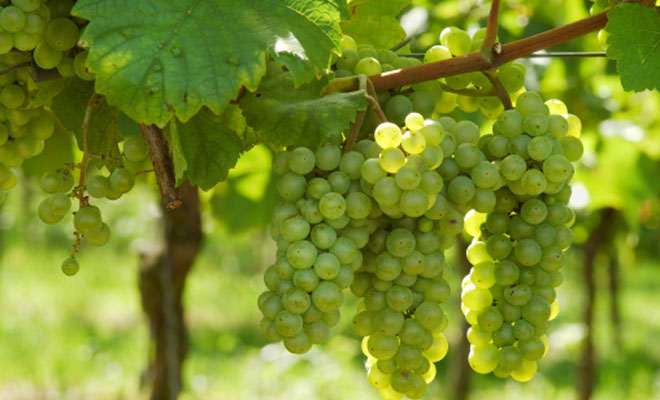
New research presented this week at the Experimental Biology conference in San Diego, California, suggests that regular grape consumption may help alleviate pain associated with symptomatic osteoarthritis of the knee, and improve joint flexibility and overall mobility.

Researchers attribute these potential benefits to the polyphenols found in grapes.

The sixteen week clinical study, undertaken by Texas Woman’s University, was designed to investigate the benefits of grape consumption on inflammation and osteoarthritis outcomes.

72 men and women with knee osteoarthritis (OA) were assigned to either consume grapes in the form of a whole grape freeze-dried powder, or a placebo powder.

The study results, presented by lead investigator Shanil Juma, Ph.D., showed that both men and women consuming a grape-enriched diet had a significant decrease in self- reported pain related to activity and an overall decrease in total knee symptoms.

This beneficial effect was more pronounced in females. Additionally, age-related differences were observed: there was a 70% increase in very hard activity for those under 64 years of age consuming the grape powder, while those receiving the placebo reported a significant decrease in very hard activity.

Participants over 65 years, whether consuming grapes or the placebo, reported a decline in moderate to hard activities.

Evidence of increased cartilage metabolism was observed in men consuming the grape- enriched diet; they had higher levels of an important cartilage growth factor (IGF-1) than those on placebo. This protective effect was not observed in the females. The researchers noted that no difference in range of motion was observed for either the grape group or the placebo group.

The serum marker for inflammation (IL1-β) measured was increased in both placebo and grape groups, although much less of an increase was observed in the grape group.

“These findings provide promising data that links grape consumption to two very important outcomes for those living with knee osteoarthritis: reduced pain and improvements in joint flexibility,” said Dr. Juma. “More research is needed to betterunderstand the results of the serum biomarkers, as well as the age and gender differences observed.”

Dr. Juma also shared results from a recent cell study that looked at the effects of whole grape polyphenols on cartilage cell integrity and markers of cartilage health.

Cartilage cells were first treated with various doses of whole grape polyphenols, and then stimulated with an inflammatory agent. Cell proliferation significantly increased – in a dose dependent manner – in the grape polyphenol treated cells in the presence of an inflammatory agent.

Additionally a marker for cartilage degradation was significantly lower with the three highest doses of the whole grape polyphenols when compared to control cells and cells treated with the inflammatory agent, suggesting a possible protective effect of grapes on cartilage cells.

Osteoarthritis is a condition where the natural cushioning between joints – the cartilage – wears away. Millions of Americans are affected by osteoarthritis: according to the Arthritis Foundation, more than 27 million people have osteoarthritis and knees are an area most commonly affected. Osteoarthritis is more likely to occur in people over 45 years of age, and women are more likely to have osteoarthritis than men.

The Experimental Biology conference is a multidisciplinary, scientific meeting focused on research and life sciences, covering general fields of study such as anatomy, biochemistry, nutrition, pathology and pharmacology. The conference is comprised of nearly 14,000 scientists and exhibitors.

2016-05-31T19:35:34-07:00May 9th, 2014|

Pear Health Benefits!

Source Alyssa Klimek

Pear Bureau Northwest, Portland, Ore., commissioned research that examined consumption of fresh pear health benefits.

The research was led by Victor Fulgoni III and was presented in San Diego in late April at Experimental Biology, a conference where scientists and researchers in anatomy, physiology, biochemistry, pathology, nutrition, and pharmacology meet to discuss scientific contributions.

Risk of obesity, dietary quality, and nutrition intake related to fresh pear consumption were examined in participants of the National Health and Nutrition Examination Surveys from 2001-2010. Energy and nutrient intakes were calculated using the USDA’s Food and Nutrient Database for Dietary Studies.

Consumption of fresh pears lead were tied to improved health benefits, a better nutrition profile and an overall better quality of diet with more dietary fiber, vitamin C, copper, magnesium, and potassium, according to the release. Fresh pear consumers had lower added sugar intake and lower intake of total fat, monounsaturated fat, and saturated fat. Also, the risk of becoming obese was 35% lower than non-consumers of pears.

2016-05-31T19:35:34-07:00May 8th, 2014|

Ag Theft Crime Ring Taken Down In the Valley

Source: Jessica Peres; ABC 30

Investigators say they’ve taken down a major crime ring. The suspect stole hundreds of thousands of dollars in agriculture equipment.

The Kern County Sheriff’s Office notified investigators that they found more than 1,000 pieces of ag equipment stolen out of Tulare County.

Lawn trimmers, sidewalk edgers and tree pruners are just a fraction of the pieces of equipment found in Southern California that were stolen out of Tulare County.

The equipment was taken from Fruit Growers Supply in Porterville, and Lawrence Tractor out of Tipton, over the last two weeks. Then on Friday, investigators got a break in the case.

Tulare County Acting Sheriff Mike Boudreaux said, “The Kern County Sheriff’s Department was conducting an investigation separate from the commercial burglaries in the Hawthorne area. While they were there they recognized some property that may or may not be related to our burglary.”

What they ultimately uncovered was a highly proficient crime ring, where suspects would steal hundreds of pieces of ag equipment and sell them on the street for one-third of the retail price.

Boudreaux added, “The particular people were not only selling it on the black market but they would send it to people to sell at swap meets.”

The Tulare County Sheriff’s Office arrested Rafael Gomez and Israel Garcia, both from Hawthorne, for the thefts.

Stihl branch manager in Visalia, Larry Blamer, says most of the tools sell for upwards of $300.00.

Blamer told Action News, “Stihl brand is not sold to any of the big box stores just independently owned family businesses throughout America and it’s those independent owners that take that hit.”

Stihl has a highly sophisticated serial number tracking system, that helped investigators confirm most of the 1,100 pieces of stolen equipment out of Tulare County. The tools were worth more than $300,000.00.

Blamer says most times when store owners call them about a theft, they’re lucky if they see 1-percent of it returned to them.

Blamer explained, ” I’ve been in business for 35 years and this is the biggest single find of power equipment I’ve seen.”

The sheriff’s office is still investigating the case and says there are more suspects they’re looking for.

They say the crime ring is wide spread. Some of the ag equipment was stolen from as far away as Hanford, San Luis Obispo and even Ohio.

2016-05-31T19:35:34-07:00May 8th, 2014|
Go to Top