About Patrick Cavanaugh

This author has not yet filled in any details.
So far Patrick Cavanaugh has created 1490 blog entries.

Borlaug CAST Communication Award — UC Davis College of Agricultural and Environmental Sciences

Source: Patricia Bailey

Photo Credit: John Stumbos

The Council for Agricultural Science and Technology (CAST) has announced that Alison Van Eenennaam, a geneticist and Cooperative Extension specialist in animal genomics and biotechnology at the University of California, Davis, is the recipient of its 2014 Borlaug CAST Communication Award.

Announcement of the award, which will be presented to Van Eenennaam on Oct. 15 along with the World Food Prize Symposium in Iowa, was made at the World Bank in Washington, D.C.

Established in 1986 and named after Nobel laureate Norman Borlaug, the award is presented to a food or agricultural scientist who is actively engaged in research; has made significant contributions to science; and communicates the importance of food and agricultural science to the public, policymakers and the news media.

Van Eenennaam’s research and extension program in UC Davis’ Department of Animal Science is focused on developing science-based educational materials about the uses of animal genomics and biotechnology in livestock production systems.

She has served on advisory committees in the U.S. Department of Agriculture and the U.S. Food and Drug Administration to provide expert counsel on animal biotechnology.

Van Eenennaam is a passionate advocate for science and frequently speaks about agricultural technology to the public and policymakers, both nationally and internationally. She frequently provides science-based commentary to the media on sometimes-controversial topics, including genetic engineering and cloning. She also works to increase public understanding of agricultural biotechnology, using a variety of media, including YouTube videos.
2016-05-31T19:35:28-07:00June 5th, 2014|

Water Finally Reaching Growers in Fresno Irrigation District

In a normal year, farmers would see water delivered for six months in the Fresno Irrigation District. This year, they’re getting a fraction of that but that still beats the zero allocation some growers are getting.

The almonds are developing nicely in Mitch Sangha‘s Fresno County orchard. He has been putting his old well to the test since winter — pumping groundwater because the drought has severely reduced water deliveries. But this past weekend, the water finally flowed as the Fresno Irrigation District began a six-week-long delivery.

“It’s going to help us a lot. Hopefully it will recharge the underground and hopefully we can shut our pumps off and let the water table build back up,” said Sangha.

“It’s a large district. Its 245,000 acres,” said Fresno Irrigation District General Manager Gary Serrato

He says 4,000 growers now have access to the much needed water.

“The thought is that by starting up in June because there are wells going dry and groundwater tables are dropping that it buys them time as well,” said Serrato.

Sangha says he’ll take whatever water he can get. The constant groundwater pumping impacts homes which rely on the same underground aquifer.

“Our domestic pump on this rental house is only 60 feet so when I turn this pump on that runs out of water,” said Sangha.

“There’s been a lot of pressure on our groundwater this year, and we’ve seen historical drops like we’ve never seen before,” said Serrato.

Sangha says the delivery will help bring his almonds into production and will help raisin growers get through a critical period. Still, some farmers rely solely on the water deliveries and don’t have underground wells to pump groundwater.

Serrato says this is the third driest year on record. Only the droughts of 1976-77 and 1932-33 were worse.

2016-05-31T19:35:28-07:00June 5th, 2014|

Food Assistance Available In Counties Hit By California Drought

Source: CBS Sacramento

Families in areas hardest hit by California’s drought are getting some much-needed help as part of the state’s $687 million drought relief bill.

Yolo County is able to put some of that money to use by feeding families in need.

“Most of us here in town, they work on the fields, and they depend on the season,” said Claudia Covorrubias.

But she says this season, the drought is taking its toll, and her husband is out of his usual farm work. It’s a familiar story in Yolo County.

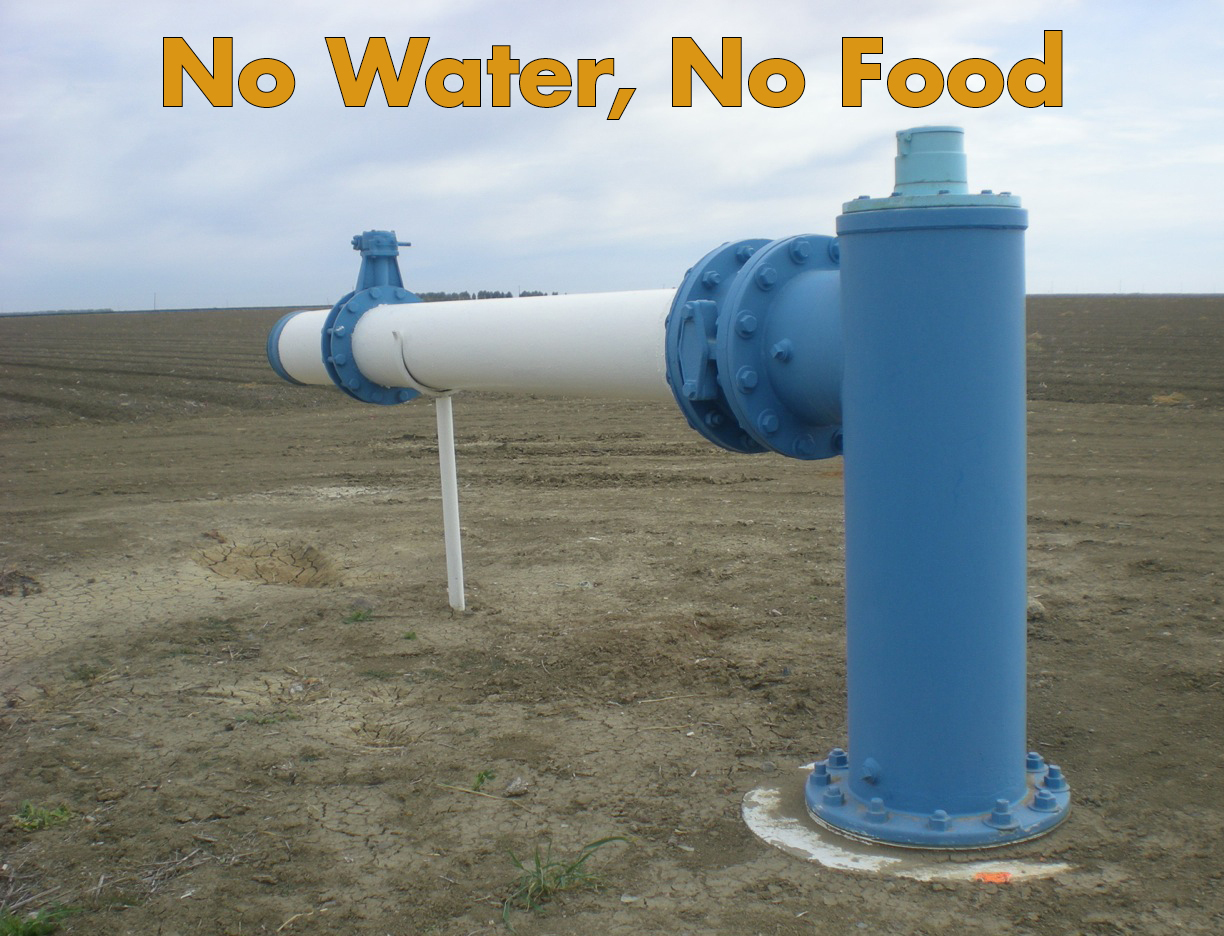
“We need the water,” she said. “If there’s no water, there’s no planting. So if there’s no planting, there’s no food.”

The need was seen by state leaders who set aside $25 million in the recent drought bill to help feed families like hers. The money is being spent on boxes going to food banks from 24 of the hardest hit counties where unemployment and agricultural work is higher than the state average.

COUNTIES AFFECTED: Amado, Butte, Colusa, Fresno, Glenn, Kern, Kings, Lake, Lassen, Madera, Merced, Modoc, Monterey, San Benito, San Joaquin, Santa Cruz, Sierra, Siskiyou, Stanislaus, Sutter, Tehama, Tulare, Yolo, Yuba

The Yolo County Food Bank began handing out more than 5,600 boxes of donations at two locations on Monday.

The boxes include nonperishable, nutritionally balanced food that can last four or five days for a family of four.

Families qualify if the drought has caused them to be unemployed. “It’s all on an honor system,” said Stephanie Sanchez. “We’re really trying to just help out families in need. If they can’t prove it, we don’t want to have to turn them away.”

Emmanuella Eliadiazzamora has a daughter and is expecting another child in less than a month. For her, the help is huge.

2016-05-31T19:35:28-07:00June 5th, 2014|

USDA Announces Programs to Conserve Sensitive Land, Help Beginning Farmers

WASHINGTON, June 4, 2014 – Agriculture Secretary Tom Vilsack today announced that farmers, ranchers and landowners committed to protecting and conserving environmentally sensitive land may now sign up for the Conservation Reserve Program (CRP). The Secretary also announced that retiring farmers enrolled in CRP could receive incentives to transfer a portion of their land to beginning, disadvantaged or veteran farmers through the Transition Incentives Program (TIP).Vilsack continued, “The average age of farmers and ranchers in the United States is 58 years, and twice as many are 65 or older compared to those 45 or younger. The cost of buying land is one of the biggest barriers to many interested in getting started in agriculture. The Transition Incentives Program is very useful as we work to help new farmers and ranchers get started.”

The Conservation Reserve Program provides incentives to producers who utilize conservation methods on environmentally-sensitive lands. For example, farmers are monetarily compensated for establishing long-term vegetative species, such as approved grasses or trees (known as “covers”) to control soil erosion, improve water quality, and enhance wildlife habitat.

CRP consists of a “continuous” and “general” sign-up period. Continuous sign up for the voluntary program starts June 9. Under continuous sign-up authority, eligible land can be enrolled in CRP at any time with contracts of up to 10 to 15 years in duration. In lieu of a general sign-up this year, USDA will allow producers with general CRP contracts expiring this September to have the option of a one-year contract extension. USDA will also implement the 2014 Farm Bill’s requirement that producers enrolled through general sign-up for more than five years can exercise the option to opt-out of the program if certain other conditions are met. In addition, the new grassland provisions, which will allow producers to graze their enrolled land, will enable producers to do so with more flexibility.

The Transition Incentives Program provides two additional years of payments for retired farmers and ranchers who transition expiring CRP acres to socially disadvantaged, military veteran, or beginning producers who return the land to sustainable grazing or crop production. Sign up will also begin June 9. TIP funding was increased by more than 30 percent in the 2014 Farm Bill, providing up to $33 million through 2018.www.fsa.usda.gov.

Both the CRP and TIP were reauthorized by the 2014 Farm Bill. The Farm Bill builds on historic economic gains in rural America over the past five years, while achieving meaningful reform and billions of dollars in savings for taxpayers. Since enactment, USDA has made significant progress to implement each provision of this critical legislation, including providing disaster relief to farmers and ranchers; strengthening risk management tools; expanding access to rural credit; funding critical research; establishing innovative public-private conservation partnerships; developing new markets for rural-made products; and investing in infrastructure, housing and community facilities to help improve quality of life in rural America. For more information, visit www.usda.gov/farmbill.

Cultivating New Farmers and Ranchers- CDFA

Farm demographics continue to change in California. The average age of a farmer is 58 years old, relatively few heirs are willing to take over farms, and fewer people are interested in becoming farmers because of a variety of challenges. This dynamic is made more troublesome by the fact that food demand is expected to double worldwide by the year 2050. As a result, the opportunity and need for California farmers will be significant, and the cultivation of new farmers and ranchers is more important than ever.


2016-05-31T19:35:28-07:00June 4th, 2014|

CA Drought Devastates State’s Citrus Industry – June 6 in Bakersfield Orchard

California Citrus Mutual and Senators Fuller and Vidak to hold Press Conference June 6, 11:00 a.m. 

Please join California Citrus Mutual, Senator Andy Vidak and Senator Jean Fuller for a press conference on the current water crisis and its devastating impact to the Central Valley’s $1.5 billion citrus industry and local communities.

Senator Jean Fuller

Senator Jean Fuller

Senator Andy Vidak

Senator Andy Vidak

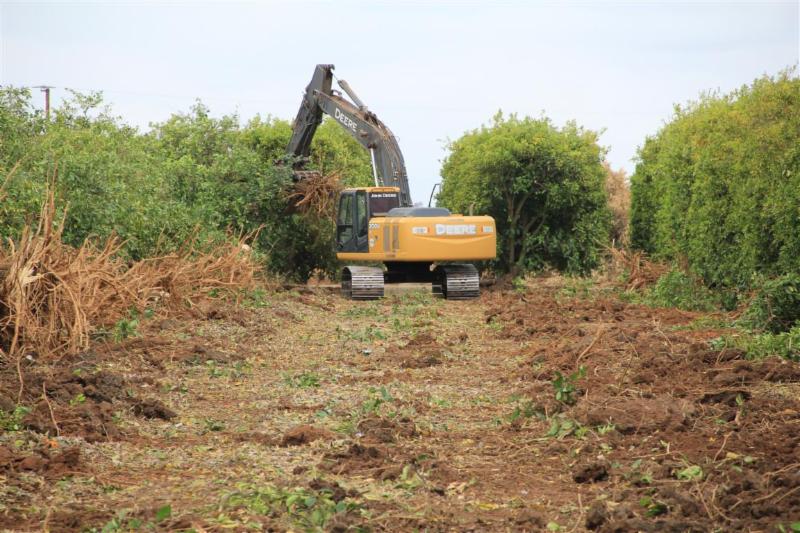
The event is on Friday, June 6 at 11:00 a.m.in a Bakersfield citrus grove that is being pulled out of production due to zero surface water allocation [21662 Bena Rd., Bakersfield, CA]. The scene of removed groves is, unfortunately, becoming a familiar one throughout the Valley as citrus growers are faced with zero water allocation for the first time in the Central Valley Water Project’s history.

“The situation our industry is now faced with is not the result of a drought,” says CCM President Joel Nelsen. “It is the result of inaction and indifference by state and federal regulators who have time and again demonstrated that the production of food and fiber is not a priority.”

California Citrus Mutual estimates that nearly 50,000 acres of citrus will receive zero water allocation this year. “The loss of citrus production in the Central Valley will undoubtedly have a ripple effect that will be felt in many local communities,” continues Nelsen.

“Due to the zero water allocation, thousands of acres of citrus trees have already been destroyed resulting in higher food prices and lost jobs,” says Senator Fuller. “Now is the time for regulators to act on behalf of the farmers and residents of the Valley, get the water moving to where it is needed most, and stop the planned removal of thousands of more acres of citrus.”

California Citrus Mutual President Joel Nelsen

California Citrus Mutual President Joel Nelsen

“The citrus industry is an economic driver in the Central Valley,” says Senator Vidak. “The loss of prime citrus production as a result of zero water allocation will have a lasting and devastating impact on jobs and our communities. This is not simply an agricultural problem; the impact will be felt by each and every one of us if water is not made available to our Valley.”

Speaking at the press conference will be CCM President Joel Nelsen, Senator Andy Vidak, and Senator Jean Fuller along with Valley citrus growers who have been directly impacted by this water crisis.


(Photo credit: California Citrus Mutual)

2016-05-31T19:35:28-07:00June 4th, 2014|

Could CDFA’s ACP Control Policy Devastate Our Citrus Industry Like Florida’s?

Citrus Industry is Fired Up Over Softened ACP Control Policy

By Patrick Cavanaugh


It seems that CDFA officials are giving up on controlling the Asian Citrus Psyllid (ACP) in Central California citrus growing areas! It sure looks like it.

Ever since the May 12 ACP trappings in the Lindsay area of Tulare County, there has been a major back-step in what has been an aggressive mandatory spray program to control any possible live psyllids within an 800-meter radius around the trap.

Now CDFA is suggesting that the spray programs should be voluntary and only 400 feet around the trap find.

According to Joel Nelsen, president of the Exeter-based California Citrus Mutual, “The conversation relative to the change in eradicating or treating for the ACP came about with a discussion between a few members of the scientific community and the department.”

“Frankly, the industry was unaware of this possible change in the program. When it was first released to the AG commissioner, it shocked everybody–is my understanding,” Nelsen said.

“And as a result, last Friday afternoon, the executive committee members from our pest and disease management committee had a very direct conversation with senior leadership of the CDFA. I understand that the conversation was extremely candid, somewhat emotional; if the industry to is going to be supporting a program to the tune of 15 million dollars, they want a say in how the program is run. And evidently, the Department of Agriculture is making some subjective decisions that we don’t believe are appropriate.”

“From my perspective, there were mistakes made at the onset of this program that we had to learn from; and if we don’t take seriously—psyllid control, psyllid control, psyllid control!—we’re going to end up in the same type of quandary that our colleagues in Florida, Texas, Mexico and even Brazil are in.

Too many psyllids, an endemic population, some of which will contract citrus greening disease and eventually contaminate citrus trees, could devastate central California’s $2 Billion industry. “If we even allow one psyllid to continue to foster a population, then we have failed at our effort. And so from the perspective of Citrus Mutual, we are in an eradication mode,” Nelsen said.

“We are in a position in which we can find isolated psyllids and treat, and we are in position where continuous trapping and tapping (with bats and trays in searching for psyllids) and intensive trapping is not finding an endemic population. So for the department to argue that the population is endemic, its a ‘what if’ scenario that we don’t think is appropriate.”

Nelsen said that the pushback by his pest and disease management committee might have made a difference. “I haven’t received anything, but I think that conversation last Friday afternoon yielded some intended results. There’s a reconsideration, and I give a lot of credit to the industry members who stood up the department; but until it happens, its not real,” he said.

2021-05-12T11:06:01-07:00June 3rd, 2014|

Governor Brown Issues Proclamation Declaring Real California Milk Month

Source: CDFA
Governor Edmund G. Brown Jr. issued a proclamation declaring June 2014 as “Real California Milk Month” in the State of California.


The text of the proclamation is below:

PROCLAMATION


California prides itself on its vibrant agricultural sector, of which the dairy industry forms a key part. Our dairy farms contribute in innumerable ways to the state’s economic prosperity. 

California’s dairy farmers’ hard work has made them leaders in the field. Their leadership has resulted in the annual production of over 40 billion pounds of milk, accounting for about twenty-one percent of the nation’s entire supply.

The landscape, economy, health, and nutrition of California would not be the same without our dairy farms. I urge all Californians to take time to appreciate the privilege of living in one of the world’s great dairy-producing regions, and to support our industry by buying milk and other dairy products from our Golden State.

NOW THEREFORE I, EDMUND G. BROWN JR., Governor of the State of California, do hereby proclaim June 2014, as “Real California Milk Month.”

IN WITNESS WHEREOF I have hereunto set my hand and caused the Great Seal of the State of California to be affixed this 29th day of May 2014.

2016-05-31T19:35:29-07:00June 3rd, 2014|

The Groundbreaking of the New Jordan Research Center to Take Place on June 13

Source: http://www.fresnostate.edu/jcast/jrc/

As the flagship university in the top agricultural region in the world, Fresno State is a fitting home for a world-class research center to discover and investigate the most advanced concepts and practices of agriculture, food and natural resources.

The new Jordan Research Center at Fresno State fosters collaboration between some of the brightest minds in agriculture, engineering, science and mathematics. The 30,000-square-foot facility is slated for groundbreaking in spring 2014, reinventing Fresno State as a leading research institution for decades to come.

Please join Fresno State for the groundbreaking of the new Jordan Research Center on June 13.

JRC

2016-05-31T19:35:29-07:00June 2nd, 2014|

Migrant Farmworker Housing: Part of the Solution for our Industry’s Workforce

By: Karen Ross; CDFA

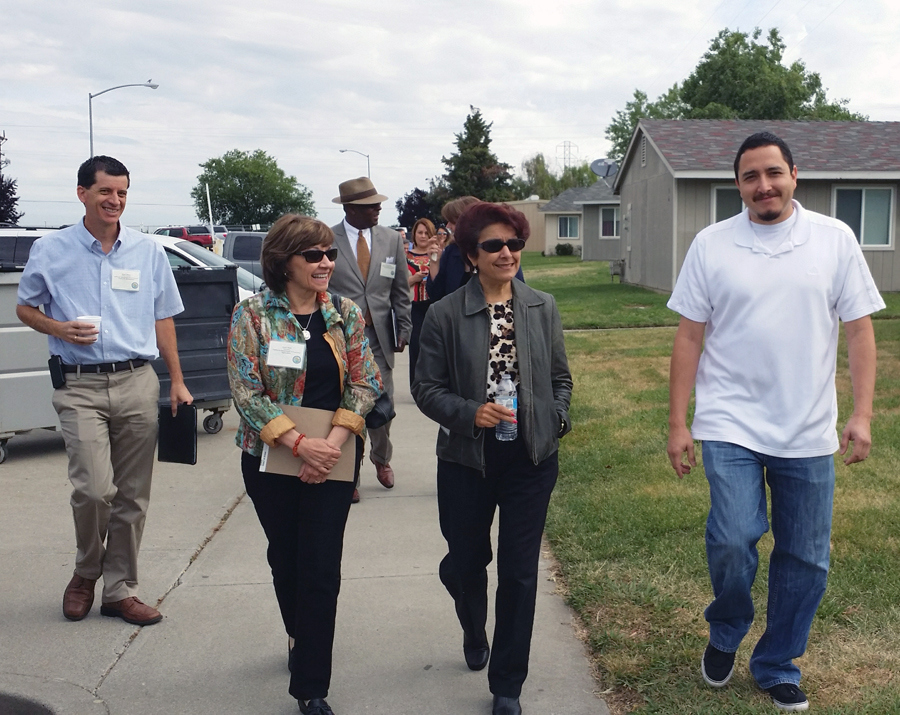
Recently, I had the privilege of taking part in a tour of several migrant farmworker housing centers hosted by the California Department of Housing and Community Development.

I was eager to participate in this tour with Business, Consumer Services and Housing Secretary Anna Caballero because of our shared commitment to work “across Cabinet” to improve existing and develop new affordable and decent housing for farmworkers and their families.

Access to safe, affordable housing is just one of many issues critical to our rural agricultural communities.

Earlier this year we received a report from the California Agricultural Workforce Housing and Transportation Project with recommendations to address the challenges and barriers to providing adequate housing and transportation to the agricultural workforce (www.aginnovations.org/workforce).

Seeing housing centers firsthand was very informative. We toured three centers  – Harney Lane Migrant Center (Lodi), Empire Migrant Center (Ceres) and Westley Migrant Center.

Our one-day tour underscored the critical importance of the effort that is needed in our rural areas to provide decent housing for hundreds of workers who plant, pick and process our fruits, vegetables, nuts and other agricultural commodities. These centers are not just a space to sleep and eat, but a place for families to live and belong.

The primary message I took away from this experience was a simple recognition of the progress that has been made. But there is much more that needs to be done!

The long-term viability of California agriculture depends upon agricultural workers who need safe, reliable and affordable transportation to their places of employment and a home that reflects their dignity and importance.

This will require effective coordination at the regional, state and federal levels to improve existing housing stock and develop new affordable housing for farmworkers and their families.

I applaud the dedication of the county housing authority leaders and center managers I met on the tour, and I look forward to working with my colleagues and stakeholders to make real, concrete improvements in the form of walls and floors and playgrounds that can make a difference today, and that will stand as examples for continued progress.

2016-05-31T19:35:29-07:00June 2nd, 2014|

California’s ‘Exceptional Drought’

Long Term Solutions, Desperately Needed For California Drought


By John Vikupitz, president and CEO of Netafim USA in Fresno, California


Aaron Barcellos, a partner with A-Bar Ag Enterprises in Los Banos, is a fourth-generation farmer. His 7,000-acre operation produces crops, including pistachios, pomegranates, asparagus, and tomatoes.

The farm creates jobs for up to 40 people full-time and over 100 at peak season. This year, the operation took an unprecedented move in letting 30 percent of its productive acreage go fallow for lack of water, redirecting available water to permanent crops and to honor tomato contracts.  This fallowing of acreage has resulted in a loss of work for over 30 part-time employees and an estimated loss of $10 million to the local business economy from his operation, alone.

“It’s a ‘batten down the hatches’ year,” notes Mr. Barcellos. “We are trying to survive this year while hoping the severity of this drought will provide momentum for more long term solutions to our water crisis.”

California’s ‘exceptional drought’ – said by University of California (UC) Berkeley paleoclimatologist B. Lynn to perhaps be the worst in 500 years – places the state at a critical juncture.

California’s historic low precipitation of 2013 and the below normal 2012 precipitation left most state reservoirs at  between six percent storage in the Southern Sierra to 36 percent in Shasta – levels not been seen since the 1977 severe drought. Snowpack is nearly non-existent.

The U.S. Drought Monitor reports nearly half of the U.S. is in some form of drought.

Water is one of life’s greatest conveniences. Turn on the tap and water appears, often at less cost than other household bills, providing the lifeblood for food production, human health, climate, energy and the ecosystem.

We may take water for granted until we’re in danger of losing it as sources dry up. We may not contemplate the support system and cost that brings water to the tap: the extensive pipe conveyance system, treatment plant, chemicals needed for purification, labor and energy costs.

Consequently, every drop saved by one water user benefits all users.

Homeowners may do their part in water conservation by installing low-flow fixtures – often incentivized through government rebate programs – by washing vehicles less or taking shorter showers. The payoff: lower water bills.

The agricultural sector is doing its part, too, using water-saving technology investments that reap returns for Californians, as well as those elsewhere benefitting from its exports. According to the California Department of Food and Agriculture (CDFA), the state produces nearly half of U.S.-grown fruits, vegetables and nuts and leads the world in almond and pistachio production. California’s 80,500 farms and ranches received a record $44.7 billion for their 2012 output.  Exports totaled more than $18 billion.

Tens of thousands of productive acres are being fallowed. The number of jobs, specifically those of farmworkers, will subside as food prices increase. California, the nation’s top dairy producer, is shipping cows out of state due to water uncertainties with no guarantee that alfalfa and other crops cows consume will continue to be available.

It’s critical that people appreciate their food source. California’s regulations ensure safe and reliable food, while California’s highly progressive and efficient farmers enable that food source to be the cheapest in the world Mr. Barcellos points out.

Food safety and quality drive those innovations, as well as economics. Regulations mean the cost to produce food and get it to the store requires farmers to be highly efficient to remain competitive.

Mr. Barcellos farms in five different irrigation districts with various water rights and water supplies. A-Bar Ag Enterprises has converted 5,500 acres from flood irrigation to drip irrigation creating a combined water savings and production efficiency of over twenty percent.

“What we do in California with the different irrigation technologies creates significant efficiencies in water application without waste, enabling farmers to increase yields with fewer inputs. With that said, it doesn’t matter what the crop – it still takes water to grow it,” Mr. Barcellos points out.

According to The Center for Irrigation Technology at California State University, Fresno, Agriculture uses 40 percent of all dedicated water, including environmental, municipal and industrial uses in order to meet the needs of the eight million irrigated agricultural acres in California.

When farmers were short on water, they used to purchase it on the open market or pump more ground water. This year, there is no water to buy and wells are starting to run dry, says Mr. Barcellos.

While the federal government has offered temporary food money for farmworkers, “the people in our communities want to work, not receive handouts from a food bank,” Mr. Barcellos says, adding that it’s time to work on long-term solutions to water problems.

California’s water system was developed for 20 million people, with residents and farmers sharing the water supply, with those same resources later shared to meet environmental concerns. That – and the nearly doubled population – has taxed the water system, Mr. Barcellos says.

“We haven’t spent any serious funds to improve California’s infrastructure since the early 1970s to keep pace with population growth and environmental demands,” Mr. Barcellos says. “If the environment needs more water, let’s use sound science and invest in more storage and better conveyance systems for long-term solutions.”

Following Governor Edmund Brown Jr.’s January declaration of a drought emergency, the State Water Project cut water deliveries to all 29 public water agencies to zero for 2014.

Even if there is some short-term relief, mitigation is needed to protect against long-term unpredictable weather patterns.

UC Berkeley’s David Sedlak, professor of civil and environmental engineering, explains:  the drought notwithstanding, California’s aged infrastructure calls for increased investments in water recycling, rainwater harvesting and seawater desalination with a focus on local water supply development.

The United States Department of Agricultural (USDA) Natural Resources Conservation Services (NRCS), California indicates three priorities: protecting soils made vulnerable by water cutbacks, protecting drought-impacted rangeland, and stretching every drop of irrigation water using improved hardware and management Farmers and ranchers are encouraged to develop a water conservation plan and seek funding opportunities such as the $30 million available through USDA NRCS California to help drought-impacted farmers and ranchers with conservation practices and the $25 million to help pay for conservation practices through the Environmental Quality Incentives Program.

Irrigation is the final stop on the train that begins with water supply and continues with delivery methods. Water conservation technology – much of which has been proven overseas for decades on arid farmlands – offers a solution right now to apply water more precisely and even improve crop yields and quality.

Our world’s growing population calls for large-scale farming to provide food. For decades, California farmers with reasonable and secure access to water have used water conservation technologies to continue farming and create more water for other purposes, such as the needs of growing urban areas and for environmental remediation, which uses half of California’s water supply.

Farmers like Mr. Barcellos are great stewards of the environment. Many California farmers have successfully adopted this technology to a large degree, using water more efficiently and leaving more in the system for other uses. We need to expand that effort more.

2016-05-31T19:35:29-07:00May 31st, 2014|
Go to Top