About Patrick Cavanaugh

This author has not yet filled in any details.
So far Patrick Cavanaugh has created 1490 blog entries.

UPDATE: ACP Quarantine and Advocacy for Unimpeded Eradication

by Laurie Greene, Editor

CDFA filed a proposed emergency amendment TODAY to expand the ACP quarantine area in response to an “infestation” of the Asian citrus psyllid (ACP), Diaphorina citri, detected in the Farmersville/Visalia area (June 4, 2014), Tulare County. One adult female was found in the area. The proposed 14-mile expansion will include the Visalia area, and the state’s vast ACP quarantine will cover 46,544 sq. miles.

CDFA Secretary Karen Ross

CDFA Secretary Karen Ross

The regulation defines emergency as” a situation that calls for immediate action to avoid serious harm to the public peace, health, safety, or general welfare.” The government code provides,”if the emergency situation clearly poses such an immediate, serious harm that delaying action to allow public comment would be inconsistent with the public interest, an agency is not required to provide notice.”

CDFA Secretary Karen Ross believes that this emergency clearly poses such an immediate, serious harm that delaying action to give the notice would be inconsistent with the public interest. Therefore, Ross proposed that the CDFA Director may adopt reasonably necessary measures such as bypassing the mandatory notice five working days prior to emergency action in order to carry out emergency provisions. Additionally, she requested that the Director be permitted to establish, maintain, and enforce quarantine, eradication, and such other regulations necessary to circumscribe and exterminate or prevent the spread of any pest which is described in the code.

This comes after the California Citrus Industry’s recent backlash against the Executive Committee of the California Citrus Pest and Disease Prevention Committee’s proposed easing of the state’s ACP quarantine and eradication efforts.

Joel Nelsen, CA Citrus Mutual President

Joel Nelsen, CA Citrus Mutual President

And, while CDFA uses the word, “infestation”, Joel Nelsen, President of California Citrus Mutual, commented at the recent United Fresh Convention in Chicago, “There were two more ACP finds found in the northeast part of Tulare County. They were individual finds. Intensive trapping and tapping on the trees, looking for the ACP, hasn’t found any more. So one would argue that we’ve got a population—given the finds in the last year—but we’re still talking single digits.” Nelsen believes this demonstrates the eradication programs are working. “We’re supposed to find the ACP before finds a commercial citrus industry, and we’re doing that.”

Nelsen said the Executive Committee’s recent proposal to significantly modify the program was, “based upon some subjective analysis by a team of scientists who in fact believe that there’s more out there than what we can find.”

“So,” he continued, “we’re obligated to prove a negative; and as long as we do the intensive trapping program, as long as we continue the mandated treatment program, as long as we’re aggressively looking for the Asian citrus psyllid—I don’t see how, and industry doesn’t buy into the fact, you have an endemic population. We’re not finding them in volume; everything is isolated.”

“So, when the industry first became aware of this possible change in the treatment zones of the quarantine mandates, the industry challenged CDFA.”

Now, not only does the ACP program remain intact, but TODAY, CDFA Secretary Ross proposed measures for an unhindered and  immediate eradication response by CDFA to ACP discoveries.

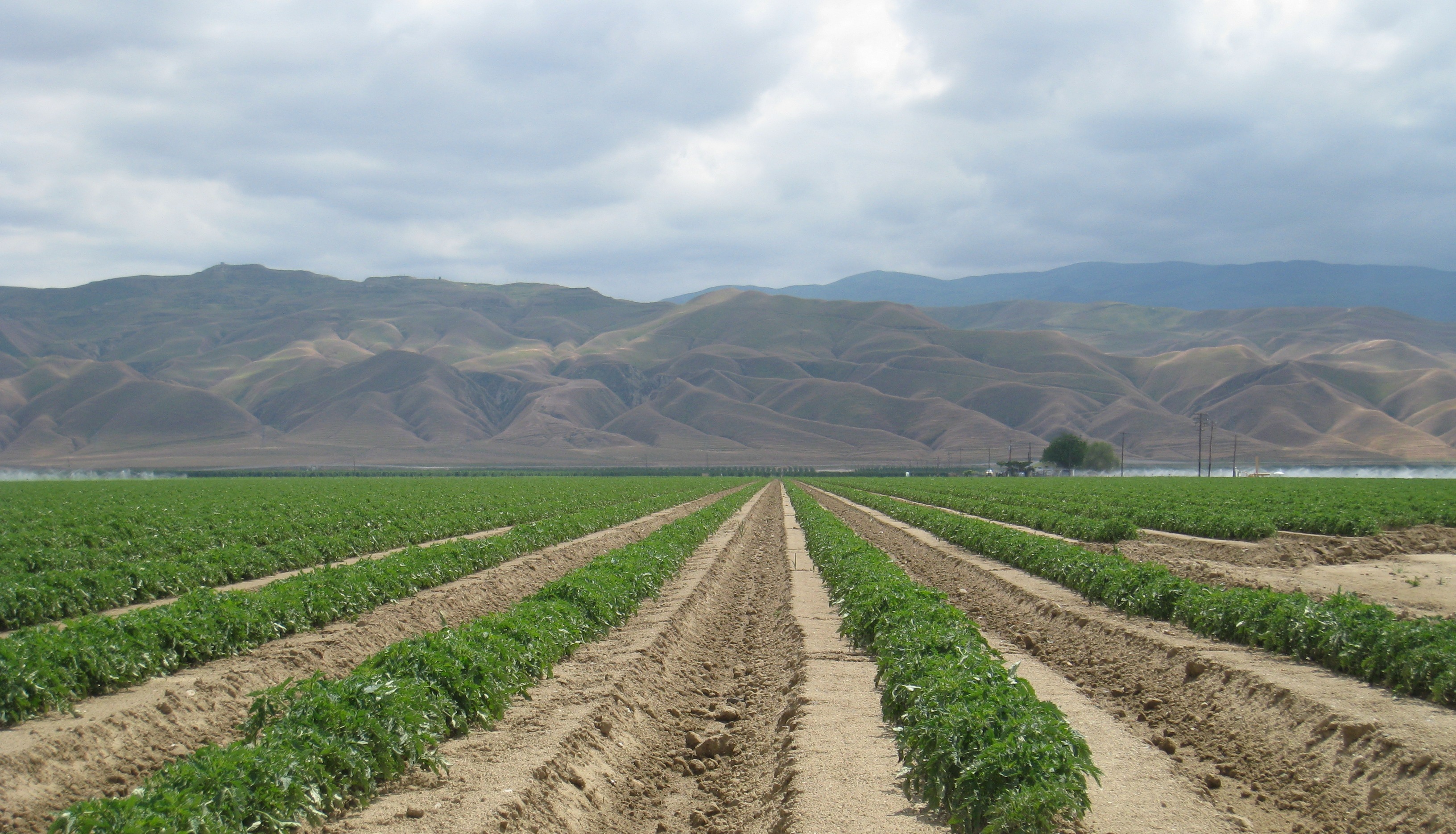
Featured Photo Credit: Ted Batkin, Citrus Research Board, “Invasive Pests in California” 1/10.
2016-05-31T19:35:24-07:00June 18th, 2014|

Views on Food: Outsmarting the Drought

By Elaine Corn; The Sacramento Bee

Shahar Caspi tends acres of gardens, fruit trees and a commercial vineyard in the hamlet of Oregon House in the foothills between Marysville and Grass Valley. His job since 2012 has been raising food year round for his community and bringing perfect wine grapes to harvest – all without tilling, and with little to zero added water.

We drove between two fields, one side brown, ragged and parched, the other a Caspi no-water showcase – grape vines in bud break, the ground beneath them rich, a natural ground cover green as jade.

“Mulch with shredded roots,” he says exuberantly, eyes off the road. “Very simple!”

At a sunny glade, another concept preps cherry trees. He walks us past huge square holes he flushed with water and allowed to drain. The holes were filled with Caspi’s mulch, manure and compost, then a tree. “They won’t need water for many, many months.”

Back in the greenhouse next to his mountaintop home, Caspi laid manure on the rock-hard dirt floor, and on purpose didn’t till the soil underneath. He stuck chard seedlings directly into the manure. “They flourished immediately,” Caspi says. “The roots went sideways into a huge mass of roots. I’ve never seen anything like it.”

And despite no rainfall the first four months of his second season of raising food for his neighbors, water usage dropped 30 percent and yields increased.

How does he do it?

The same way a dietitian would bulk up a wasting patient with lots of calories and nutrients. Except Caspi is like a soil chef, mixing fermented manure and compost in varying proportions “to re-establish a whole layer of soil that holds water” like a subterranean sponge.

The technique is reminiscent of Rudolf Steiner’s bio-dynamics, which treats the farm as a holistic entity. But considering Caspi’s past and combining it with an uncertain future of water in California, a goal of using zero water to grow food is understandable.

Caspi grew up inculcated with respect for water. In Israel, kids get “Don’t Waste A Drop” stickers in school that go on the family fridge. “It’s so much in our blood to save water,” he says. “We had a cartoon that showed the whole family showering together under a few drops of water.”

Modern drip irrigation with emitters was an idea out of Israel. So is placing black plastic sheeting over soil to contain moisture. Israel leads the world in recycling 80 percent of its water. Its latest technology collects dew.

In California, some growers are on top of the drought. A report from the California Farm Water Coalition says that in the San Joaquin Valley $2.2 billion was invested in drip irrigation on 1.8 million acres. But for every conserver using soil probes, infrared photography and improved weather forecasting, we have devourers of resources.

“Here you flood fields,” Caspi says. “An Israeli would say, ‘Are you kidding?’ It’s the mentality of abundance, that it’s going to last forever.”

In 2008, winemaker Gideon Beinstock hired Caspi to be vineyard manager at Renaissance Vineyard and Winery in Oregon House. With Caspi’s degree in plant sciences from The Hebrew University and years of experience in water strategy in Israel, his mission was to convert 45 acres of conventionally cultivated vineyard to fully bio-dynamic viticulture.

Production costs went down by 12 percent. Yields increased between 3 percent and 7 percent.

Beyond his work at the vineyard, Caspi tends the gardens of about 50 “member” neighbors in and around Oregon House. Because this is a rural community, Caspi can put a sign on the road saying “manure needed,” and loads are brought to him for fermenting.

The finished manure plus organic matter from garden waste, wood ash and olive paste all come from within a 10-mile radius. It returns to the members in the form of Caspi’s magical soil smoothie that retains water and nourishes roots.

In the garden, take a load off and don’t till. Then follow Caspi’s instructions.

Find a source of manure and compost. Lay a thick layer, up to 4 inches, on the ground and plant right into it. Apply plant by plant rather than over the entire garden. For tomatoes, dig a deep hole, water the hole until the water drains, fill the hole with a mix of chicken manure and compost, then a tomato seedling. Add a bit more nitrogen in the form of half a teaspoon of chicken manure when you dig the hole. Water once more.

How long can you go without added water? A week? A month? Water only if lack of moisture is detected by sticking a finger into the ground. “The first year is hardest,” Caspi says. “Don’t give up. If you fail, you try again.”

As to your own sense of food security, you can have a community-supported agriculture system on your street. “One person grows the potatoes, someone else grows the beans, and another person grows herbs,” Caspi explains. Everyone adds to the pile tended by the neighborhood compost geek. In a few years, the soil will be so absorptive it will gulp winter rainwater and retain it through summer.

Without access to the livestock that live near Caspi, there might be a cost for store-bought manure, unless you have a friend with a horse, a cow or chickens. When a crop is ready, deliveries begin in staggered availability.

With wells already stressed in the Sierra foothills, Caspi remains an Israeli at heart, tinkering for extra droplets of water in what he presumes is a terminal drought.

“The plant takes only what it needs,” Caspi says. “This is how it works in nature. If you don’t need it, why do you want to take it?”

To protect ourselves from food shortages and to buffer California’s agricultural economy, we all should regard any adjustments that allow us to grow food with less water as permanent.


2016-05-31T19:35:24-07:00June 17th, 2014|

From Service to Harvest – Military Veteran Deploys Aquaponics on the Farm

By: Blair Anthony Robertson; Sacramento Bee

Farming wasn’t Vonita Murray’s first choice, but after making a drastic career change, the 38-year-old Navy Veteran, former office manager and longtime fitness enthusiastic now believes digging in the dirt, growing food and being her own boss may be the dream job she has always wanted.

The transition to farming for Murray, 38, happened gradually over the past several years. She eventually took stock of her life, sized up her talents, sharpened the focus on her dreams and decided she was no longer cut out for a desk job.

For several years, Murray had been an office manager and a CAD, or computer-assisted design, technician for an architecture firm. Much of her work focused on remodeling floor plans for a major fast food chain’s Northern California stores. But when the economic downturn hit the architecture and design industry, Murray got laid off. She saw it as a chance to make a change in her life.

“It was the best thing that ever happened to me,” she said.

Using a $5,000 grant she received from the Davis-based Farmer Veteran Coalition, Murray bought some basic farm equipment and managed to launch her new career. She also enrolled in the first class of the California Farm Academy, a six-month farming course run by the Center for Land-based Learning in Winters.

Murray knows it will take hard work and several years before she can make a comfortable living as a farmer. But she has a long-term plan and says farming – including many 12-hour days – is exactly the lifestyle she was seeking.

“I’ve never been so tired, so broke and so happy,” she said with a laugh. “For the first time in my life, I have worth and a purpose. What I do has value in people’s lives.”

More and more veterans are turning to farming to connect in a similar way. “We’re all a family and we all try to help each other succeed,” Murray said.

When Michael O’Gorman founded the Farmer Veteran Coalition in 2009, he searched throughout the U.S. and found just nine veterans interested in going into farming. By the end of that year, the number was up to 30. These days, O’Gorman and his group have helped 3,000 veterans transition into farming.

“What’s really attracting veterans to agriculture is it offers a sense of purpose and a sense of mission,” said O’Gorman, who has farmed for 40 years. “It’s about feeding their country, offering food security and a better diet.”

O’Gorman is seeing more women get into farming and says Murray is a great role model.

“Vonita is dynamic, creative, energetic and smart. Whatever she does, she will do it well and take it places,” he said. “She’s a growing phenomenon. About 15 percent of those who serve in the military are women and that’s about the same percentage we hear from.

More and more women are going into agriculture. The military and farming are both male-dominated. The women who have taken on both of them just seem like a really exceptional group.”

Those who encounter Murray are often impressed by her energy and her holistic, lead-by-example approach to farming. Not only does she want to grow good food, she sees the work she does as a way to help people be healthy.

Indeed, Murray’s physical presence says plenty. Though she no longer trains as a bodybuilder, she remains noticeably lean and muscular. Her workouts these days focus on functional training and she is a big advocate of Crossfit, which combines classic weightlifting with mobility exercises.

“I’m doing all this because I want to get people healthy,” said Murray, noting that she hopes to someday build an obstacle course on the property so people can use it to work out.

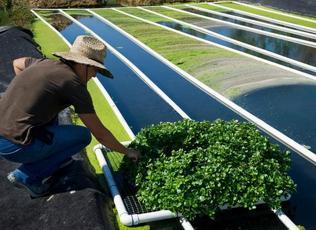
She also has a penchant for unorthodox and innovative approaches to growing food. Standing on a portion of the land she leases in rural Elverta next to the renowned Sterling Caviar facility, Murray watches water stream past. It’s runoff from the tanks where sturgeon are raised for their prized caviar. It’s also the key to what she will grow on her new “farm” site.

Murray essentially harnesses the water, 3 million gallons a day and loaded with nutrients, to create an innovative style of growing food called aquaponics, which combines modern hydroponics with forward-thinking environmental awareness.

The water goes through a settling pond to separate solids from liquids, travels through a moat and into small ponds where Murray is growing produce she sells to restaurants and to a growing number of customers at the Saturday farmers market in Oak Park.

The outgoing and optimistic Murray has put some of her energy into tapping resources that can help get her going in farming. She obtained a $35,000 low-interest loan from the U.S. Department of Agriculture.

Murray, whose produce operation is going to specialize in watercress, says she would have been at a loss as to how to proceed as a farmer without the education she got at the California Farm Academy. The program costs about $2,600 and various grants subsidize the tuition, according to Dawnie Andrak, director of development for the Center of Land-Based Learning.

Those who enroll run the gamut of age and work background. About 20 students graduate each year. To make it a real-world experience, they write a business plan and present it to a panel composed of people from the banking, business and farm community.

“There are more women like Vonita getting into farming,” Andrak said. “You will not find someone more dedicated and more clear about what it is she wants to do. She is certainly not one to give up.”

Jennifer Taylor, the director of the Farm Academy, is herself an example of a woman who made the career leap into farming. She was a research biologist who had no idea until well after college that a life in agriculture might appeal to her. She landed a four-month internship on a farm, was given four calves and eventually rented a barn and started dairy farming.

“If you have no connection to agriculture, it’s very difficult to imagine yourself doing it, Taylor said. “It’s a way many people want to live, an opportunity to be your own boss, work outside with your hands and be your own boss.”

But can you make a living?

“That depends,” said Taylor, noting that one young farmer from the program now sells to about 50 Bay Area restaurants and nets about $75,000 a year.

Back in Elverta, Murray is busy tending her crops and her chickens. She’s not making a profit yet, but she knows it takes time. More than anything, she loves the work, the lifestyle and the mission. She sometimes feels the stress of having debt and not knowing whether her crops will thrive.

But her farm is called Thrive Acres for a reason.

“You have to keep dreaming,” she said with a smile. “This is just the beginning.”


2016-05-31T19:35:25-07:00June 17th, 2014|

Poll Finds Little Support for Drought Spending Despite Broad Awareness

Source: Bettina Boxall; Los Angeles Times 

Most Californians surveyed say the statewide drought has had little or no impact on their daily lives, and a majority oppose the suspension of environmental protections or large-scale public spending to boost water supplies, a new USC Dornsife/Los Angeles Times poll has found.

Although 89% characterize the drought as a major problem or crisis, only 16% say it has personally affected them to a major degree.

Despite widespread news coverage of the drought — one of the worst in recent decades — the state’s major population centers have largely escaped severe mandatory rationing. Even agriculture, which as California’s thirstiest sector is inevitably hit the hardest by drought, has partially compensated for reduced water delivery by pumping more groundwater.

That has softened the drought’s effect on many, apparently blunting the desire for drastic remedies and big spending on water projects.

While Central Valley congressmen and some agribusiness interests have blamed environmental regulations for worsening the water shortages, those polled cited a much broader range of causes. Topping the list was a lack of rain and snow and people using too much water, followed by insufficient storage and climate change.

“They’re really blaming larger forces here,” said David Kanevsky of American Viewpoint, the Republican firm that conducted the opinion survey with Greenberg Quinlan Rosner Research, a Democratic firm. “What they don’t want to see is quick fixes at the expense of the environment.”

The survey showed strong support for water recycling, capturing storm water, increasing storage in underground aquifers, voluntary conservation and seawater desalination. A smaller percentage, though still a majority, favored building new dams and reservoirs.

But when it comes to paying for the projects, the numbers flipped. Only 36% want to improve storage and delivery systems by spending taxpayer dollars.

“As soon as you inject spending into it, support dries up,” said Drew Lieberman of Greenberg Quinlan Rosner.

Pollsters conducted the telephone survey of 1,511 registered California voters from May 21 to May 28 for the USC Dornsife College of Letters, Arts and Sciences and the Los Angeles Times. The margin of error is plus or minus 2.9 percentage points.

A large majority of those surveyed, 87%, said they were trying to save water by taking shorter showers, flushing toilets less frequently and making other changes in their domestic routines. Two-thirds say they are watering their lawns less, and roughly a quarter say they’ve ripped out lawns and replaced them with drought-tolerant plants.

Generally speaking, people in all parts of the state were taking steps to reduce domestic water use. But regional differences surfaced when people were queried about solutions.

Coastal areas favored mandatory 20% cuts in water use more than inland regions. In Southern California, 45% of those surveyed said water rates should be increased to promote conservation, compared with 56% in the Bay Area and slightly less than a third in the Central Valley.

A biology major with independent political leanings, Hart also opposed suspending environmental regulations. “I believe we should do more as a community to limit our water usage before we go and affect the wildlife around us,” she said.

The Bay Area had the smallest share of those saying the drought had a major impact — 11% — probably reflecting an urban landscape with some of the lowest per capita water use in the state. But 32% of those in the Central Valley, the state’s agricultural heart, said the drought had a major effect on their lives.

A sharp partisan divide surfaced over the role of climate change, with 78% of Democrats saying it was very or somewhat responsible for water supply problems, compared with 44% of Republicans.

Democrats and Republicans differed to a lesser extent on whether environmental protections for fish and wildlife should be suspended in response to water shortages. Overall, 55% of voters said no, as did 56% of Democrats, compared with 45% of Republicans and 64% of those who didn’t align with a party.

Those results suggest a bill passed by the GOP-controlled U.S. House and headed to a House-Senate conference committee is out of sync with a majority of the state’s voters. The legislation would roll back federal fish protections to increase delivery of water in California. But of 11 different water-supply solutions in the opinion survey, easing environmental regulations was the only one opposed by more than 50%.

Photos and newscasts about shrinking reservoirs and dusty cropland have also apparently failed to boost voter willingness to open the public wallet for water projects.

Reluctance to spend taxpayer dollars on water supply was found across the political spectrum. Whether Democratic, Republican or independent, fewer than 40% of those surveyed supported storage and delivery system improvements if they cost taxpayer money.

The numbers are largely unchanged from the results of a USC-Times poll conducted in September that gauged support for state borrowing to finance water-supply improvements. Legislators are now trying to hammer out a water bond to place on the November ballot.

“I think it’s trouble for passing a water bond,” Lieberman said, “if the ‘no’ side spends money” this fall.

2016-05-31T19:35:25-07:00June 17th, 2014|

Chocolate Company Looks to California for Ingredients

A major candy company always looks to California for a major ingredient.

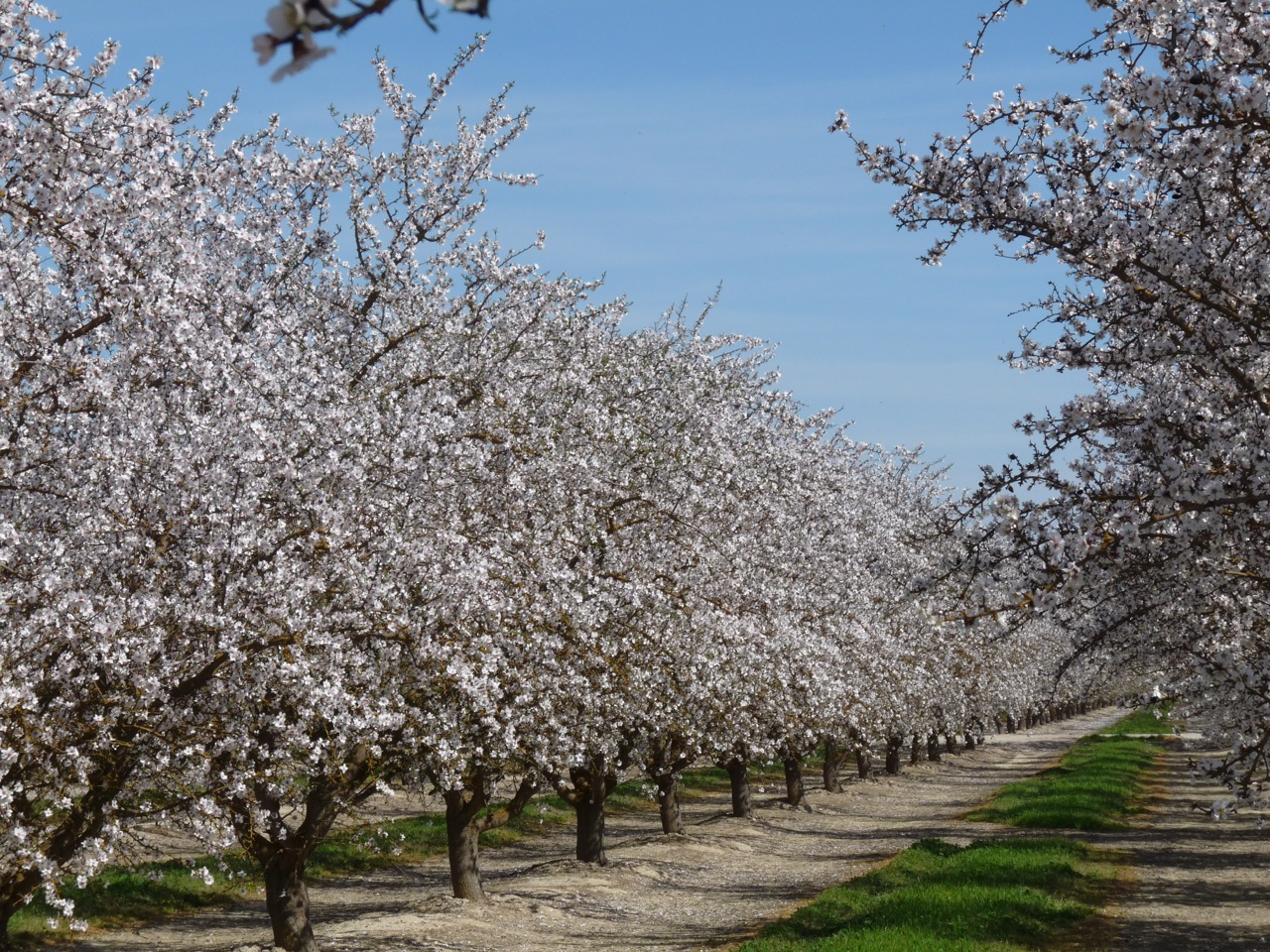
The Hershey Company looks to California almond growers’ for their most important ingredient for their products.

Jeff Beckman is the Director of Corporate Communications with the Hershey Company based in Hershey, Pennsylvania.

“In fact, they’re so important that the Hershey company is the number one purchaser of California almonds in the entire nation. It was Milton Hershey himself who in the early 20th century married almonds with chocolate and discovered something that was unbelievable and consumers today love that product and thats why we sell so many products that are a combination of delicious California almonds and chocolate.” said Beckman.

Beckman mentions the type of partnership that Hershey and the California almond industry have.

“We have a great, long relationship with the California almond industry. In fact in 2012 we opened the largest and most technologically advanced chocolate making factory in Hershey, its our new western Hershey plant,” said Beckman. “Representatives from the california almond industry came out and joined us for that opening ceremony as a sign of their commitment to our company and how important we are to the California almond industry as the number one purchaser.” he added.

Beckman said the California almonds are so important to the Hershey family, they have a team of people with a watchful eye on the state.

“California almonds are so important to us we have people on our sourcing team who are constantly keeping an eye on the California almond crop because really its such an important input to our product. he said. “Their watching the water conditions, their tracking how the pollination season is going, they are always looking at understanding what’s happening out in the Central Valley in California because thats so important to us to know that theres going to be a good almond crop each and every year.” added Beckman.

2016-05-31T19:35:25-07:00June 16th, 2014|

Sustainability Questions From California Officials

At the annual United Fresh Conference in Chicago, which attracts the produce industry from California and all over the United States, there was a talk on sustainability. Could it be just another regulation?

Barry Bedwell is the President of the California Grape and Tree Fruit League in Fresno. He thinks the whole idea of farming sustainability could just be another regulation.

“When you look at sustainability you have to understand that we need to show value and rely on the value by the existing regulatory network. While we may not always agree with has been regulate or to the extent of regulation, it should provide confidence to other third parties particularly our demand-side partners.” said Bedwell

Barry mentions that much of what the sustainability initiative wants is already provided.

“There is compliance with social accountability issues, there is compliance with environmental friendly issues. There is compliance actually with economically viable issues as well. So number one, understand the value of the regulatory system before you go to a new initiative, understand what is already in place thorough regulations.” said Bedwell.

Bedwell says some of the proposals that have been brought forwards have secondary agendas.

“With somebody who comes in and says “Well I want to participate in a food safety initiative” it may be that their primary goal is involved with worker organization, under organized labor. The retailers and demand-side partners should understand that sustainability should not be used as a marketing tool. That there shouldn’t be a rush to “out sustain” one another. Because by doing that and creating further unofficial regulation on the producers you’re going to do the opposite, you’re going to make them less sustainable.” said Bedwell.

“So are message is, sustainability is an absolute positive thing, we probably have been doing it for many many years, what we haven’t been doing is communicating effectively. Can we improve? absolutely.” said Bedwell. “But lets understand what’s already in place, lets understand some of the motives of those that are pushing sustainability. Then also understand the role of the true partnership between the demand and supply sides.”

2016-05-31T19:35:25-07:00June 16th, 2014|

October Hearing Set on Proposed $3.75 Million Fine Against Slaughterhouse

The Colorado River Basin Regional Water Quality Control Board will consider assessing a proposed $3.75 million civil liability penalty against National Beef California, a former beef slaughterhouse in the city of Brawley, Imperial County, when the Regional Water Board conducts a public hearing on the matter on Oct. 27.

The hearing has been rescheduled from its original date of June 19. The exact time and place of the hearing will be announced by the Water Board’s advisory team, which acts as a neutral advisor to the Water Board in administrative civil liability cases, and will be posted on the Board’s web site.

The complaint against National Beef is the result of an investigation that started in early 2013, when the Water Board’s prosecution team filed a complaint against the city of Brawley for chronic violations of its wastewater discharge permit and violation of an earlier cease and desist order.

The order required the city to develop and implement a pretreatment program to deal with industrial discharges. The complaint against the city identified National Beef’s discharge as a significant factor in the city’s violations. In September 2013, the Water Board fined the city $1 million for the violations of its permit and the cease and desist order.

The current civil liability complaint against National Beef alleges that the company violated federal pretreatment standards and requirements in the Clean Water Act, which prohibit an industrial user from introducing into a publicly owned treatment facility any pollutant(s) which cause “pass through” or “interference” with the treatment plant.

The complaint alleges that the facility introduced pollutants into the city of Brawley wastewater treatment plant, causing and/or contributing to chronic violations of the city’s federal discharge permit. The complaint also alleges that in doing so, National Beef avoided over $13 million in compliance costs.

A copy of the complaint against National Beef, and its supporting documents can be viewed here: http://www.waterboards.ca.gov/coloradoriver/national_beef.shtml

The slaughterhouse generated about 12,800 gallons per day of discharge to groundwater through unlined ponds, and 1.62 million gallons per day of industrial wastewater to the city’s wastewater treatment plant. Effluent from the city plant is discharged into the New River.

The New River is a state priority for cleanup because it is severely polluted by sources in Mexico and the Imperial Valley. The New River is a tributary to the Salton Sea. Both the New River and the Salton Sea are “Waters of the United States” and are listed as impaired waters under the Clean Water Act.

In January of this year, National Beef announced that it would be closing the plant, which employed 1,300 people, citing “a declining supply of fed cattle available for the Brawley facility” as a key driver of the decision to close the plant. The plant was closed permanently on May 23.

On March 20, the Water Board adopted a cleanup and abatement order directing National Beef to decommission its onsite wastewater treatment facilities. Prior to that order and the corporation’s announced closure of the facility, National Beef and Water Board staff had been working cooperatively on developing a permit for onsite discharges of wastes by the slaughterhouse, but no Water Board requirements had yet been adopted or imposed. With the closure of the plant, the permit was no longer needed.

“We continue to work closely with National Beef staff to ensure the slaughterhouse’s onsite treatment facility is decommissioned properly, and its onsite ponds are closed in compliance with the Water Board’s directives,” said Jose L. Angel, the Board’s Assistant Executive Officer.

National Beef California, LP, is a wholly owned subsidiary of National Beef Packing Company, LLC, of Kansas City, Missouri, which in turn is a subsidiary of Leucadia National Corporation, Inc. Leucadia National Corporation has reported its shareholders’ equity at more than $6 billion.

The Water Board will consider the allegations, proposed penalty, and all of the relevant evidence and testimony it receives at the hearing. After the hearing, the Water Board will consider whether to affirm, reject or modify the proposed Administrative Civil Liability, including whether to assess additional liability on a $10 per gallon basis, or whether to refer the matter to the Attorney General for recovery of judicial civil liability.

For more information on the Colorado River Basin Regional Water Quality Control Board, visit: http://www.waterboards.ca.gov/coloradoriver/ 

2016-05-31T19:35:25-07:00June 16th, 2014|

Final Cap-and-Trade Budget Includes Climate-Friendly Farming

Source: Renata Brillinger; CalCAN

After months of speculation and debate, Governor Brown and California’s legislature have agreed on how to allocate a total of $872 million in cap-and-trade auction proceeds as part of the state’s FY 2014-15 budget package.

We are pleased to report that the persistent efforts of CalCAN and many partners have yielded results—the deal includes investments in farmland conservation and in agricultural practices that reduce greenhouse gas emissions and sequester carbon.

“It is encouraging to see that the Governor and legislators recognize that agriculture can play a part in addressing California’s climate crisis,” said Rich Rominger, a Yolo County farmer and Secretary of the California Department of Food and Agriculture under Governor Brown’s first tenure. “It is important that agriculture is included from the start of the state’s investments in climate change solutions.”

Most of the cap-and-trade funds go to high-speed rail, clean transportation and land use planning projects known as “Sustainable Communities Strategies.” However, the budget includes over $30 million for agricultural projects that reduce greenhouse gas emissions. Of that, $15 million will support agricultural energy and operational efficiency projects.

$10 million will fund agricultural water use efficiency projects at the farm level, approved in this year’s drought package. Of the $130 million that will go to implementing regional Sustainable Communities Strategies, $6.5 million will go towards agricultural land preservation as a component of integrated land use and transportation projects.

“Many farmers and ranchers want to do their part to protect the environment and climate, whether it’s conserving energy and water, reducing our carbon footprint or producing renewable energy,” said Julie Morris of Morris Grassfed Beef in San Benito County. “With funding for research, technical assistance and financial incentives, it will be easier.”

The deal also specified that high-speed rail, transit and Sustainable Communities Strategies will receive 60 percent of the future funds in on-going, continuous appropriations. The remaining 40 percent, which could reach billions of dollars in future years, will be allocated annually as part of the regular budget process.

This is a good start, and CalCAN will keep working to ensure that the money funds innovative solutions with multiple environmental and health benefits. We will also continue to advocate for larger investments over time in sustainable agriculture and farmland conservation to support farmers and ranchers in addressing one of the biggest threats to California agriculture.

Click here for a joint statement on the cap-and-trade budget deal from a coalition of natural and working lands organizations, including CalCAN.

2016-05-31T19:35:25-07:00June 16th, 2014|

New Jordan Research Center Breaks Ground At Fresno State

by Patrick Cavanaugh


Under clear blue skies, with hundreds of agricultural industry members in attendance, the Jordan College of Agricultural Sciences and Technology at Fresno State broke ground yesterday on a new 30,000 sq. ft. Jordan Research Center, at the corner of Barstow and Woodrow Avenues, designed to foster collaboration among students and faculty in agricultural sciences and technology engineering and science and mathematics. The new research center of Fresno State is scheduled to open in the fall of 2015.

Ground BreakingFresno State President Joseph I. Castro said the world-class Jordan Research Center would provide many opportunities for students. “We are very excited about the Jordan Research Center. It’s going to provide many new opportunities for the next generations of leaders in agriculture, advance the research throughout our region and play a key role in strengthening our economy here in the Valley,” Castro said.

Castro said that the ag industry in California would be there to support that center well. “We are blessed with so many partnerships now with agriculture, and one of my highest priorities is to expand the number of partners, and this Center will help us do that.”

A $29.4 million dollar gift from the Jordan family to the College of Agricultural Sciences and Technology in 2009 made this facility possible. “We are so fortunate to have the Jordon’s as friends. They love agriculture, and they love Fresno State. And we are grateful for their gift.”

The monetary gift is the largest cash gift in Fresno State’s history and among the largest ever in the CSU system.

“My late husband Bud, as well as brother-in-law Lowell, would be so very pleased to see not only the family legacy tied to Fresno State agriculture, but to know that the future of agriculture will be well served by the work to be done in the research center,” said Dee Jordan.

Dee Jordan

Dee Jordan

During the groundbreaking ceremony, Castro also announced three gifts to establish endowments to enhance laboratory spaces inside the building:

Retired Fresno Dentist Harry Moodigian, who walked onto the Fresno State campus in 1956, has given $200,000 in support of a microbiology lab at the center. “I want to see my University in the forefront of research in the field of microbiology. This is a wonderful way of supporting the research program.

And, Dave Watkins, senior vice president of agricultural operations for Loam Spices and Vegetable Ingredients has established a $200,000 endowment to support the interdisciplinary research lab.

“We moved our headquarters to Fresno three years ago, and we immediately began reaching out to the University to build our relationship, established an intern recruiting program, and when this opportunity came along, it was a perfect fit for us,” said Watkins.

Alumni Earl and Beverly Knobloch gave in support of the instrument/robotics laboratory space.

The drought has a tremendous impact on nutrient cycles leading to top management decisions this year beyond agricultural liquid fertilizer recommends of balanced nutrient program to strengthen plants in times of stress which speeds recovery this year’s soil and plant analysis extra importance close attention to residual nitrate levels is critical remember practice responsible nutrient management during this drought here yes you can with agriculture liquid fertilizers@worldliquid.com

This $24 million project will feature open, flexible space designed for collaborative research. Faculty and students from the Jordan College will work alongside colleagues in the Lyles College of Engineering and the College of Science and Mathematics.

“At Fresno State, we want to support advances in the agriculture industry, and we have the opportunity to do that with the Jordan Research Center,” said Castro. “This facility is going to make a tremendous impact in the Valley and around the world. We’ll be able to perform research that will advance knowledge throughout the industry.”

“This is the first-of-its-kind on a CSU campus. Fresno State agriculture will be on the leading edge as we continue to make significant contributions to enhancing production agriculture, food systems and natural resources,” said Dr. Charles Boyer, dean of the Jordan College.

The state-of-the-art center will include wet and dry laboratories and laboratory support space. “For our students, the Jordan Research Center will create an environment where research becomes totally integrated into university life. This will be a place where the region’s greatest minds will enrich our environment and unlock the solution for our greatest challenges,” Boyer said.

“Fresno State specializes in applied research, aligning its resources with the needs of the Central Valley,” Castro said. “The Jordan Research Center is a perfect example of the vision and creativity that will drive Fresno State’s growth.”


For more information, contact Shannon Fast, associate director of development for the Jordan College, at 559.278.4266 or sfast@csufresno.edu. To discuss potential partnership opportunities in the Jordan Research Center, contact Alcidia Freitas Gomes at 559.278.4266 or alcidia@csufresno.edu.

2016-05-31T19:35:25-07:00June 15th, 2014|

CAPCA’s Terry Stark: Biopesticides More Mainstream

Stark Speaks About CAPCA and its Role in the Biopesticide Industry.

By Patrick Cavanaugh, Editor


Terry Stark, President and CEO of California Association of Pest Control Advisors (CAPCA,) told 140 attendees at the Biopesticide Industry Alliance semi-annual early April meeting in Sacramento, what his organization thinks about the softer pest and disease control products.

“CAPCA represents 3,000 members of the 4,000 licensed-PCAs in California.

We have expanded our educational outreach through CAPCA-ED. We run 40 seminars annually throughout the state to aid all license-holders to improve their categories,” Stark announced,” said Stark.

“The regulatory burden pushes us to be better and more advanced,” Stark said. “CAPCA has 16 chapters, and each chapter has a director seated on the state board. My Chairman of the board is Jeremy Briscoe a Certis USA national manager. So I believe CAPCA is very well integrated with the biopesticide industry. Jeremy is the first representative that is a non-retail, non-independent to serve as the chair of CAPCA. This is a big move in the mentality of what we do,” said Stark.

CAPCA has traditionally centered on the San Joaquin Valley – production agriculture – the heart and soul of diversified agriculture and the money. “However, in the last 10 years, the wine industry has taken a step higher than the our other crops. All of a sudden we have Napa, Sonoma, Paso Robles, and southward to Santa Maria and Ventura County.”

Stark explained that everything west of I-5 tended to be the “softer side” of PCAs and chemical use in California. “I say that with respect because the wine industry was looking for ways to use less conventional products, ways to brand both organically and sustainability and with lower tolerances for their products. That caught on solidly seven or eight years ago.” Stark continued, “My largest independent PCAs are between Mendocino and San Francisco.”

“Like my Ventura guys and gals, they use more biological controls by releasing a lot of beneficials,” said Stark. “And it’s hard to come in with a hard-core application and maintain your beneficial populations,” he said.

When Stark was asked to speak at the Biopesticide Alliance meeting, he was asked to talk about perceptions. “I reflected on what I saw as a manager when they hired me to come to CAPCA. You talk about perception of biopesticides, with all due respect to my membership, 30 percent think that it’s one way or the highway.

In the central part of the state, from Kern County and throughout the desert valleys, it’s still spray and run. It’s big business, big acres. But it has its place,” said Stark.

He spoke about California being a hodgepodge of the most invasive species in the world, with many new pests coming in seemingly every week.

“Our entire citrus industry is facing Asian Citrus Psyllid which vectors the deadly citrus greening disease; we just survived the Glassy-winged sharpshooters in the wine industry; and, we’ve got Shot-hole bores coming to avocados. This represents huge production areas,” he said.

CAPCA has recognized that there are new ideas in pest and disease control and has moved towards being able to incorporate other chemistries, pheromones, and other items into the tool chest.


CAPCA’s Aging Demographics

Stark shared some demographics of CAPCA. “In CAPCA meetings, I don’t see a lot of dark-haired people sitting in the room. I don’t see a lot of females sitting in the room.

Our gender is 10-15 percent females,” he said.

Seventy five percent of my membership has 16-plus years of experience as PCAs. CAPCA also manages 1,000 Certified Crop Advisor (CCAs) who focus on nutrient recommendations, and the same demographics carry over to them. Of that, 35 percent have 30-plus years of experience. Do you think many will work past 30 years?

CAPCA’s last membership survey was done in 2010. We are projecting a 20% loss of membership by 2015. And that continues outward in a five-year cycle.

Through the Department of Pest Regulations we are only testing maybe 12-15 percent maximum replacements with young PCAs coming into the cycle.

How do we survive? We are turning to electronics, iPhones, and iPads.

PCAs have to be licensed in California if you are using restricted-use materials, soliciting for sale, and/or acting as an expert thereof. That takes care of the whole sales group too.

So, in biopesticides, you’re outside of that umbrella in most ways. You have some products that you to play with, but overall, that gives a “softer approach” for the younger PCAs to look at.


 Working Areas of PCAs

Sixteen percent of PCAs work in field and row crops; 34 percent in trees & vines, the only ones getting water this year; vegetables at 12 percent; and turf and ornamentals –10 percent. Turf and ornamentals in California drop 50 percent in the last 5 years with the collapse of the housing and commercial real estate industries, plus golf courses, they have had a pullback. So our members have moved to retail and other areas.

If you are in PAC and you are in retail, you represent 30 percent of the industry. Eighteen percent are independents, and that means you truly do your own thing: if you have alfalfa, you have 20,000 acres you’re looking at; if you have citrus, you’ve got 3-5,000 acres; if you have vineyards, you’d better have 2-3000 acres to pay for it—if you want to make big money—and you’re working 7 days a week to do that. Seventeen percent are in-house; these are the Paramount’s and the Boswells of the industry. They hire CCAs and PCAs like full-time employee of the ranch.

The dynamics of I-5 is not moving into the Central Valley or into the southern counties. You have pockets of Los Angeles and Santa Barbara where you have nursery stocks, that‘s always been kind of open to the biopesticides industry and its products.

What I think has made the biopesticide industry successful, beyond all of your research, hard work and marketing, are the opportunities and the new wave of using your thumbs, and twitter, and communications, and Facebook, and social media in general. The outreach that you can do your business on the iPhone and still drive down the road, answering your clients’ questions has enabled the “boutique” industry in the last 5 years to come closer to the mainstream because customers don’t have to do any special work to find out about you. You are in their feed lines of information. These are important tools,” said Stark.

“California is a highly-regulated environment, so electronics has complemented other resources. I think the known fact that many products are less toxic is a huge benefactor,” he said.

“Take the Light Brown Apple Moth, which ended up being a environmental community PR campaign that kicked food and agriculture’s butt in California. And now every fruit tree in Santa Cruz is going to die from the apple moth. You can’t even move the firewood because it will contaminate the rest of the area,” Stark said.

The unknown elements of a pheromone to treat the moth were a big problem because the public did not understand, and the industry took it for granted. “The pheromone is about as soft and appropriate as you can get in the marketplace,” said Stark. “But we need to approach the public in a different way. And I think the biopesticide industry is doing a much better job,” he said.

“I’d be remiss with all of the large companies sitting in the room, the BASF’s, Syngenta’s, Bayer’s, the Valent’s—all have learned to adopt and bring into their tool chest additional products that can complement their conventional materials and usually make the grower more profit,” noted Stark.

“CAPCA doesn’t get into this much, but we have a lot regulatory obligation responsibility to protect the field worker. The toxicity and the life of the product go a long way in how you get back into the field,” he said.

“So, in the biopesticide world, you have a better opportunity of targeting the exact pest you need to target. It’s not a broad-spectrum-type deal. So that gives you the advantage. My PCAs see that– my 50 percent younger side in the house – sees that. And that’s a positive for this industry,” Stark said.

IPM is not a word that is understood until you get to California. CAPCA cannot do anything in his recommendation without being CEQA-oriented (California Environmental Quality Act) must look for alternative uses before any restrictive material can be made; otherwise he is in violation of his own recommendation. IPM, and biopesticide products fit that requirement to make that check mark when they do that.

“In addition, biologicals are lower priced than they ware 7-8 years ago. And that’s good because the grower doesn’t spend a dime more than they have to. If you think PCAs are out there pounding product or fertilizer on, and the farmer is not making any money, just three minutes later in the coffee shop, that guy is fired and another is hired,” Stark said.

“It is important to the sustainability in going forward, when you have a regulatory environment like we do in California. We have a built-in arena here and people are always listening to what can be done better and still make a profit. In my opinion, you are off to the races and biopesticides are mainstream now,” noted Stark.

If you can hit 15-20% of the marketplace, it’s been a great quarter-century run for you to get there and I think the CAPCA membership is looking forward to a long-lasting relationship.

He reminded attendees of the popular CAPCA Conference, Oct. 19-21, 2014 at the Disneyland Hotel in Anaheim. “I have 1,300 attendees and 150 exhibitors. What better place to be than with 800-900 license holders. It’s all relationships. Once you get the relationship, your social media, and your electronics, your product will sell itself,” Stark concluded.

2016-05-31T19:35:25-07:00June 15th, 2014|
Go to Top