About Patrick Cavanaugh

This author has not yet filled in any details.
So far Patrick Cavanaugh has created 1490 blog entries.

Hartnell College Hosts Agroterrorism Training

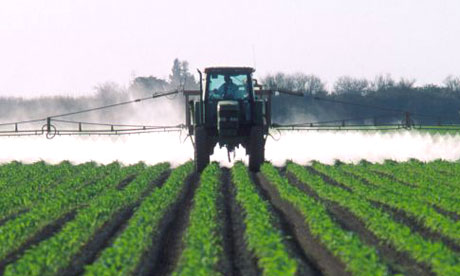
UC Davis has announced that Hartnell College, in the Salinas Valley, is hosting a series of six agroterrorism training courses. David Goldenberg from the UC Davis, Western Institute for Food Safety and Security will be at the helm of these U.S. Department of Homeland Security (DHS) courses.

Goldenberg, Acting Program Manager and Coordinator for Field Training at WIFSS, pointed out that the Agricultural Business and Technology Institute at Hartnell is partnering with WIFSS to conduct the agroterrorism training courses, which kicked off on September 5. These courses emphasize the importance of awareness of and preparedness for disasters that can affect the agricultural industry. Preparedness includes having a response action plan in which all community members and organizations have a coordinated disaster response strategy.

The remaining classes are:

• Oct. 10, AWR 155: Principles of Frontline Response to Agroterrorism and Food System Disasters, 8 a.m. to 3 p.m.

• Oct. 17, AWR 156: Principles of Planning and Implementing Recovery (6 hours), 8 a.m. to 3 p.m.

These agroterrorism courses delivered at Hartnell are geared toward traditional first responders as well as community emergency planners, public health officials, and members of the agricultural community including county officials, local farmers and ranchers who are interested in training addressing potential threats to food safety and food security.
2016-05-31T19:33:22-07:00October 6th, 2014|

Glenn County Farmer on Water Cutbacks for Rice, Nuts

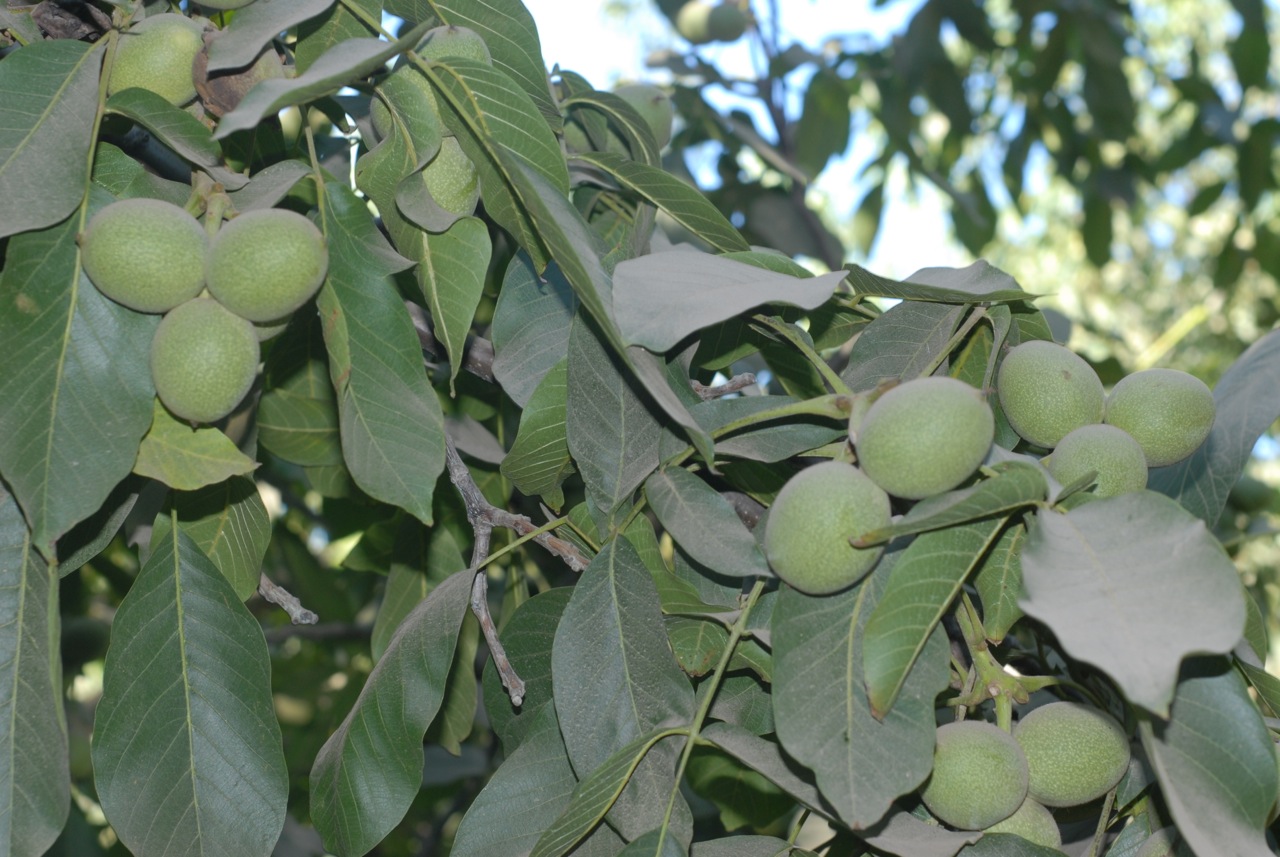
John Garner farms rice and walnuts in Glenn County. Though he is busy harvesting both crops now, Garner says rice acreage was down due to water cutbacks and there was a problem getting the longer season rice varieties in the ground early enough.

“There were cutbacks due to the 75 percent water allocation. That amount of water sounds really good, but we were also unable to plant before May 1st. So, in essence, we were prevented from planting some of the longer-season rice because you have to get those varieties in by April 15th-20th,” said Garner.

Still, Garner said his rice harvest this week is going very well. “My walnut crop had an excellent spring for pollination and a good summer, supposedly a warmer summer. We didn’t have the high temperatures or real strong north winds, so the crop just flourished,” said Garner.

And while the 2013-2014 walnut crop is predicted to be a record, Garner questions how that can be true this year. “I have a good normal crop. There are areas in the state where walnut and almond production are off upwards of 30 percent, and I think that’s due to this drought, the water cutbacks and the lowering of the groundwater tables,” said Garner.

“We were fortunate in our areas because we didn’t have nearly their shortage in water . You win some years, and then you’re on the other end some years,” he said.

2016-05-31T19:33:22-07:00October 4th, 2014|

Palo Verde Valley Prepares for Fall Crops

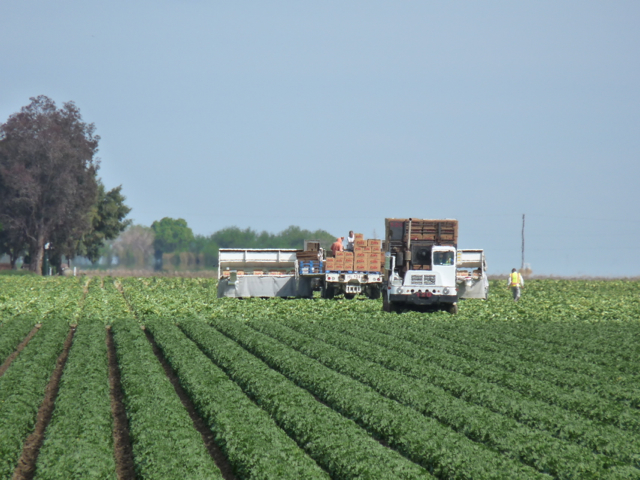
Dr. Vonny Barlow, a UC Cooperative Extension Entomology Farm Advisor in Blythe located in Imperial County, reports the Palo Verde Valley has a lot of activity this time of year.

“Currently we’re transitioning out of the summer crops; temperatures are getting cooler; we’re no longer in the 114° to 116° F zone; and nighttime temperatures are dropping. So we are transitioning to our late fall/winter crops, which is predominantly lettuce in the Palo Verde Valley,” said Barlow.

“A lot of those growers out there are pre-irrigating their fields now to increase soil friability—to break it up so that when they come in and mulch the soil, they can create fine soil and soil particles—because lettuce seed needs good soil contact for it to imbibe water and germinate,” said Barlow.

“The Palo Verde Valley is unique in the desert in that it is a highly productive agricultural region. It’s the second largest alfalfa production in that area outside the San Joaquin Valley, and it actually has greater production than the inner-mountain areas in Northern California. We have plentiful sunshine, good soil types, easily-drained soils, and available water for irrigation, so that’s the trifecta for agriculture,” said Barlow.

2016-05-31T19:33:22-07:00October 3rd, 2014|

IR-4 on Process and Trends of Biopesticides

Michael Braverman manages biopesticides for Rutgers University’s IR-4 Project in Princeton, New Jersey. The IR- 4 Project helps with research to get these safe and effective pest management products registered for use in specialty crops, the cornerstone of California agriculture.

“We have two main objectives,” said Braverman. “We have an efficacy grant program, where we fund researchers all across the United States to conduct field or greenhouse trials involving biopesticides to see how they can fit into real-world production systems. The other part of our program is a regulatory assistance program.  Biopesticides, like any crop protection products on the market, require EPA registration.  We work with university researchers who may have discovered a new organism, a plant extract or whatever it may be, and we help guide them through the EPA registration process,” said Braverman.

“There is certainly a trend towards use of biopesticides,” Braverman observed. “If you notice, major manufacturers—all the biggest companies—are now investing in research or purchasing smaller companies that are involved in the biopesticide market. So it’s really expanding very rapidly,” said Braverman.

2016-05-31T19:33:22-07:00October 3rd, 2014|

Imperial County Breaks Ag Production Record in 2013

The big Imperial County Region had a record year of Ag production value in 2013 of more than 2 billion dollars.

“It’s the first time that we ever hit the 2 billion dollar mark. We hit 2.158 billion dollars this year in production value,” said Linsey Dale, Executive Director of the Imperial County Farm Bureau.  Dale is based in El Centro—the county seat of Imperial County.

“We had a bump in price of cattle last year, we had a bump in the price of some of our forage crops last year, and our onion market went up a bit, broccoli market went up a bit, so there were several different crops that had an increase in price in 2013 over 2012,” said Dale.

Dale says that agriculture drives the economy in Imperial County. “We are the single biggest private employer in Imperial County, agriculture is. It has been since day one and will continue to be. If we lose agriculture here in Imperial county we lost Imperial Valley. We have thousands and thousands of jobs in farm services providers and right in production agriculture, its a tremendous impact,” said Dale.

Dale noted that Imperial County, through the Imperial Irrigation District, has some of the strongest water rights in the state. “We do have a very strong water rights. Water is a key issue for us here, we have very little rainfall, less than 2 inches per year. All of our water comes from the Colorado river, so with drought conditions here in California currently, areas are looking at us to produce that the fruits and vegetables need for the nation, especially for the winter months,” Dale said.

“We produce crops 365 days a year, some of our fields actually have 3 crop rotations. We get cuttings on alfalfa year-round, and again we have that strong water right that is necessary to be able to grow these crops,” said Dale.

2016-05-31T19:33:22-07:00October 3rd, 2014|

Nation’s Ag Co-Ops Set Record for Annual Sales and Income

Source: USDA

Agriculture Secretary Tom Vilsack announced that the nation’s farmer, rancher and fishery cooperatives set a new sales record in 2013, with total business volume of more than $246 billion. That surpasses the previous record, set in 2012, by $8 billion, a 4 percent gain. U.S. co-ops also enjoyed robust job growth over the previous year.

This third consecutive year of record sales by ag cooperatives reflects increased sales in the overall farm economy in 2013. U.S. crop production and livestock sales both increased 6 percent in 2013, while production input (farm supply) sales increased 2 percent.

“These sales and net income records for ag cooperatives, combined with strong gains in employees for 2013, underscore the strength and productivity of the nation’s farmer- and rancher-owned cooperatives. These co-ops play a vital and growing role in the nation’s economy,” Vilsack said.

Secretary Vilsack made the announcement to mark the start of National Cooperative Month in October. He also signed a Cooperative Month proclamation that salutes the nation’s entire cooperative business sector, which includes about 30,000 co-ops. In addition to agriculture, the nation’s co-ops play a major role in electricity and telecommunications services, credit and financial services, housing and in many other sectors of the economy.

Ag co-ops also enjoyed record net income (before taxes) of $6.2 billion, besting the previous high of $6.1 billion, set in 2012. Co-op income is either reinvested in the co-op for needed improvements or returned to the member-owners. It then circulates in local communities.

The number of full-time employees working for ag co-ops climbed by almost 7,000 in 2013, to 136,000, up 5 percent from 2012. Counting seasonal employees, ag co-ops employ 191,000 people.

In addition to marketing and processing their members’ crops and livestock, co-ops are also major players in the farm supply market. Co-op sales of petroleum, feed, seed and crop protectants were all up in 2013. Fertilizer sales declined, the only major farm supply to see sales drop in 2013.

With grain and oilseed prices generally lower in 2014, it appears unlikely that co-ops will set a fourth consecutive sales record when the results are tallied next year. However, livestock, poultry and dairy producers and their co-ops will benefit from lower feed costs, which should offset at least some of the decline in revenue from grain and oilseed sales.

While 33 ag cooperatives recorded more than $1 billion in sales in 2013, 33 percent (726 co-ops) had less than $5 million in sales.

The value of cooperative assets fell in 2013 by almost $1 billion, with liabilities decreasing by $5.3 billion and owner equity gaining $4.5 billion. Equity capital still remains low but is clearly showing an upward trend, with a 15 percent increase over the previous year.

Patronage income (refunds from other cooperatives due to sales between cooperatives) increased by almost 33 percent, to $1.2 billion, up from $900 million in 2012.

U.S. farm numbers remained about the same in 2013 as in 2012, with USDA counting 2.1 million in both years. There are now 2,186 farmer, rancher and fishery cooperatives, down from 2,236 in 2012. Mergers account for most of the drop, resulting in larger cooperatives.

Producers held 2 million memberships in cooperatives in 2013, down about 7 percent from 2012. The number of cooperative memberships is slightly less than the number of U.S. farms, but this does not mean that every producer is a member of an agricultural cooperative. Previous studies have found that many farmers and ranchers are members of up to three cooperatives, so farm numbers and cooperative memberships are not strictly comparable.


2016-05-31T19:33:23-07:00October 3rd, 2014|

CALIFORNIA AGRICULTURE LEADS THE NATION IN FUNDING FOR SPECIALTY CROPS CDFA

State receives more than $19 million in federal grant funds

SACRAMENTO, October 2, 2014 – The United States Department of Agriculture  announced Today funding for the 2014 Specialty Crop Block Grant Program (SCBGP). California received $19.8 million out of approximately $66 million awarded nationwide.

The SCBGP provides grants to state departments of agriculture to enhance the competitiveness of specialty crops, defined as fruits, vegetables, tree nuts, dried fruits, horticulture and nursery crops, including floriculture.

The 60 projects funded under the 2014 SCBGP reflect the diversity of California’s specialty crops across the state. This year’s projects include but are not limited to: creating economic opportunities for specialty crop producers through market development activities; increasing nutrition knowledge; developing local and regional food systems; and improving food access in underserved communities. Other area of focus include developing and implementing beneficial practices on the farm; training and equipping the next generation of beginning farmers; and preventing and managing pests and diseases to minimize threats to specialty crops.

In addition, the California Department of Food and Agriculture partnered with the Center for Produce Safety in the evaluation and recommendation of food safety related projects. These projects represent an ongoing effort to address food safety practices and minimize outbreaks of foodborne illness by proactive research.

2016-05-31T19:33:23-07:00October 3rd, 2014|

Pacific Legal Foundation Appeals to U.S. Supreme Court Over Water Cutbacks Based on Delta Smelt Biological Opinion

On behalf of San Joaquin Valley almond, walnut, and pistachio growers, Pacific Legal Foundation (PLF) filed an appeal TODAY, asking the U.S. Supreme Court to review a Ninth Circuit decision this past March that upheld the Delta smelt “biological opinion” — an Endangered Species Act regulation that has caused devastating water cutbacks in Central and Southern California, worsening the effects of the current drought.

PLF’s petition for certiorari asks the High Court to reconsider — and reverse — the controversial precedent on which the Ninth Circuit relied:  the Supreme Court’s 1978 decision in TVA v. Hill, which gives a blank check for onerous species regulations, “whatever the cost.”

PLF’s appeal:  Regulators broke their own rules by ignoring economic impacts

Listed as “threatened” under the ESA, the smelt is a three-inch fish in the Sacramento-San Joaquin Delta.  In a controversial strategy to help the smelt, regulations under the 2008 “biop” send vast quantities of fresh water directly to the ocean — instead of storing it behind dams or pumping south for use in cities and towns and on farms.  However, the smelt hasn’t improved — but the economy has suffered, with even more severe effects as the natural drought has set in.

PLF has been battling the Delta smelt water cutbacks for many years, and once before sought Supreme Court review, in our separate challenge based on the Commerce Clause.

PLF’s current case is based on the fact that the U.S. Fish and Wildlife Service violated its own regulations in drafting the Delta smelt biop.  Specifically, the biop’s drafters ignored the potential harms — even though they were supposed to take economic considerations into account.

Damien M. Schiff, Principal Attorney, Pacific Legal Foundation's National Litigation Center

Damien M. Schiff, Principal Attorney, Pacific Legal Foundation’s National Litigation Center

“Under the U.S. Fish and Wildlife Service’s own rules, officials must consider economic impacts of proposed ESA regulations,” said PLF Principal Attorney Damien Schiff.  “But with the smelt biop they bypassed this requirement.  We’re asking the Supreme Court to call them out for not making good on their legal duty — and on their duty to the public interest.

“The economic impacts that regulators ignored have been tremendous — and tremendously negative,” Schiff continued.  “Even before the drought, pumping restrictions fallowed hundreds of thousands of acres of farmland, contributing to unemployment of 40 percent in some rural communities.  In Southern California, we saw what amounts to a Delta smelt tax, with water rates hiked by 17 percent or more in some areas.

“The biop has also worsened the impacts of the drought,” he added.  “It reduced the amount of water that was stored when we had ample rainfall and should have been saving for the dry times.”

PLF asks Supreme Court to help drought-stricken Californiaby rejecting the Delta smelt biop — and the “anti-human” TVA v. Hill

In 2010, then-U.S. District Court Judge Oliver W. Wanger, of Fresno, struck down the Delta smelt biop, holding that it had been drafted “arbitrarily and capriciously,” with “sloppy science and uni-directional prescriptions that ignore California’s water needs.”

However, this past March, a divided Ninth Circuit panel reversed Wanger’s order that the biop be rewritten.  Although the Ninth Circuit acknowledged that the biop is a “chaotic document,” poorly reasoned and written, the court cited TVA v. Hill in upholding it.

“The Ninth Circuit’s ruling was another example of the anti-human bias of TVA v. Hill and its staggering assertion that species protection takes absolute precedence over all other considerations,” said Schiff.  “As California suffers a third year of drought, we are asking the Supreme Court for relief from illegal regulatory cutbacks on water — and from the pernicious judicial precedent that is used to justify them.

TVA’s indifference to the welfare of human beings was a misreading of the Endangered Species Act from the first, but it’s more incorrect than ever today,” Schiff said.  “Ironically, the Ninth Circuit’s decision undercuts Congress’ attempts to temper TVA’s extremism.  Congress added a framework to the ESA requiring ‘reasonable and prudent alternative[s]’ when protecting species.  The FWS’s rule for considering economic impacts furthers this purpose of bringing balance to the process.  Yet the Ninth Circuit has permitted the agency to violate that rule and ignore the devastating impact of water cutbacks on families, farms, businesses, and the California economy.

“In recent years the U.S. Supreme Court has begun to back away from TVA,” Schiff noted.  “The Delta smelt case offers the court an opportunity to help drought-scorched California — and to finally overturn this radical and harmful precedent.”

PLF represents Central Valley farmers

In all of PLF’s legal efforts against the Delta smelt regulations, PLF attorneys represent three farms in California’s San Joaquin Valley that have been seriously affected, since 2008, by the water cutbacks:  Stewart & Jasper Orchards (an almond and walnut farm); Arroyo Farms (an almond farm); and King Pistachio Grove (a pistachio farm).  PLF represents the clients in this case — as in all our cases — free of charge.

The case is Stewart & Jasper Orchards v. Jewell.  PLF’s petition for certiorari, a video, a blog post, and a podcast, are available at:  www.pacificlegal.org.


About Pacific Legal Foundation

Donor-supported Pacific Legal Foundation (www.pacificlegal.org) is a nonprofit public interest watchdog organization that litigates for limited government, property rights, and a balanced approach to environmental regulation, in courts across the country.  PLF represents all clients free of charge.

2018-04-23T12:23:43-07:00October 1st, 2014|

WIFSS Animals in Disasters Courses Piloted in Sonoma

2015 WIFSS Animals in Disaster Course Series

Source: Chris Brunner; UC Davis Western Institute for Food Safety and Security


Without coordinated response, awareness and resources, those animals left behind in a natural or man-made disaster most often do not survive. The Western Institute for Food Safety and Security (WIFSS) offers a series of Animals in Disasters courses that help prepare first responders and community members for animal-related emergencies.

WIFSS instructors, Tracey Stevens, deputy director, Animals in Disasters Project, and Dr. Michael Payne, dairy Ooutreach coordinator, piloted two new Department of Homeland Security Animals in Disasters courses this summer in Sonoma, California.

Class participants in “Emergency Animal Sheltering: Veterinary Considerations” learned skills and knowledge on how to establish an emergency animal shelter, and how to safely shelter and reunify animals that have been displaced during a disaster. In the “First Responder Guidelines for All Hazards Large Animal Emergency Evacuation” class, emergency personnel were provided instruction on safe approaches to emergency evacuation of large animals.

First responders, county officials, animal services personnel, veterinarians and other individuals can look forward to the 2015 WIFSS Animals in Disaster Course series which, in addition to the two courses above, will include:

  • Guidelines for Establishing an Emergency Animal Shelter: Veterinary Considerations – CE approved
  • Loose Livestock, Injured Wildlife and Humane Euthanasia of Animals for First Responders
  • First Responder Guidelines for Equine Emergencies – Level 1
  • Veterinarian Integration into Multi-Agency Emergency Equine Rescue and Disaster Response – CE approved

View WIFSS Animals in Disasters for announcements of course dates and registration information.

2021-05-12T11:17:15-07:00October 1st, 2014|

AG CRIME ALERT: HUNDREDS OF FOSTER FARMS CHICKENS SLAUGHTERED

Investigators with the Fresno County Sheriff’s Office Ag Task Force are asking for the public’s help in identifying the suspects responsible for a Foster Farms facility burglary and hundreds of Foster Farms chickens slaughtered.

On September 20, shortly before 8:30am, deputies responded to the facility located at 3691 W Swanson Ave in Caruthers regarding the burglary.

The investigation revealed the suspects pulled back a portion of the fence and entered the chicken shed. Once inside, the suspects used a golf club, and possibly another similar type instrument, to slaughter the birds.

Foster Farms officials advised nine hundred twenty chickens were killed during the incident. They put the loss at approximately five thousand dollars.

Foster Farms is now offering a reward for information leading to the arrest and prosecution of the persons responsible for the crime. Anyone with information on this investigation is asked to contact Ag Task Force detectives at 559-600-8150, the Sheriff’s Office at 559-600-3111, or CrimeStoppers at 559-498-STOP(7867).

The Fresno Sheriff’s Ag Task Force’s primary focus is to investigate and suppress all agriculture-related and all metal theft-related crimes in Fresno County, its secondary objective is to prevent ag crime through education and communication with partners in the ag industry. ACTION Network Ag Crime

The  Fresno Sheriff’s Ag Task Force also participates in ACTION (Ag Crimes Technology Information & Organization Network), an association of 13 central California counties that regularly share information, support and technology to battle Ag and rural crime. Ag criminals often freely move from one County to the next, and this association has been very effective in bring criminals to justice who live in one County and commit crimes in another County.

You’ll find useful anti-Ag-crime tips on the Office of the District Attorney County of Tulare website and information about the Owner Applied Number (OAN) Program.

Another great resource is the California Rural Crimes Prevention Task Force website.

2016-05-31T19:33:23-07:00October 1st, 2014|
Go to Top