About Patrick Cavanaugh

This author has not yet filled in any details.
So far Patrick Cavanaugh has created 1490 blog entries.

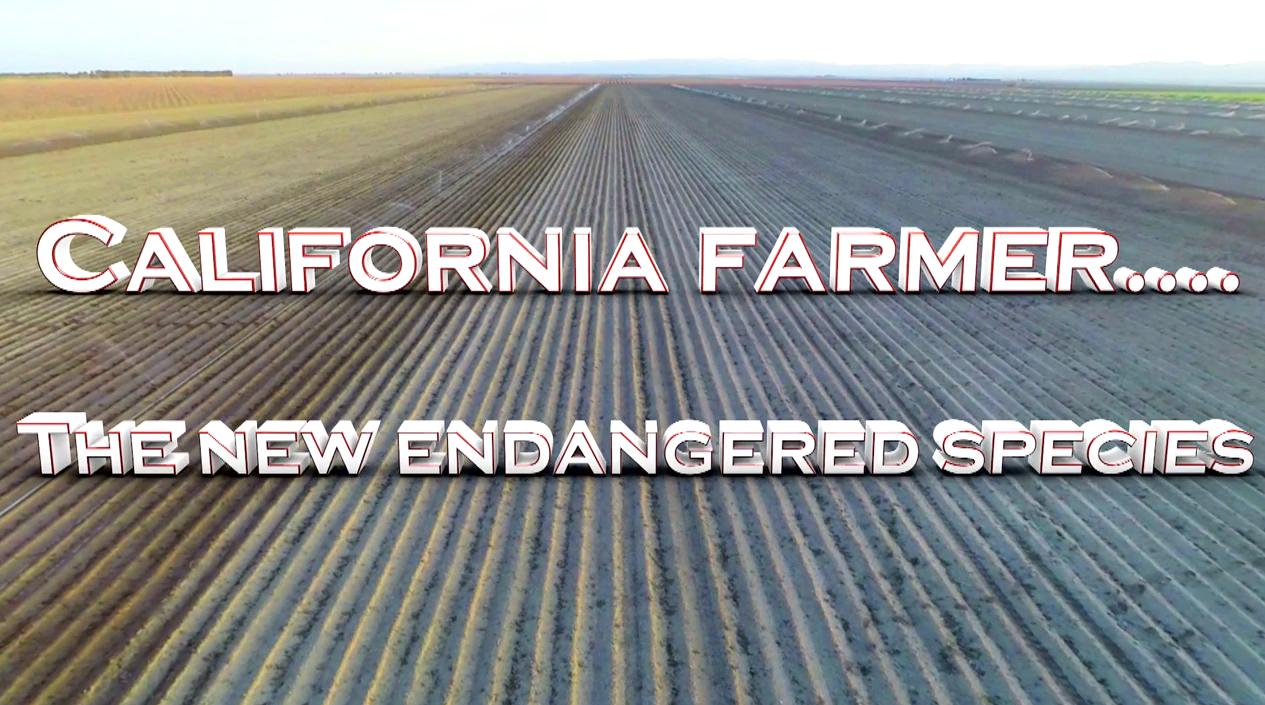
California Farmer… ‘The New Endangered Species’

Ambitious filmmaker documents plight of the California Farmer from a new perspective

Simba Temba Hove grew up on a farm in the rural area of Zimbabwe in Africa. “[Farming] is all we did in my childhood. My father had ten kids, and all we did in the morning was wake up, go to the fields, work the fields the whole day and into the evening, and then go home. Everyday we did this, every day except Sundays. So, farming is very close to me. That’s all we did. I was in the rural area of Africa, so we were all subsistence farmers.”

Simba Temba Hove

Simba Temba Hove

Hove is intimately aquainted with droughts, having lived through the devastating 1982 drought in his country: “When the drought hits, there is nothing that you can do. There is no water system, and everyone is on their own. The drought hits your livestock, your fields, your plantations, your wells, your rivers, everything is gone.” Soon after, Hove came to America, went to college and became a registered nurse in the Bay Area.

When this epic drought hit California, Mr. Hove decided to combine his interest and experience with drought with his passion for filming. “The drought is the worst in a hundred years. If it were not the worst in a hundred years, I probably wouldn’t have filmed it…I want to see how the American farmer survives.”

He spoke to several farmers including Joel and Todd Allen and Vaughn Von Allman of Firebaugh in western Fresno County.  Also prominent in the film is Gayle Holman, public affairs representative for Westlands Water District in Fresno.

Simba Temba Hove, left, with those in Movie

Simba Temba Hove, left, with individuals featured in movie

Hove used these interviews to let African farmers compare their experiences: “I wanted to do a documentary like this one so I could show African farmers. When I first talked to Joel, my idea was to show this to African farmers so they could see what an American farmer’s life is like through the drought, and how he survives.”

Hove was shocked that California adheres environmental restrictions to save an endangered species of fish, the Delta Smelt, even in one of the worst draughts on record: “Honestly it would be unthinkable in Africa—to protect an endangered species when the draught is that bad. In Africa it is all about survival, it’s all about human survival.”

He kept thinking how this situation would play out in Africa, “Everyone would think you’re are crazy. Everyone would think you were out of your mind to think of protecting an endangered species like a fish.”

“California Farmer… ‘The New Endangered Species'” is a riveting and powerful documentary film that illustrates the challengers and the struggles faced by Central California Farmers and their communities.

Check back here to find a screening near you. To see a trailer of the film go to You Tube: https://www.youtube.com/watch?v=LOk3PyOWT5M

2016-07-23T17:03:02-07:00November 10th, 2014|

Westlands Water District Corrects LA Times Errors with Full Page Ad

LA Times Wrongly  Attacks Westlands and Refuses OP ED Correction

The Los Angeles Times recently published an intensely critical article about Westlands Water District, which recited many of the false, misleading, or outdated claims made by some of our critics over the years. The Times’ editors refused to print an Op-Ed that the District offered in response. And so the District has taken out a full-page advertisement in the Times TODAY to provide readers with a better understanding of the issues facing Westlands and how we are addressing them. A copy of the advertisement is attached.

I wanted to let you know immediately about this action.

Tom Birmingham

General Manager of Westlands Water District

Westlands’ LA Times Ad

A Little Straight Talk About Agriculture,Saving Water and Drainage

Statement from Don Peracchi, President of Westlands Water District

Westlands

Source: Westlands Water District (wwd.ca.gov)

As the largest public irrigation district in the United States, Westlands Water District draws a lot of attention as well as the criticism that sometimes comes with its successes. This year, one of its most persistent critics, George Miller, is retiring after 40 years in Congress, and to mark the occasion, the Times’ recently unpacked a trunkload of his oft-repeated complaints and concerns about the District.

Some parts of this catalog identify serious issues that were long ago resolved. Others involve legitimate problems which we are still trying to address. And, like many things involving California water, a few are pure, political invention.

The article’s fundamental charge is that Westlands is simply “in the wrong place.” One might make the same complaint about dredging natural marshes in California’s Delta to grow crops in the middle of a saline estuary. Or attack the folly of installing vast farms on the desert lands of the Coachella and Imperial valleys. Or stranger still, decry building a great city on the arid plain where Los Angeles now stands. The point is, these endeavors and dozens more helped to create the prosperity of California by linking our communities together with a modern water system.

The reality is that Westlands is in the ideal place. Indeed, the Central Valley of California occupies the only Mediterranean climate in North America. Weather conditions, rich soils, and the arrival of water in the mid-1960s, have transformed the area into the most productive farming region in America. The communities that have grown there as a result, the thousands of businesses and tens of thousands of people whose livelihoods depend upon agricultural productivity, are not “in the wrong place.” They are at home.

The most persistent criticism of Westlands’ role in this transformation has to do with the influence of “corporate agriculture.” That may remain a concern for some parts of California, but not in Westlands or any of the other farming region served by the federal Central Valley Project. When Westlands was created in 1952, major industrial interests, including Standard Oil of California and Southern Pacific Railroad, did indeed own large tracts of land within its water service area.

But that ended in 1982 with the passage of Congressman Miller’s Reclamation Reform Act. That act redefined the qualifications for receiving water from a federal reclamation project; as a result, large corporate entities sold out, the large tracts were broken up, and today in Westlands there are nearly 2,250 landowners and the average farm size is 710 acres. “Corporate agriculture” has lost its meaning. Any corporate structure for today’s family farmers in Westlands is likely to have a mom as its vice president and her child as its treasurer.

Water use remains a constant concern for our farmers. That’s why farmers in Westlands have invested more than $1 billion in water saving techniques and technology. Indeed, even Westlands’ harshest critics have acknowledged that the men and women who today farm in Westlands are among the most efficient users of irrigation water in the world. Westlands is a leader in water conservation, and agricultural experts from all over the world come to the District to learn how its farmers are able to accomplish so much with the limited, and often uncertain, water supplies they have to work with.

Our interest in water use efficiency has become even more important in the 22 years since Congressman Miller’s Central Valley Project Improvement Act, and a host of new regulatory restrictions redirected more than a third of the water that cities and farms used to receive from the federal project, dedicating it instead to serve a wide range of new environmental purposes. Today, on an annual basis, the federal project manages more than 1.5 million acre-feet of water for fishery flow, waterfowl habitat, to protect listed species, and other environmental uses.

In hopes of restoring reliability to the water system as a whole, Westlands is working with the Metropolitan Water District of Southern California and other public water agencies throughout the state to support Governor Brown‘s Bay Delta Conservation Plan.

Drainage was a major issue on the westside of the San Joaquin Valley for decades before Westlands’ creation. That is why when Congress authorized the construction of the San Luis Unit of the Central Valley Project, it mandated that the Bureau of Reclamation provide Westlands with both a water supply and a drainage system. Initially federal officials planned to dispose of the drain water in the Delta. But Congress stopped that project when the drain being built by Reclamation reached Kesterson, and it was Washington as well that decided to designate this new terminus for agricultural waste as a wildlife refuge.

The resulting biological catastrophe should have been predictable. In the years since, the drainage system in Westlands has been plugged, and not a drop of drain water has left Westlands after 1986. Instead, Westlands has helped to fund the development of new methods for recycling drain water. And it has taken nearly 100,000 acres of the most vulnerable farmland out of production. Some of those lands are being converted to solar power development, with the support of numerous environmental organizations.

The drainage problem, however, persists. Federal courts, including the Ninth Circuit Court of Appeals, have repeatedly ordered that federal officials fulfill their obligation to provide drainage. But even though Westlands farmers pay every year for drainage service, the government has done nothing to resolve the problem in Westlands. And the government is facing a mandatory injunction, which it estimates will cost more than $2.7 billion to satisfy.

To avoid that cost, the government approached Westlands to assume the responsibility to manage drainage water within its boundaries. In addition, Westlands would compensate those landowners who have been damaged by the government’s failure to act. As part of a settlement, which is not yet final, Westlands would receive some financial consideration, albeit significantly less than the cost of performing the obligations that Westlands would assume. But there is nothing secret about either the negotiations or the proposed settlement. In fact, federal officials and Westlands have briefed interested Members of Congress and non-governmental organizations on the proposal. And there is no process that is more public than the process that federal officials and Westlands will have to pursue to obtain the congressional authorization needed to implement the proposed settlement.

We remain hopeful that these ideas can still form the basis for a long-term resolution of the drainage debate. This would put an end to more than fifty years of litigation, relieve the federal taxpayers of a substantial obligation, and enable us to move forward with an environmentally sustainable approach to the problem.

Whether that happy outcome would also put an end to the criticism of Westlands, however, is not for us to say.

Don Peracchi was born in Fresno, California to second generation Northern Italian immigrants. His family has lived and worked in Central California over 100 years. He has been farming since 1982 alongside his wife, two sons and daughter in Westlands. He has been involved in career-related board positions including banking, insurance, agriculture and water. He currently is the Board
President of Westlands Water District.

2016-05-31T19:32:16-07:00November 9th, 2014|

Growing Figs for 33 Years at Maywood Farms

Farming Niche Organic Figs with Passion

By: Kyle Buchoff; CalAgToday reporter

Growing up in the Bay Area, Bob Steinacher learned how to harvest and dry apricots on his family’s one-acre plot in the Santa Clara Valley. His family maintained the plot as a hobby, but when houses began replacing orchards there, he decided he didn’t want to leave farming. After graduating from UC Davis, he began farming figs and walnuts full-time in Corning, in Tehama County.

tehama-figs“I’ve had Maywood Farms now for 33 years. My family helped me get started, and we’ve been very successful at what we do.” In addition to growing and harvesting 172 acres of organic figs, Steinacher fresh markets his fruit all over the country. “We have 50 acres of conventional walnuts as well,” he added.

Steinacher’s fig farming operation is unique: “We farm the most northern commercially grown figs in the country as Corning has the same weather as the Fresno area.  We also have to worry about late spring frost and early fall rains, but we can weather that. We have wind machines installed for frost protection.”

Waxing nostalgic about his career, Steinacher reflected, “I have learned a lot over the last 33 years of doing this. I had no background in farming other than a desire to do this. I worked for other orchardists and down at a high school farm when I got out of college. I’ve learned a lot by the seat of my pants.”

“We’ve been very successful,” he continued, “because we’ve found a niche with the organic fresh figs. The fig market has been growing ever since we have been in it, and the organic market—on top of that—is growing very quickly as well.”

For more information, please visit the Maywood Farms’ website.


2016-05-31T19:32:16-07:00November 8th, 2014|

Looking ahead – December is Farm to Food Bank Month

By: Monique Bienvenue; Social Media Manager/Reporter

California produces one half of the nation’s fruits, nuts and vegetables and is also the largest dairy producing state. Yet in California, the nation’s largest agricultural producer, one in four children and one in six adults regularly go hungry. Join the California Department of Food and Agriculture, the California Association of Food Banks, and CA Grown  in combating hunger.

This is why December is ‘Farm to Food Bank Month’. It is an opportunity to not only recognize the great work that is occurring on an ongoing basis – Ag Against HungerHidden HarvestYoung Farmers and Ranchers, and Farm to Family – but also provides a chance for California farm families to give back to their communities.

CDFA is working in collaboration with its State Board of Food and Agriculture to try to increase annual farm-to-food bank donations to 200 million pounds by next year.

Help join the cause and participate at our upcoming Farm to Food Bank event on Wednesday, December 3rdfrom 10 a.m. to 11 a.m. at the Second Harvest Food Bank in San Jose.  Let’s work to end hunger in California!

2016-05-31T19:32:16-07:00November 7th, 2014|

November Is Alzheimer’s Disease Awareness Month–Think Walnuts!

By: Monique Bienvenue; Social Media Manager/Reporter

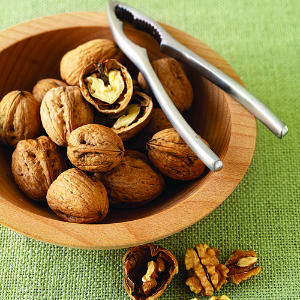
A new animal study published in the Journal of Alzheimer’s Disease indicates that incorporating walnuts into your diet may reduce the risk of getting Alzheimer’s disease.

Research led by Abha Chauhan, PhD, head of the Developmental Neuroscience Laboratory at the New York State Institute for Basic Research in Developmental Disabilities (IBR), found significant improvement in learning skills, memory, reducing anxiety, and motor development in mice fed a walnut-enriched diet. 

The researchers suggest that the high antioxidant content of walnuts (3.7 mmol/ounce) may have been a contributing factor in protecting the mouse brain from the degeneration typically seen in Alzheimer’s disease. Oxidative stress and inflammation are prominent features in this disease, which affects more than five million Americans.

“These findings are very promising and help lay the groundwork for future human studies on walnuts and Alzheimer’s disease – a disease for which there is no known cure,” said Dr. Chauhan. “Our study adds to the growing body of research that demonstrates the protective effects of walnuts on cognitive functioning.”

The research group examined the effects of dietary supplementation on mice with 6 percent or 9 percent walnuts, which are equivalent to 1 ounce and 1.5 ounces per day, respectively, of walnuts in humans. This research stemmed from a previous cell culture study led by Dr. Chauhan that highlighted the protective effects of walnut extract against the oxidative damage caused by amyloid beta protein. This protein is the major component of amyloid beta protein that form in the brains of those with Alzheimer’s disease.

Someone in the United States develops Alzheimer’s disease every 67 seconds, and the number of Americans with Alzheimer’s disease and other dementias are expected to rapidly escalate in coming years as the baby boom generation ages.

By 2050, the number of people age 65 and older with Alzheimer’s disease may nearly triple, from five million to as many as 16 million. Estimated total payments in 2014 for all individuals with Alzheimer’s disease and other dementias are $214 billion.

This study was supported in part by funds from the California Walnut Commission and the New York State Office for People with Developmental Disabilities.

2016-05-31T19:32:16-07:00November 6th, 2014|

Mooney Farms, a California Produce Success Story

By Kyle Buchoff, CalAgToday reporter

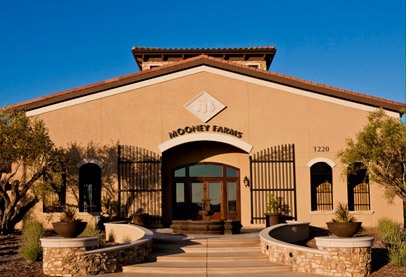
After 25 years of hard work, Mooney Farms has taken its place as the #1 sun-dried tomato brand in the U.S.

The processing tomato industry is huge in California, comprising almost 100% of the US total. Farmers plant almost 270,000 acres of crop each year and the total value hovers around one billion dollars. These tomatoes are used in ketchup, salsa, sauces, dried tomato products and other foodstuffs.

Mary Mooney, owner of Mooney Farms in Chico, a premium manufacturer of sun-dried under the Bella San Luci brand, told us the rags-to-riches story of the brand. “We started about 25 years ago, actually on the side of the road. We went to farmers markets, and our first customer was Costco. We delivered one pallet, and before we knew it, we were their number one item and our products were in every Costco all over the world. So, with an interesting beginning, we jumped into the fire, and now after 25 years we are the leading producer of sun-dried tomatoes in America!”Bella Sun Luci

Mooney described the evolution of their product line, “We started with the original sun-dried tomato and olive oil pack, like in Italy, but we’ve gone into wonderful pestos, ground up with sun-dried tomatoes, walnuts and parmesan cheese. Our latest venture has been to promote the flavor of sun-dried tomatoes, whether BBQ-smoked, or basil-flavored. Customers really love the convenience and the variety.”

Mooney is proud to make quality products from the best California produce, “You know, I love working in CA. I was born and raised in Sonoma before moving to the Chico area to run the family company. All of our products are from California. We even have our own California olive oil ranch. We are enjoying all the Mediterranean-style foods, but we’re able to use the bounty of Northern California to bring that to the public. ”

“Just from a personal standpoint,” said Mooney, “I love the produce industry, working in it and bringing these products to market because produce is where consumers look for the healthiest items and we are excited to provide them. ”

2016-05-31T19:32:16-07:00November 6th, 2014|

BREAKING NEWS: Two New ACPs Found in One Trap Near Exeter

CDFA Has Saturated Exeter Area with Extra ACP Detection Traps

The Tulare County Agricultural Commissioner’s offices announed TODAY that two additional Asian citrus psyllids (ACP) have been detected on one trap south of the city of Exeter. The latest interceptions were confirmed by the California Department of Food and Agriculture (CDFA). Maps and current information are available on the Tulare County Agricultural Commissioner’s website.

CDFA has already begun to saturate the affected areas with detection traps in order to determine the extent of any infestation.The United States Department of Agriculture’s Animal and Plant Health Inspection Service (USDA-APHIS) and CDFA will work collaboratively to determine what steps are taken next.

The ACP is an invasive species of grave concern because it can carry the disease huanglongbing (HLB), also known as citrus greening. All citrus and closely related species are susceptible hosts  for both the insect and the disease. There is no cure once a tree becomes infected. The diseased tree will decline in health,producing bitter, misshaped fruit untilitdies. To date, HLB has been detected on just one residential property in the Hacienda Heights neighborhood of Los Angeles.

Tulare County Ag Commissioner Marilyn Kinoshita said that her staff will continue to support the efforts of our $750 million citrus industry, as well as our residential citrus owners. “I want to emphasize that citrus fruit is safe to eat and the disease is not harmful to human health,” said Kinoshita.

Residents in the area who think they may have seen ACPs are urged to call CDFA’s Pest Hotline at 1-800-491-1899 or the Tulare County Agricultural Commissioner.

Media inquiries related to technical questions about Asian citrus psyllid and Huanglongbing (HLB) disease are encouraged to contact Katie Rowland, Account Coordinator for Nuffer, Smith, Tucker Inc. at (661) 817-3638.

The best way to fight HLB is to suppress the spread of ACPs which can carry it. So, California Citrus Research Board hired Nuffer, Smith, Tucker, (NST) a public relations firm, to raise awareness of ACPs and HLB, especially among the many California homeowners with backyard citrus trees who may unknowingly be harboring the pest, and to encourage the public to take necessary steps to save California citrus.


2016-05-31T19:32:16-07:00November 6th, 2014|

Student Inventors Take Grand Prize

Source: Pat Bailey; UC Davis

A student team composed of some of the best and brightest young minds at the University of California, Davis,  took the grand prize in the finals of the global iGEM (International Genetically Engineered Machines) competition in Boston. The team also won the Best Policy and Practices Advanced Presentation Award.

The UC Davis students, all undergraduates, placed tops in what is known as the “overgraduate division.” A team from the University of Heidelberg was awarded the grand prize in the “undergraduate division.”

The competition, which this year featured 245 teams from Asia, Europe, Latin America and North America, annually challenges student teams to design and build biological systems or machines and present their inventions in the international competition.

The UC Davis team spent several months building a high-tech, palm-sized biosensor to quickly evaluate the chemical profile of olive oil. Their creation provides a prototype for quickly and accurately detecting low-grade or adulterated olive oil.

The UC Davis team is composed of undergraduate students Lucas Murray, Brian Tamsut, James Lucas, Sarah Ritz, Aaron Cohen and Simon Staley, with student Yeonju Song serving as an alternate or “shadow” team member. A team of faculty advisers guided the students. For more on the innovative olive oil biosensor and the iGEM competition visit, click here.

2016-05-31T19:32:16-07:00November 4th, 2014|

Spice World Garlic is Largest Domestic Grower/Supplier

Spice World Garlic Supplies Consumer Needs


By Patrick Cavanaugh, CaliforniaAgToday.com Reporter

Founded in 1949, Spice World farms in the San Joaquin Valley for coast-to-coast distribution of garlic products. Today they are the largest supplier of garlic to America’s supermarkets in all 50 states. This is all part of the bounty that Central Valley farmers supply consumers around throughout the U.S.

Louis Hymel, director of purchasing and marketing at Spice World’s corporate headquarters in Orlando, Fla., noted that farming garlic in the Central Valley is tough with the lack of water availability. “We have a big challenge in finding water and we are moving to different parts of the state where water is,” said Hymel. “We have moved to production areas in the north. It is a challenge for the whole industry.”

“We hope to have more rain and snow this season as we definitely need it,” said Hymel.

Garlic is an interesting back-to-back crop; it was harvested in late summer and the 2015 crop has already been planted. “We never stop from the point of harvesting our seed up in Oregon, then transporting it down, then cracking it for replanting in the San Joaquin Valley,” said Hymel. “We also need to decide on how much to replant in Oregon for the next year’s seed production. Finding the areas where we need to plant for next year’s production it important.”

Spice Word is very diversified in their garlic product line, noted Hymel. “We produce garlic in every form possible from the whole bulbs to whole peeled to ready-to-use garlic to squeezed garlic. We look to what the consumers are looking for in terms of convenience.

“We try to make it so consumers get the garlic in the form that they want and we also provide a lot of recipes,” Hymel said.

2016-05-31T19:32:16-07:00November 4th, 2014|

Helene Dillard Hits Stride as Dean of UC Davis College of Ag  

By Patrick Cavanaugh, Cal Ag Today Reporter

Dr. Helene Dillard, the new dean of the College of Agricultural and Environmental Sciences at UC Davis appointed this past January 2014, commented at the  Produce Marketing Association Annual Meeting last month in Anaheim, that she has very well-defined goals for the students in her department.“One of my goals is to make sure that we are giving our students the very best education that we can possibly give them, and also to help them see envision new career paths,” Dillard. “So many of our students arrive and are not sure what they want to do, but they know that they are interested in food and agriculture.”

Helene Dillard, dean of University of California, Davis, College of Agriculture and Environmental Sciences

Helene Dillard, dean of University of California, Davis, College of Agriculture and Environmental Sciences

Dillard noted that when she left high school, she knew that she wanted to be a scientist, but she had no idea that she would one day become a plant pathologist, working on fungal diseases on lettuce. “We have more than 30 majors in our college, which gives our students so many opportunities,” she said.

“I also want to help our students realize just how big California agriculture is,” said Dillard. “It’s important that they know the breath and depth of the state’s ag industry and help them to appreciate this $45 billion industry,” she said.

Dillard is also interested in internships for students. “I want to make sure our students get their toes in the water for potential jobs and see the high technology involved in  agriculture–that it’s not just about shovels,” she said.

She said students get a lot of hands-on experience at the university, with more than 3,000 acres of farmland for students to work with. “It’s different when you do some experiments on the university farm, versus going out in the real world and do it on a bigger scale. So the goal is to get them to practice on the university farm and then get out to a farm for an internship.

Dillard said another exciting thing about UC Davis is that the university is at a stage where it is hiring a lot of new people. “We currently have 15 active searches for new faculty, which is really exciting as these people come from all over the world,” she said.

2016-05-31T19:32:16-07:00November 4th, 2014|
Go to Top