Apple Commission Joins Listeria Outbreak Investigation in Caramel Apples
California Victim Represents the First Wrongful Death Suit in this Listeria Outbreak
By Laurie Greene, CalAgToday reporter and editor
A portion of Los Angeles County has been placed under quarantine for the oriental fruit fly (OFF) following the detection of nine adult OFF in an unincorporated area of Los Angeles County near the City of Inglewood.
The quarantine zone in Los Angeles County measures 81 square miles, bordered on the north by Avalon Boulevard; on the south by E Victoria Street; on the west by S La Cienga Boulevard; and on the east by California Avenue. A link to the quarantine map may be found here: www.cdfa.ca.gov/plant/go/offq.
To prevent the spread of fruit flies through homegrown fruits and vegetables, residents living in the fruit fly quarantine area are urged not to move any fruits or vegetables from their property. Fruits and vegetables may be consumed or processed (i.e. juiced, frozen, cooked, or ground in the garbage disposal) at the property where they were picked.
To help prevent infestations, officials ask that residents do not bring or mail fresh fruit, vegetables, plants, or soil into California unless agricultural inspectors have cleared the shipment beforehand, as fruit flies and other pests can hide in a variety of produce. It is important to cooperate with any quarantine restrictions and to allow authorized agricultural workers access to your property to inspect fruit and oriental fruit fly traps for signs of an infestation.
“Our system to detect invasive species like the oriental fruit fly is working well and according to design,” said CDFA Secretary Karen Ross. “The key is to respond quickly and take action before the pests can spread.”
Following the principles of Integrated Pest Management (IPM), CDFA uses “male attractant” technique as the mainstay of its eradication effort for this pest. This approach has successfully eliminated dozens of fruit fly infestations from California. Trained workers squirt a small patch of fly attractant mixed with a very small dose of pesticide approximately 8-10 feet off the ground on street trees and similar surfaces; male fruit flies are attracted to the mixture and die after consuming it.
The male attractant treatment program is being carried out over several square miles surrounding the sites where the oriental fruit flies were trapped. A map of the treatment area is available online at: www.cdfa.ca.gov/plant/go/ffmaps-peps.
On or near properties where fruit flies have been detected, additional measures include removal of host fruits and vegetables, fruit cutting to detect any fly larvae that may be present, and treatment of host trees and plants with the organic-approved material spinosad.
The oriental fruit fly is known to target over 230 different fruit, vegetable, and plant commodities. Damage occurs when the female fruit fly lays her eggs inside the fruit. The eggs hatch into maggots and tunnel through the flesh of the fruit, making it unfit for consumption.
While fruit flies and other invasive species threaten California’s crops, the vast majority of them are detected in urban and suburban areas. The most common pathway for these pests to enter the state is by “hitchhiking” in fruits and vegetables brought back illegally by travelers as they return from infested regions around the world or from packages of home grown produce sent to California. The oriental fruit fly is widespread throughout much of the mainland of Southern Asia and neighboring islands including Sri Lanka and Taiwan. It is also found in Hawaii.
Residents with questions about the project may call the department’s Pest Hotline at 1-800-491-1899.
The following was written by CDFA Secretary Karen Ross
Our general counsel here at CDFA, Michele Dias, came into my office last Friday with an excitable look on her face. I think most people in positions of organizational leadership would agree that when your lawyer does that, it may not be a good thing … Thankfully, this time was different.
Michele was proudly carrying her newly minted, California agriculture-themed license plate proclaiming her to be “MAD4AG”, matching her initials (middle name Ann). She had ordered it online from the DMV as part of a great program we’ve worked on in recent years that generates funding for agricultural education. Aside from the welcome bit of levity in an otherwise busy Friday, this moment gave me pause to reflect on the remarkable workforce that makes this department run.
It isn’t unusual for someone to have a personalized license plate related to their work, especially when they sincerely enjoy the job as much as Michele does. Part of the reason is a very real connection to agriculture that makes this more than a job. Michele grew up on a small, family-run dairy in Turlock and, as any farm kid can tell you, there is no education quite like the one you get on a farm. From biology to math to engine repair, I’m betting on the kid with the dirty boots.
Fortunately, CDFA has quite a few folks who share that upbringing and awareness. We have livestock inspectors who, when their work day is done, trade in the pickup for a saddle as they start their second job as cattle ranchers. We have administrators and field staff who take a detour on the way home to check their walnut grove, walk a few rows of vegetables, or move sprinkler pipes to the other side of the alfalfa field. We have PhDs, technicians and support staff who grew up on the farm and now volunteer their time in support of worthy causes like water conservation and habitat restoration on ag lands. We have scientists who take the time to talk to local elementary school students about farms and food, passing on their own experience to the next generation.
Of course, CDFA also has many staff members who did not have ag experience before joining this organization. Whether they are new or long-term employees, the common thread is that they develop a passion for our mission to protect agriculture, from the farms and families we work with every day to the food supply that they produce and provide.
More than 17,000 California agriculture-themed license plates are already on the road in California, and that says a lot about this community’s support for agricultural education. The program is currently accepting proposals for grant projects to promote ag education and leadership activities for students at the K-12, post-secondary and adult education levels. As more and more of our neighbors have less and less direct exposure to farming, this investment in agricultural literacy is an important step toward helping all of our citizens become informed consumers and voters who understand what goes into producing our food.
There is something special about agriculture, and it’s important to remember that it’s something we all share: If you go back even a handful of generations on just about anyone’s family tree, you’ll find a farmer. I am proud to say you’ll find quite a few of them working for you here at CDFA as well.
Source: Brunilda Nazario, MD; WebMD
If you’re lactose intolerant, you can still eat foods with lactose — in moderation. The key is to know your limit. Keep a food diary, write down when, what, and how much you ate, and how it made you feel. You should see a pattern emerge and you will learn how much or how little lactose you can have. Then, stick to your limit.
Consider Lactose-Free Milk and Other Dairy
For regular milk drinkers, most supermarkets have lactose-free or low-lactose milk in their dairy case or specialty foods sections. You can also find lactose-free cheese, lactose-free yogurt, and other dairy products. It can be hard to get enough calcium when you are lactose intolerant. Lactose-free milk, however, has the same amount of calcium as regular milk.
Take Control of Your Diet
Take control of your meals by brown bagging it rather than struggling to find something that you can eat on a menu. When cooking at home, you can replace milk in recipes with lactose-free milk. You can also buy a cookbook that features lactose-free recipes and start trying them. Many classic recipes can be adapted to fit a lactose-intolerant diet. Control the ingredients that go in the meal and you may be surprised at how much variety you can eat.
It’s not a cure, but taking lactase enzyme supplements can help you eat foods containing lactose. Supplements are found in many forms, including caplets and chewable tablets. They may be particularly helpful if you don’t know the exact ingredients in your meal. If supplements do not help your symptoms, be sure to check with your doctor.
Hunting for Hidden Lactose
Lactose is found in most dairy products, except those marked “lactose-free,” such as lactose-free milk or cheese. It also can be in packaged foods such as dried mixes, frozen meals, and baked goods. Read food labels carefully, and watch out for ingredients such as “milk solids,” “dried milk,” and “curd.” If you choose to eat these foods, you may need to take a lactase supplement to help prevent symptoms.
Ask the Experts
Learning a new way of eating isn’t easy, but you don’t have to do it alone. Ask your doctor to suggest a nutritionist or dietitian to help you manage your diet. She can teach you how to read food labels, share healthy eating tips, learn how much dairy you can eat or drink without symptoms, and come up with reduced-lactose or lactose-free foods to provide a well-balanced diet.
Smaller Portions, Fewer Symptoms
Maybe you can’t enjoy a big glass of milk with cookies, but you can try a smaller serving. Start with a 4-ounce glass instead of a full 8 ounces. Gradually increase the amount of dairy you eat until you begin to notice unpleasant symptoms. Listen to your body. It will tell you when you’ve reached your limit. If you want to avoid lactose completely, try lactose-free dairy milk or non-dairy drinks, such as soy milk.
Enjoy Dairy on the Side
Instead of eating or drinking dairy products by themselves, try having them with food that doesn’t contain lactose. For some people, combining dairy with other food may reduce or even get rid of their usual symptoms. So don’t just drink a glass of milk in the morning. Pour it over cereal or have a piece of toast on the side.
Make Better Cheese Choices
With lactose intolerance, you can still eat cheese, but choose carefully. Hard, aged cheeses like Swiss, parmesan, and cheddars are lower in lactose. Other low-lactose cheese options include cottage cheese or feta cheese made from goat or sheep’s milk. Certain types of cheeses — especially soft or creamy ones like Brie — are higher in lactose. If you want to avoid dairy completely, try lactose-free and dairy-free cheeses.
Learn to Love Yogurt
Look for yogurt with live and active bacterial cultures. When you eat this type of yogurt, the bacterial cultures can help break down the lactose. Plus just 1 cup of plain, low-fat yogurt provides 415 mg of calcium. But forget frozen yogurt. It doesn’t contain enough live cultures, which means it may cause problems for people who are lactose intolerant. To be safe, you can always choose lactose-free yogurt.
Probiotics for Lactose Intolerance
For some people, probiotics can ease symptoms of lactose intolerance. Probiotics are live microorganisms, usually bacteria, that restore the balance of “good” bacteria in your digestive system. They can be found in foods like yogurt or kefir — probiotic-rich milk — as well as dietary supplements. Check with your doctor to see if probiotics might help you.
Low-Lactose Home Cooking
Cooking low-lactose requires a change of thinking. The simpler you cook, the better. Use herbs and seasonings to flavor meat, fish, and vegetables. Stick to fresh ingredients and use fewer prepared foods. Experiment with chicken stock or lactose-free milks to make sauces. Use low-lactose cheeses for baking. Explore cuisines — such as Mediterranean or Asian — that don’t rely very much on dairy products.
Almond Board of California announced January 20, 2015 as the deadline for filing nomination petitions for two independent grower member positions and two independent grower alternate positions on its Board of Directors.
Each candidate must be a grower and must submit a petition signed by at least 15 independent growers of almonds (verified by Almond Board) in order to be considered for the position. The petition must state the position for which the candidate is nominated and must be filed with Almond Board of California, 1150 9th Street, Suite 1500, Modesto, California 95354.
Additionally, two independent handler member positions and two independent handler alternate positions are available. Handlers must declare their candidacy, in writing, to Almond Board no later than January 20, 2015in order for their name to be placed on the ballot.
A cooperative grower member and alternate nominee will be selected through their cooperative association.
For further information call: Sue Olson – Associate Director, Marketing Order Services, (209) 343-3224.
Go to
By: Monique Bienvenue; Cal Ag Today Communications Manager
As the end of the year approaches, it’s likely there are multiple meals and parties in your future. Carrying food from one location to another and sharing dishes with a crowd means more opportunity for bacteria to grow and cause food poisoning. Whether you’re an experienced cook, a first-time party host, or simply adding a dish to the potluck lineup, the holidays can make even the most confident chefs nervous.
To help keep your holiday season healthy, the U.S. Department of Agriculture’s (USDA) Food Safety and Inspection Service (FSIS) is issuing food safety recommendations on how to protect yourself and your family from foodborne illness.
If you have specific food safety questions this holiday season you can call the USDA Meat and Poultry hotline at 1-888-MPHotline (1-888-674-6854) or chat live with a food safety specialist at AskKaren.gov. These services are available from 10:00 a.m. to 4:00 p.m. Eastern Time, Monday through Friday, in English and Spanish.
Steps to follow during holiday grocery shopping:
Steps to follow during food preparation:
Fool proof tips when cooking for groups:
Steps to follow when cooking a holiday roast:
Consumers can learn more about key food safety practices at Foodsafety.gov and follow @USDAFoodSafety on Twitter. Consumers with questions about food safety, can call the USDA Meat and Poultry Hotline at 1-888-MPHotline (1-888-674-6854) or chat live with a food safety specialist at AskKaren.gov, available from 10 a.m. to 4 p.m. Eastern Time, Monday through Friday, in English or Spanish.
By: Kyle Buchoff, Cal Ag Today Reporter
Researchers are developing effective ways to control crop-destroying worm-like nematodes. One product, Nimitz, is not yet registered for use in California but is showing great promise in vegetables.
“We’ve been working with a number of different products over a number of years, and actually have two products; one is Nimitz, the other is still in development.,” said UC Riverside Cooperative Extension Associate Nematologist Antoon Ploeg. “Both look very promising in all three crops that we have been testing: tomatoes, melons, and carrots, so for us it’s been an exciting time!”
Ploeg and his team found remarkable results from nematode pressure plots. Non-treated plants were heavily galled and those that were treated with Nimitz showed a 95% reduction in galls.
“Something is going on here that makes us very excited, especially because the product has low toxicity,” said an enthusiastic Ploeg. “It has only a ‘Caution’ label, and has had the original restricted-entry interval (REI) of 24 hours reduced to zero.”
Nimitz has been approved by the EPA, but has not yet been approved for use in California.
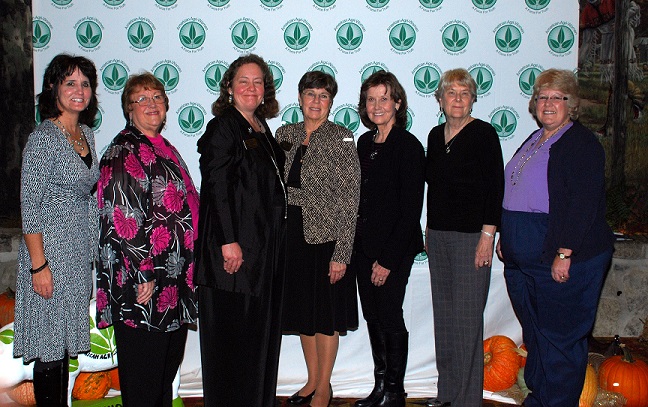
American Agri-Women (AAW) kicked off its year-long celebration of its 40th anniversary at its annual convention held recently in College Corner, Ohio. The organization also elected its national officers and recognized outstanding advocates for agriculture.
AAW is the nation’s largest coalition of farm, ranch and agribusiness women representing more than 50 state, commodity and agribusiness affiliates. The 39th annual convention’s theme was “Bridging the Path From Farm to Fork” and was hosted by Ohio Agri-Women.
National officers for 2015 are:
• President Sue McCrum, Mars Hill, Maine
• First Vice President of Resolutions & Vital Issues Doris Mold, St. Paul, Minn., and Cumberland, Wis.
• Vice President of Communications Lynn Woolf, Milton, Kan.
• Vice President of Education Donnell Scott, Manhattan, Kan.
• Secretary Arlene Kovash, Monmouth, Ore.
• Treasurer Peggy Clark, Dayton, Ohio
• Past-President Karen Yost, Billings, Montana
Outgoing officers were Vice President of Education Kris Zilliox of Omaha, Neb., and Secretary Lisa Condon of Horicon, Wis.
Since 1974, AAW members have worked together to educate consumers; advocate for agriculture; and offer networking and professional development opportunities. Go to the AAW web site for more information and to join, www.americanagriwomen.org.
By: Monique Bienvenue; Cal Ag Today Communications Manager
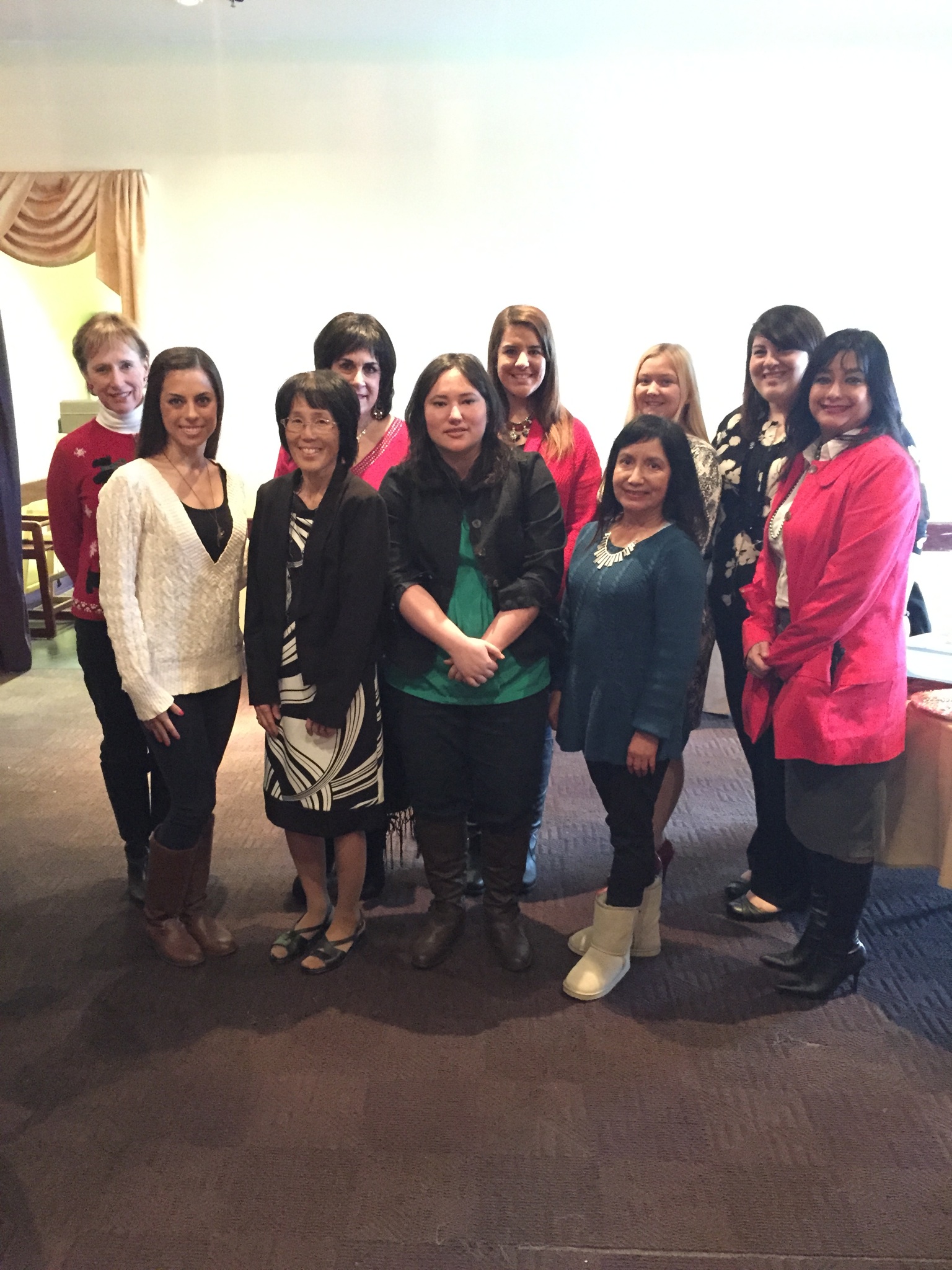
Last Friday, a group of dignified women met up for a holiday luncheon at Joy Luck Cuisine in Fresno. After working hard throughout the year to promote California’s agriculture industry, it was time to eat a delicious meal, honor a few scholarship recipients and induct the new 2014-2015 officer team.
“The CVCWA is very important to me,” said California Women for Agriculture, Central Valley Co-President Marlene Miyasaki. “Not only does the work we do help to promote various aspects of the ag industry, I’ve also met some of my closest friends through this organization.”
For years, members of the CVCWA have worked hard to celebrate esteemed agriculturalists in the Central Valley and do their best to provide scholarship money for high school and college students studying agriculture. They play a big role in planning events such as the Common Threads Luncheon, The Ag Boosters BBQ and they also dedicate their time to various community service projects throughout the Fresno County.
“I love being a member of the CVCWA,” said Agriculture Communications student Sarena Silva. “Their dedication and love for the ag industry keeps me motivated to be a voice for farmers in the Central Valley.”
With a new officer team, the CVCWA has many plans for the new year. If you’d like to become a part of this instrumental organization, go to http://www.centralvalleycwa.org or call Marlene Miysaki at (559) 278-2861.
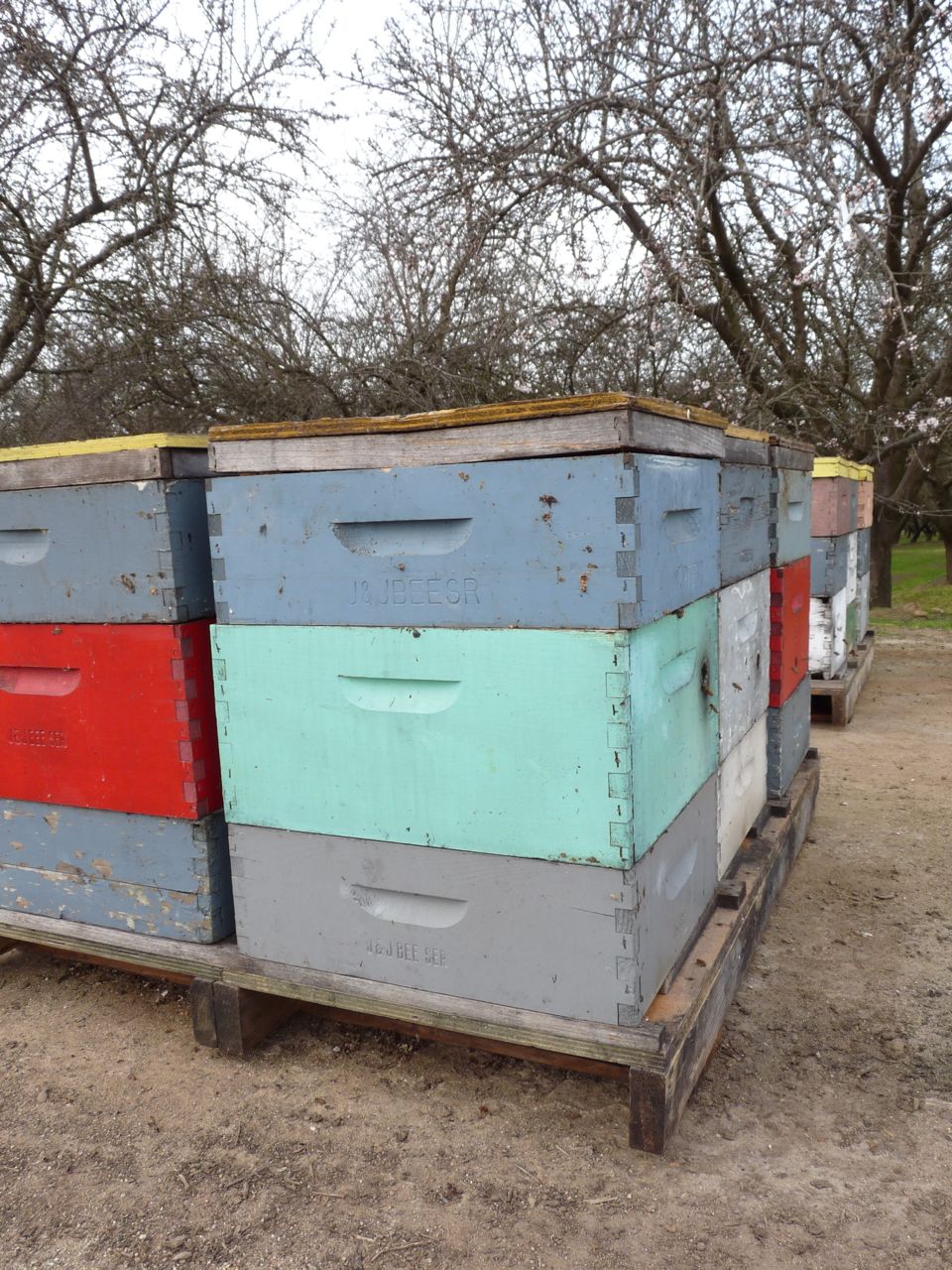
Next year, Bayer CropScience, in partnership with the National FFA Organization, will provide grants to inspire interest in agriculture and apiculture professions among America’s youth. The grant program will help FFA members develop their unique talents and explore science, technology, engineering and mathematics (STEM) careers with a focus on finding solutions that will help honey bees thrive. The program is a demonstration of Bayer’s continued commitment to engage with partners who focus on developing future STEM leaders, improving science literacy and driving bee health awareness.
“Bayer CropScience has been a long-standing advocate of FFA and supports its mission of building the next generation of farming leaders across America,” said Dr. Becky Langer, manager of Bayer‘s Bee Care Program. “Through this new initiative, we can help inspire young people to learn more about agriculture, create innovative solutions to some of our greatest industry challenges and pave the way for the future of farming.”
“We are excited about the opportunities that this partnership will give to our members,” said Molly Ball, president of National FFA Foundation. “Thanks to supporters like Bayer CropScience, FFA continues to grow future leaders in the agricultural industry.”
As a special project of the National FFA Foundation, Bayer’s investment of $50,000 will go toward three types of grants: Supervised Agricultural Experience (SAE) grants, Environmental Chapter grants and State grants.
SAE GrantsTen SAE grants worth $1,000 each will be awarded to students proposing projects focused on bee health. These grants feature hands-on learning opportunities as students work with their agricultural teachers to plan and execute their projects.
Bayer will give $20,000 in Environmental Chapter grants to support selected FFA chapters in implementing year-long, service-learning projects that address local environmental needs. Service-learning is a method of teaching and learning that challenges students to research, develop and implement solutions to identified needs in their school or community. Projects will be encouraged to focus on increasing forage by planting pollinator-friendly gardens and other pollinator-focused health initiatives.
Bayer will give $20,000 for state-specific grants focusing on improving bee health through habitat and forage.
Environmental and state grants will be awarded in the spring of 2015 and work can begin immediately after notification. SAE grants will be awarded in fall of 2015 for activities to be conducted in 2016.
For more information about the Bayer and FFA grant program, please visit the FFA website.
The National FFA Organization provides leadership, personal growth and career success training through agricultural education to 610,240 student members who belong to one of 7,665 local FFA chapters throughout the U.S., Puerto Rico and the Virgin Islands.