About Patrick Cavanaugh

This author has not yet filled in any details.
So far Patrick Cavanaugh has created 1490 blog entries.

AG CRIME MEETING ON DEC. 6

SutterCo. Sheriff’s Dept. and Y-S Farm Bureau to Host Ag Crime Meeting on Dec. 6

The Sutter County Sheriff’s Office, in coordination with the Yuba-Sutter Farm Bureau, is holding a community outreach meeting 6:00 p.m. to 8:00 p.m. Friday, December 6 at East Nicolaus High School.

Sutter County Sheriff’s deputies will be present to discuss prevention strategies for rural agricultural theft and the influx of marijuana grows, and to facilitate a dialog on the rural crime environment in Nicolaus, Rio Oso, Robbins, and Pleasant Grove. Deputies will also provide advice on the types of security cameras best suited for ranch use. 

Growers are encouraged to attend. YSFB will provide coffee and snacks at the meeting.

2016-05-31T19:42:32-07:00December 4th, 2013|

GROWERS PLAN NEW STRATEGIES TO COMBAT WEED RESISTANCE

BASF Survey Shows Majority Of Growers Face Glyphosate-Resistant Weed

Three out of four growers who participated in a recent survey by BASF suspect that glyphosate resistance is a cause of their tough-to-control weeds. As a result, a staggering 76 percent of these growers have already changed their weed management program to address resistance.

In addition, many growers have experienced lower yields, which they attribute to resistant weeds. These growers have also spent more time scouting and invested more money in their crops due to resistant weeds.


In the survey, growers identified how they plan to change their programs in 2014. More than two-thirds of growers indicated that they would be applying a pre-emergence herbicide this season and more than half of growers are planning to add an additional herbicide to their existing program. Additionally, 50 percent of growers plan to use more than one site of action and 47 percent said they plan on using overlapping residual herbicides to control resistant weeds.

“These results show that growers are beginning to understand the need for a comprehensive weed management approach,” said Greg Armel, Ph.D., Technical Market Manager, BASF. “Growers are realizing the importance of using residual herbicides and multiple, overlapping herbicide sites of action.”

The survey also highlighted the weeds that growers found the toughest to control in 2013. Nearly two-thirds of respondents said waterhemp was the most difficult to control, while 54 percent said that ragweed species were the toughest to control. Lambsquater and marestail were also identified as difficult weeds.

To combat these tough weeds, growers are now looking for solutions to meet their specific crop needs.

With half of the herbicide sites of action currently available in the U.S., BASF is a key resource for growers fighting resistant weeds.
2016-05-31T19:42:33-07:00December 4th, 2013|

CALIFORNIA RANCHERS WEIGH OPTIONS AS DRY SPELL LINGERS

Ranchers Take Measures to Survive Dry Weather


TODAY, the California Farm Bureau Federation reports this fall’s rainy season has not brought the relief cattle ranchers had hoped for since last spring’s lack of precipitation deteriorated California pastures.
Some moisture late November helped fill stock ponds and started seasonal streams flowing, said Glenn Nader, a University of California Cooperative Extension livestock and natural resources advisor for Yuba, Sutter and Butte counties. But in terms of growing feed, the rain came a little late.
“Things may germinate, but they’ll just sit there,” Nader said. “There’s not going to be any rapid growth until March—unless we get an unusually warm December.”
Because the springtime was so dry, ranchers who move their cattle to summer pastures did not have much dry feed for their animals to come home to this fall. And where they do have dry feed, stock water has been very limited, and hauling water can be cost-prohibitive, Nader noted.
“Many of them were hoping they’d get an early germination and have green feed to go into the winter with, and that just didn’t occur,” he said.
The state will still need successive rains this winter and enough ground moisture to support decent growth next year, Nader added.
For now, ranchers will have to find other forage sources, including dry feed and supplementing with hay, he said, noting that less hay production this year due to drought has led to tight supplies and high prices.
“People can quickly feed themselves into a negative cash flow with today’s hay prices,” he said. “That’s why a lot of people are looking at alternative dry matter sources such as corn stover, rice straw and other things, to try and cheapen up those costs.”

Andy Domenigoni, who runs cattle on dryland pasture in Riverside and Tulare counties, said in addition to feeding hay since September, he buys culled oranges, lemons, avocados and other vegetable and fruit byproducts from a local packinghouse to supplement until range conditions improve.
He weaned his calves early this year and thinned about 25 percent of his cows when he saw how low he was getting on feed. He had already culled about 15 percent of his herd last year and sold all of his heifers the last two years, so he has no replacements.
The aggressive herd liquidations across the nation in recent years due to drought have kept the cattle market strong for producers, Domenigoni said, and it will take some time before U.S. cattle ranchers can begin to fully rebuild after years of contraction.
“When cattle numbers are short, the prices stay up, and those who can afford to stay in the business will make some money,” he said.
San Joaquin County cattle rancher Rich Ricesaid high cattle prices have been good for those who have cattle to sell, but if producers have to sell their cows due to lack of feed, they won’t have many to sell the following year.
“If you’re selling the cows, you’re selling the factory, because they make a calf to sell every year,” he said. “Sure, she’s going to bring pretty good money, but that’s not really what you want to do.”
Because he runs his cattle on rented ground—both dryland and irrigated pasture—that land will cost him money even if he cannot turn cattle out on it. For the moment, he said he’s been able to move his cattle to various properties to stretch the feed, but he’s had to send some of his yearlings to feedlots. And while he hasn’t reduced his numbers yet, he said with hay prices getting higher, it would not be feasible for larger operations like his to obtain enough hay and labor to feed all his cattle.
For Nevada County rancher Jim Gates, who raises grassfed cattle on irrigated pasture, dry weather has increased his production costs considerably because he has to keep his animals on range much longer and must buy more hay than usual.
Jim Gates of Nevada County, Photo/Ching Lee
He noted the Nevada Irrigation District shut off its water on Oct. 15, so he now depends totally on rainfall to grow his pasture. He said his region received about two inches of rain last month, enough to germinate grasses in some areas of the pasture—but north winds immediately dried them out.
Santa Cruz County rancher John Pisturinosaid after the state’s last drought several years ago, he began expanding his herd, but he may now have to reduce his numbers again if the season does not improve. He’s been supplementing with hay since September and has enough to see him through January or February, at which time he hopes grasses will be long enough to support his cattle.
Denis Lewis, who raises purebred Angus bulls in San Joaquin County, said even though his cattle are on irrigated pasture, he has stopped irrigating because the cooler temperatures in recent weeks have not been conducive to growing grass. That means he has had to increase his hay purchases by about 30 percent, while reducing his herd by about 10 percent. He said he’s concerned about how the drought will affect the state’s dryland hay production.
“Hay growers are banking on the rain to make it grow, and if we don’t get any rain for two or three months, then what has germinated will die,” he said.
Siskiyou County rancher Leonard Gorden said not only is the drought affecting cattle producers—some of whom will go out of business or reduce their numbers so severely that ranching will no longer be a business but a hobby—but he said he’s concerned about the long-term effect it will have on the entire U.S. beef sector.
“Eventually, if cattle numbers get too low and the price of beef continues to get higher because of that, I think our consumers will try to go to alternative protein sources,” he said.


Source: California Farm Bureau Federation
2016-05-31T19:42:33-07:00December 4th, 2013|

USDA, EPA PARTNER TO SUPPORT WATER QUALITY TRADING

Water Quality Trading Upcoming for California Growers

The U. S. Department of Agriculture (USDA) and the Environmental Protection Agency (EPA) announced TODAY an expanded partnership to support water quality trading and other market-based approaches that provide benefits to the environment and economy.

“New water quality trading markets hold incredible potential to benefit rural America by providing new income opportunities and enhancing conservation of water and wildlife habitat,” Agriculture Secretary Tom Vilsack said. “Additionally, these efforts will strengthen businesses across the nation by providing a new pathway to comply with regulatory requirements.”

“EPA is committed to finding collaborative solutions that protect and restore our nation’s waterways and the health of the communities that depend on them,” said EPA Administrator Gina McCarthy. “We’re excited about partnering with USDA to expand support for water quality trading, which shows that environmental improvements can mean a better bottom line for farmers and ranchers.”


Water quality trading is an innovative approach for achieving water quality goals at lower cost. Water quality trading can also provide additional environmental and economic benefits, such as air quality improvements, enhanced wildlife habitat, carbon capture and storage, and new income and employment opportunities for rural America.

Where appropriate, trading is a powerful and effective market-based approach to achieving cleaner water. Trading is based on the fact that sources in a watershed can face very different costs to control the same pollutant. Trading programs allow facilities to meet regulatory obligations by purchasing equivalent or superior pollution reductions from another source — achieving water quality improvements in a cost-effective manner.

EPA and USDA are working together to implement and coordinate policies and programs that encourage water quality trading. The Department and the Agency will identify opportunities to work collaboratively to help improve water quality trading programs across the country. Cooperative management and technical assistance will improve resource management and public services, and accelerate implementation.

USDA and EPA will:

  • Coordinate and enhance communications and outreach to states, agricultural producers, regulated sources, and interested third parties on water quality trading;
  • Engage expertise across agencies in the review of grants, loans or technical assistance programs focused on water quality trading;
  • Share information on the development of rules and guidance that have the potential to affect water quality trading;
  • Collaborate on developing tools and information resources for states and credit generators to guide decision making, reduce costs in program design and implementation, improve environmental performance, and foster consistency and integrity across regional initiatives;
  • Co-host a workshop by 2015 to share tools and resources available to assist in stakeholder decision making and opportunities.
The purpose of this policy is to support states, interstate agencies and tribes as they develop and implement water quality trading programs for nutrients, sediments and other pollutants where opportunities exist to achieve water quality improvements at reduced costs.

For a basic introduction to water quality trading, please check the EPA website site.

EPA’s Water Quality Trading Assessment Handbook will help users decide whether water quality trading will work in their watershed and when and where trading is likely to be the appropriate tool for achieving water quality goals.

2016-05-31T19:42:33-07:00December 4th, 2013|

CITRUS GROWER TAKES PRECAUTIONS AGAINST FREEZE

Protecting Citrus Against A Possible Freeze
By Laurie Greene, Associate Editor
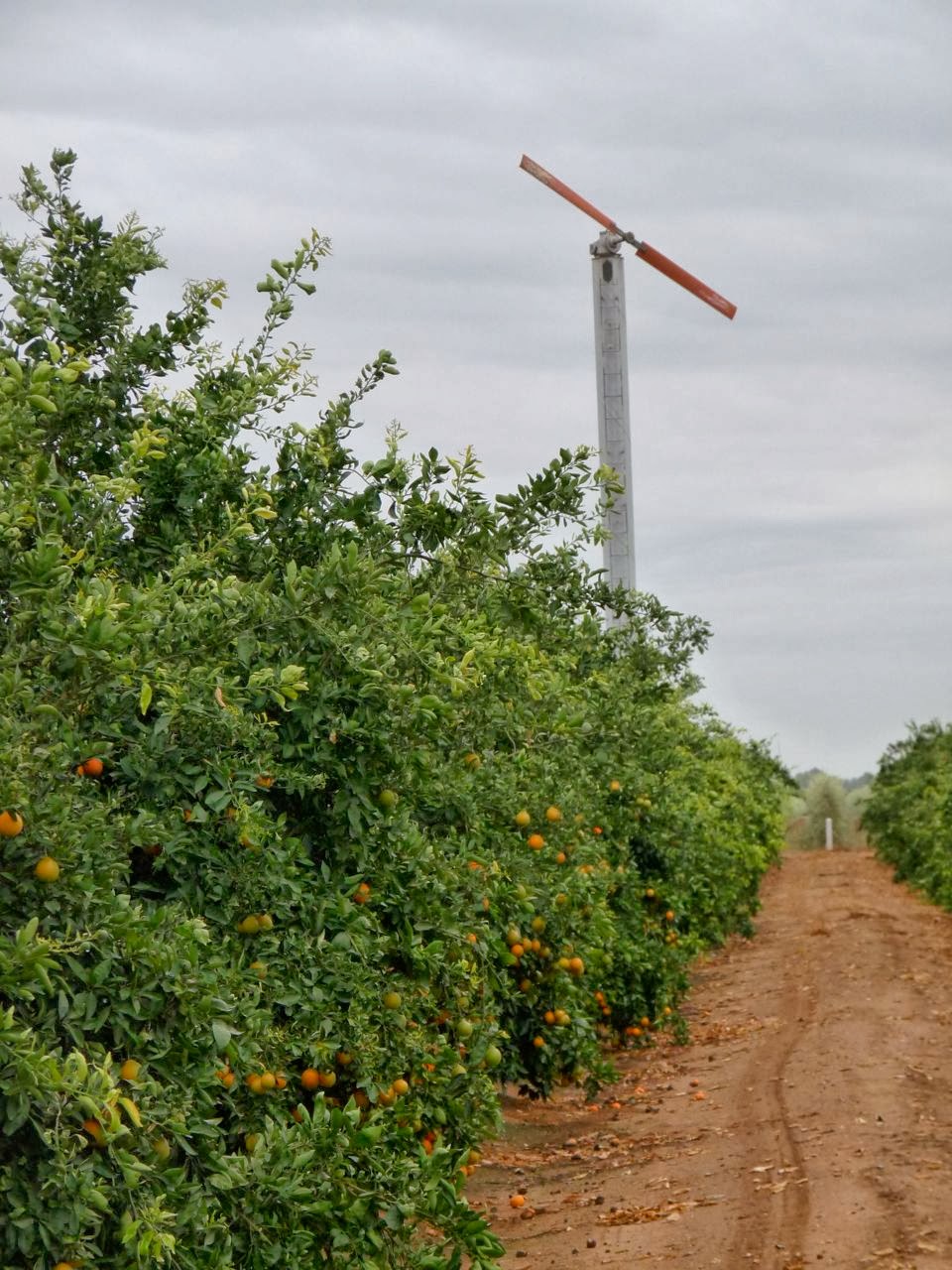
A Wind Machine Standing By to Help Protect

Citrus as a Freeze Moves into the Valley.
Philip LoBue, President and CEO, LoBue Citrus, a full-service grower, packer, and citrus shipper, based in Tulare County, spoke with California Ag Today.

According to LoBue, this week is a typical freeze event, though slightly earlier than usual. So, he is taking ordinary precautions with his citrus by using well water and wind machines.

Generally, early afternoon water application using standard irrigation, in this case micro-sprinklers within rows, creates a microclimate effect of surface heat. As the temperature drops at night, water freezes and gives off energy (heat), benefitting the trees. In the sunlight the next day, water melts into the ground allowing the ground to hold more heat during the day, and so the cycle continues.

The freeze stirs up an inversion layer 30 feet above ground at the treetops. Tonight’s inversion in the central part of the central San Joaquin Valley will be weak according to LoBue because the inversion’s elevation will be only one or two degrees warmer, and not six degrees for example.

The extent of freeze damage on crops depends upon the actual temperature, length of exposure time, and precautions taken. In citrus groves, the initial freeze damage starts outside of the grove on its borders and on the exterior of the fruit exposed on the treetops. The exterior rind of the fruit becomes physically damaged before the interior is affected. Exterior rind ice marks and other visual markers change the fruit’s export quality and value. As the freeze persists, the interior of the fruit becomes susceptible to damage.

LoBue says farmers are already taking additional standard precautions such as checking batteries for diesel or propane wind machines and copper or aluminum wiring for electric wind machines.

Of note, a brutal freeze on December 23, 1991, destroyed all fruit yet to be harvested.As a result, LoBue Bros. (former company name) shut down for most of the year. When it became apparent that government employment programs were inadequate in addressing the needs of unemployed workers, the LoBue staff and management secured both private sector and additional government assistance to help workers obtain food and shelter until the next season’s crop. LoBue Bros. received statewide recognition for its efforts on behalf of these workers.

Nearly 80 years in business, LoBue Citrus is an independent, family-owned grower, packer and shipper of fresh citrus and citrus juice products, including navel oranges, mandarin oranges, specialty citrus, lemons and juice.

2016-05-31T19:42:33-07:00December 4th, 2013|

FARM TO FOOD BANK MONTH: AG SURPLUS AGAINST HUNGER

Central Coast Farmers Give To Ag Against Hunger

As December is Farm to Foodbank Month, Lindsay Coate, Executive Director, Ag Against Hunger, posted TODAY that it is ironic that California produces the largest bounty of agricultural products consumed in the US, and yet, 4.7 million of our residents live in poverty and often don’t have access to fresh fruits and vegetables.

A solution to this problem was developed 24 years ago by farmers in Monterey, Santa Cruz and San Benito Counties when they realized that 20 percent of their product was going to waste. They collectively decided to create an agricultural nonprofit organization known today as Ag AgainstHunger to collect and distribute all of their surplus produce.

Ag Against Hunger’s primary function is to prevent the waste of fresh vegetables and fruit. Instead of disking full fields of produce or paying fees to get rid of harvested product, producers contact Ag Against Hunger to distribute the produce to food banks.

The Ag Against Hunger Program is simple:
  • We collect nutritious and fresh surplus vegetables, fruits and salads and from local growers and shippers.
  • We consolidate the surplus produce at our cooler.
  • We distribute the produce to food banks and non-profit agencies.
  • Food banks and agencies give the fresh produce at no cost to people in need.


Ag Against Hunger has started a new program with the Grower-Shipper Association Foundation, HELP, the Food Bank for Monterey County and Fresh from D’Vine in an effort to get more fresh and nutritious produce into local schools. The More Produce for Schools program provides students in Monterey County with a more balanced lunchtime meal that includes fresh produce. Currently, there are five school districts enrolled in the program: Salinas Union High School, Alisal Union, Greenfield, King City, and North Monterey County.

Gleaning session – photo courtesy of Ag Against Hunger
Ag Against Hunger’s portion of the program is being funded by a matching grant from Wells Fargo Foundation. In order to receive this grant, Ag Against Hunger had to raise $25,000 in funds by the end of November. 

The Ag Against Hunger organization is still supported by its founding community of local farmers, which provides board members along with financial assistance and, of course, produce.  Since 1990, Ag Against Hunger has distributed over 212 million pounds of fruits and vegetables to help our local food bank partners across California.

December as Farm to Food Bank Month is an initiative by the California Department of Food and Agriculture and the California Association of Food Banks to double farm contributions to food banks by 2015.
2016-05-31T19:42:33-07:00December 3rd, 2013|

COLD SNAP ACROSS CENTRAL CALIFORNIA

Weather Service Urges Growers to Take Precautions

The National Weather Service, San Joaquin Valley/Hanford has issued a Freeze Warning in effect from 2 AM TONIGHT until 9 AM Wednesday for the central and southern San Joaquin Valley areas.

A very cold weather system will move into the region starting tonight; below freezing low temperatures are expected as early as tonight in the San Joaquin Valley and the Kern County desert by Wednesday night. Subfreezing temperatures will likely last through Friday morning over much of the central California interior.

Jim Andersen, Meteorologist in the Hanford Weather Forecast Office confirmed that a Freeze Warning issued for tonight forecasts 28-32°F.

Andersen confirmed also that a Hard Freeze Watch is in effect from midnight Wednesday through Friday night for rural areas of the San Joaquin Valley with temperatures expected between 22 – 27°F. Saturday temperatures are expected to be warmer.

Andersen says these conditions are dangerous to all farmers in the region, particularly citrus farmers because there is still fruit on the trees. He urges all farmers to take precautions to mitigate damage to their livestock and plants.

This cold weather is unusual for early December. It is generally expected in late December and January, when citrus trees no longer carry fruit.

A common remember for frost conditions is to protect the 4 P’s: People, plants, pets, and pipes!


For more information, call the Frost Telephone numbers:

559-592-4140 or 800-713-7678

Information is UPDATED DAILY AT 10:00 AM AND 4:00 PM.
2016-05-31T19:42:33-07:00December 3rd, 2013|

COTTON PLOWDOWN REGULATIONS COMPLIANCE SET FOR DECEMBER 20, 2013

Annual Cotton Plowdown Deadline to Manage Pink Bollworm

It’s that time of year again when cotton growers are required to comply with the Cotton Plowdown Regulations.

The regulations were established in 1967 to combat the threat of spreading populations of Pink Bollworm, a worldwide pest of cotton. With grower support, the California Department of Food and Agricultural established regulations that required anyone planting cotton in the San Joaquin Valley to shred and uproot cotton stalks, and then mix the debris with the soil. Doing this was shown to kill overwintering Pink Bollworm larvae.

Growers were also prohibited from planting cotton prior to March 10th in an effort to provide a host-free period for any moths that might survive the winter and want a place to lay eggs in the spring.

To-date, the program has been very successful in managing Pink Bollworm in the Valley, and is the longest running area-wide integrated pest control program in the world.

The date for compliance with the Cotton Plowdown Regulations is rapidly approaching. All cotton stalks must be shredded, uprooted, and plowed by December 20, 2013. Starting on the 20th, the staff of the County Agricultural Commissioner/Sealer’s Office will be citing fields that are not in compliance with the regulations. Fines for non-compliance are set at $500 plus $5.00 per acre.

With the dry weather this fall and lack of fog, growers should have plenty of time to comply.

If you have any questions regarding the Cotton Plowdown Regulations and their enforcement contact Dennis Haines, Staff Biologist in the office of Tulare County Agricultural Commissioner/Sealer (559) 684-3350.

2016-05-31T19:42:33-07:00December 3rd, 2013|

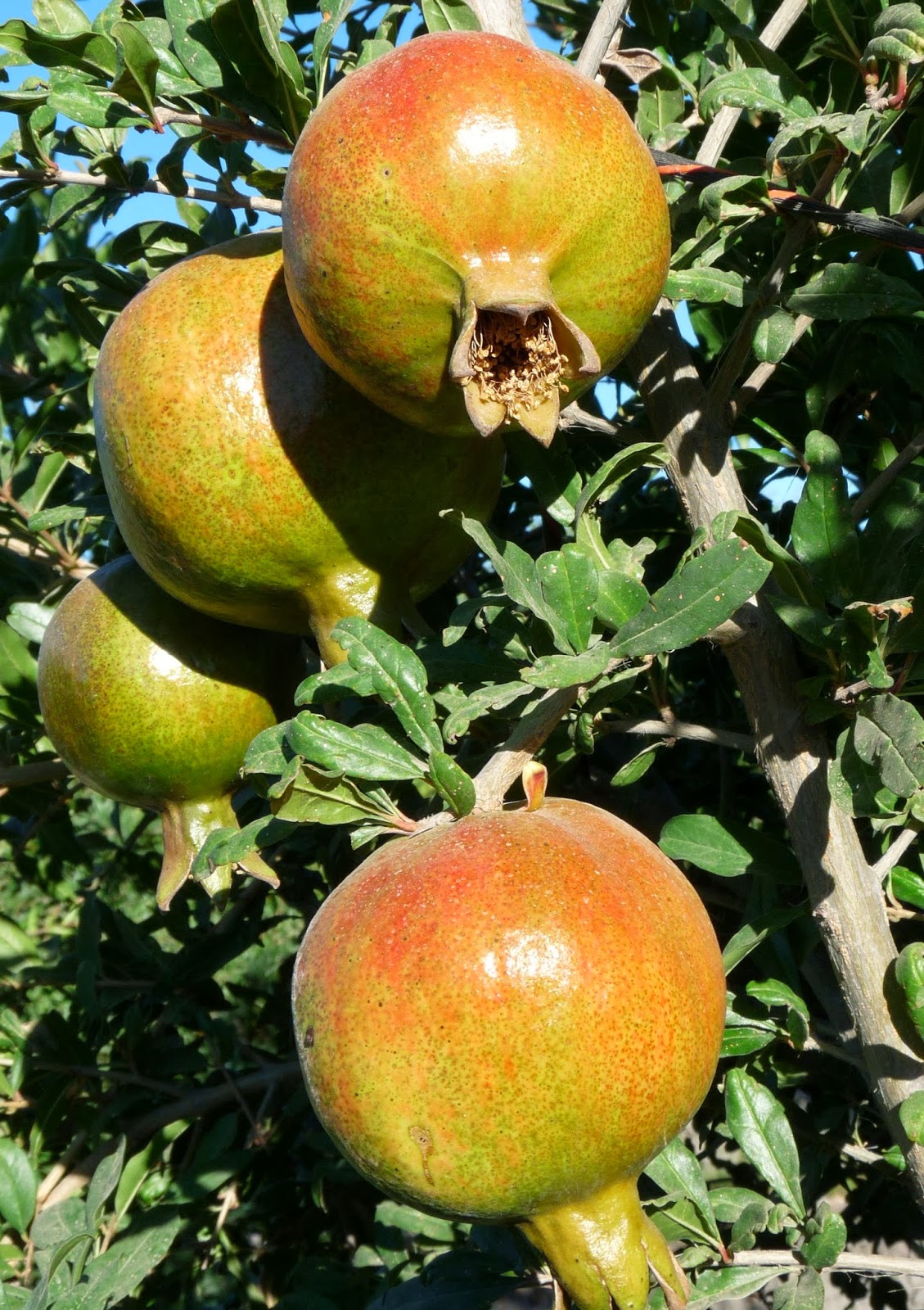
UC Publishes Pomegranate Pest Guidelines

Pomegranate Pest Guidelines Available Free


UC Cooperative Extension has published pest management guidelines for pomegranates.  They are available free by download by going to anrcatalog.ucdavis.eduand entering pomegranate in the search window.  The guidelines can then be saved to your computer. 

There are many other free publications available from Cooperative Extension at that web site.

2016-05-31T19:43:05-07:00December 3rd, 2013|

WEATHER ALERT: AVOCADO FREEZE ADVISORY

Coastal County Avocado Growers At Risk

The National Weather Service (NWS) has issued a Special Weather Statement for San Luis Obispo, Santa Barbara, Ventura and Los Angeles Counties. A cold low-pressure system from an Arctic air mass over Canada will bring an extended cold snap to Southwest California from Wednesday through Friday, December 4-6, 2013. They also warn of strong winds in advance of the cold front on Tuesday December 3, 2013. The front will be mostly dry with only scattered, isolated showers.

Wind
Winds from the west to north are expected to increase Tuesday afternoon into early Wednesday for much of the advisory area. Forecasts call for gusts up to 40 mph along the Central Coast and Santa Monica Mountains. Interior valleys could see gusts up to 50 mph. The winds are expected to diminish late Tuesday/early Wednesday and be followed by much colder air.


Freezing Temperatures
The cold air is expected to arrive Wednesday and last through Friday. There is the potential for hard freeze conditions (temperatures at or below 28 °F for several hours) in the interior valleys of San Luis Obispo and Santa Barbara Counties Wednesday night into Thursday morning and Thursday night into Friday morning. The lowest temperatures in the interior valleys are expected to be in the low to mid 20s, with temperatures remaining below freezing for several hours.


Along the coast and through Ventura and Los Angeles County valleys temperatures are expected to drop to right around freezing both Wednesday and Thursday nights. A gradual warming trend is expected for the weekend, but temperatures will remain well below average.


Freeze Protection
Most avocado growers rely on irrigation and/or wind machines for freeze protection. Growers in the area affected by the Special Weather Statement should use Monday and Tuesday to inspect their irrigation systems, checking for clogged nozzles, broken lines or other problems that would limit their ability to protect their groves. 
Wind machines should have already been serviced for the season, but if this hasn’t been done growers should try to get this task accomplished before Wednesday. Wind machine fuel tanks should be topped off and the machines should be started to make sure there would be no surprises when they are needed.


Growers are advised to watch for changes to this forecast on the NWS website. For the latest advisories and alerts go to http://www.weather.gov/ and enter your city and state or zip code in the search box in the upper left corner to find the latest alerts for your area. For more information on freeze protection for your avocado groves please visit http://californiaavocadogrowers.com/growing/cultural-management-library/freeze-protection.

2016-05-31T19:43:05-07:00December 3rd, 2013|
Go to Top