About Patrick Cavanaugh

This author has not yet filled in any details.
So far Patrick Cavanaugh has created 1490 blog entries.

Dairy Rep Ballots Due Back by Dec. 20

Dairy Rep. Monitoring Program Ballots

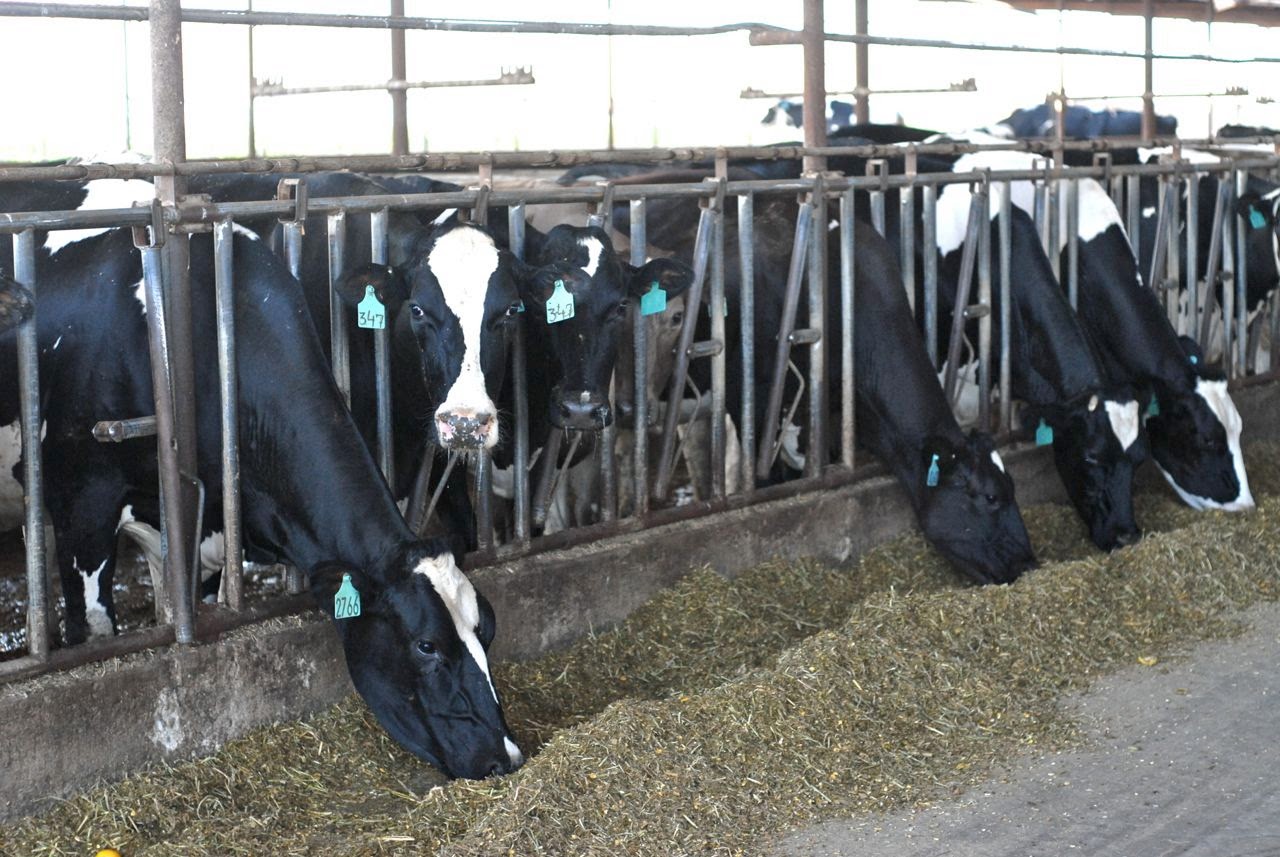
According to the Modesto-based Western United Dairymen, the Central Valley Dairy Representative Monitoring Program (CVDRMP) is conducting its annual elections to fill open seats for its Board of Directors. All CVDRMP members in good standing will receive an official ballot and instructions by U.S. mail.
 

Materials were mailed to members on November 22.

Eligible voters must return the enclosed self-addressed, postage-paid ballot postcard as soon as possible. Voting is important, but quick and easy, and can be done in less than a minute. Ballots must be received by December 20, 2013.

Ballots received after December 20, 2013 will not be counted, regardless of postmark. One seat is available for election in each CVDRMP district and one seat is available at-large. Director terms are two years, beginning in January 2014.

For more information or questions, call 916-441-3318 or email dairycares@aol.com.

2016-05-31T19:42:31-07:00December 7th, 2013|

USDA SALMONELLA ACTION PLAN PRESENTS AGGRESSIVE STEPS FOR ILLNESS PREVENTION

Salmonella and the USDA Action Plan
By Laurie Greene, Associate Editor
The U.S. Department of Agriculture’s (USDA) Food Safety and Inspection Service (FSIS) released its Salmonella Action Plan midweek that outlines the steps it will take to address the most pressing problem it faces—Salmonella in meat and poultry products. 

An estimated 1.3 million illnesses can be attributed to Salmonella every year and it is the leading cause of hospitalizations and deaths from foodborne disease. Because of the major public health role of Salmonella infections, the US Department of Health and Human Services has made decreasing the nationwide incidence of these infections by 25% a Healthy People 2020national goal.

CDC National Surveillance Data, updated 1/14/13
In 2011, in California alone, there were 20 Salmonella outbreaks, including the 7 multistate outbreaks in which CA had cases, according to CDC’s Foodborne Outbreak Online Database (FOOD).
Salmonella infections in California between 1998 and 2011 have remained between the range of 3000 and 5400.
Among the 2013 sources of Salmonella in the U.S. are chicken, poultry, tahini paste, cucumbers, and beef.
 
Note:Although outbreak data provide one of the only direct connections between food sources and infection, outbreak investigations are frequently unable to confirm the single contaminated food vehicle, limiting the ability to detect major changes over time.
“Far too many Americans are sickened by Salmonella every year. The aggressive and comprehensive steps detailed in the Salmonella Action Plan will protect consumers by making meat and poultry products safer,” said Under Secretary for Food Safety Elisabeth Hagen.
Modernizing the outdated poultry slaughter inspection system and focusing inspectors’ duties solely on food safety could prevent at least 5,000 illnesses prevented each year.
CDC FOOD Tool.  Data for 2013, to date.
 

Enhancing Salmonella sampling and testing programs, factoring in the latest scientific information available and emerging trends in foodborne illness will also contribute to prevention.

FSIS will drive innovations, establish new performance standards, develop new strategies for inspection throughout the full farm-to-table continuum, address all potential sources of Salmonella, and focus on the Agency’s Salmonella education and outreach tools to lower Salmonella contamination rates.

Thanks to previous innovative technologies and tough USDA policies, Salmonellarates in young chickens have dropped over 75 percent since 2006.

Meanwhile, research on Salmonella continues. California scientists have been investigating Salmonella vaccines, links between Salmonella serotypes and specific foods, hypervirulent strains of Salmonella, prevalence of salmonella in a specific agricultural region in California, and, incredibly, re-engineering the bacteria’s structure to secrete spider silk proteins instead of proteins associated with infection.
Additional Sources:
Dana L. Pitts, MPH, Associate Director of Communications, Division of Foodborne, Waterborne, and Environmental Diseases/National Center for Emerging and Zoonotic Infectious Diseases/Centers for Disease Control and Prevention; MarlerBlog.com
2016-05-31T19:42:32-07:00December 7th, 2013|

Fight for Water Film to Be Shown in Pacific Grove Dec. 11

Fight For Water Film in Pacific Grove

Dec. 11 8:30pm at Lighthouse Cinemas
The award winning, Fight for Water Film: A Farm Worker Struggle, will be shown Dec. 11 in Pacific Grove at the Lighthouse Cinemas, 525 Lighthouse Ave. Tickets can be bought at the door.

Filmmaker Juan Carlos Oseguera
The Fight For Water Film documents the struggle of two farmers, and thousands of farm workers on the Westside, Fresno County, in 2009 when there was only a 10 percent water allocation.

Filmmaker/Director Juan Carlos Oseguera focuses on the 50-mile historic water march in his film, the only film that documents this journey that brought more than 1,000 farmers and farm workers from all over the state.

The film also records the many food lines that became necessary in towns such as Firebaugh, Mendota, San Joaquin and Huron. Farmworkers, though humiliated, were forced to resort to these food lines due to the high unemployment that reached in excess of 40 percent as a consequence of the non-irrigated fields.

Ironically, though The Fight For Water Film documents this event in 2009 and 2010, nothing has changed. In fact, farmers in the Westside Federal Water Districts are currently facing what could be an even worse year in 2014. The Bureau of Reclamation has warned that if there is not significantly more than average rain and snowfall this winter, there could be an unprecedented zero allocation.

No water allocation may force many farmers out of business and cause massive unemployment in the Westside communities already suffering from severely reduced water allocations. This season, farmers received only 20 percent of what they needed and paid for.

Oseguera said, “I have found that Californians outside of the Central Valley, and Americans out of state, are unaware of the plight of farmers and farmworkers here. So, we need to expand distribution of the film to educate everybody.”

“There is growing interest from film distributors to advance the film to wider audiences,” said Oseguera. “A good way to tell the distributors that the film needs to be seen by others outside of California is to like the Fight For Water Facebook page,” he noted.

2016-05-31T19:42:32-07:00December 7th, 2013|

More Funding Available for Ag

Valley Air District hosts Compliance Workshops for Truck Rule
The Valley Air District has made an additional $10 million available and broadened its eligibility criteria for the Valley’s 15,000+ single-truck owner/operators and small fleets to receive funding that reduces nitrogen oxides emissions, a major source of the air basin’s pollution. This much-needed funding can provide truckers with assistance that further reduces emissions beyond mere rule compliance.

A workshop will be held to assist owners/operators and small fleet owners with the changes in the rule and access the funding for replacement purchases.

Thursday, December 12, 2013

Fresno Valley Air District Office

1990 E. Gettysburg Ave.

Fresno, CA 93726

10:00 am – 2:00 pm

Video Conference of this workshop will also be available at:

SJVAPCD Office

34946 Flyover Court

Bakersfield, CA

SJVAPCD Office

4800 Enterprise Way

Modesto, CA

For more information visit:  www.valleyair.org/trucks

1-855-99GRANT (994-7268

2016-05-31T19:42:32-07:00December 7th, 2013|

California Citrus Mutual Reports Possible Freeze Damage

Citrus Freeze Damage Expected,

But Too Soon to Confirm


A second night of cold temperatures is expected to leave behind some damage to the Valley’s citrus crop.  Although the extent of damage cannot be known for certain at this time, the industry along with county and state regulators will begin assessments as early as next week.
In the majority of the Valley’s citrus producing areas temperatures dropped to critical levels as early as 5:00 p.m. last night for mandarins and 8:00 p.m. for navels and lemons.  However, a strong inversion layer and breezy conditions helped keep temperatures manageable with frost protection measures.  On average, temperatures steadied around 27 degrees.  The navel crop will likely see some damage, but the high sugar content of the fruit at this point of the season should provide extra internal fruit protection and keep damage levels minimal.  

The Valley’s lemon crop, too, should see very minimal damage. Lemon producing areas along the coast have not been affected by cold weather so far this season.  

The mandarin crop is another story.  The less cold tolerant variety will see more damage, but again the extent of which cannot be determined at this time.  Some isolated areas experienced temperatures in the low 20s in which cases a greater degree of damage is expected.  The most damage will surface in border rows, where the fruit has a greater exposure to cold temperatures and is less protected by frost protection measures.

Overall, field reports are bullish that the crop will escape this cold spell without critical damage. The industry does not anticipate that the level of damage will have any dramatic impacts to supply or price. The primary concern at this point is to ensure that only high quality fruit makes its way to the consumer. 

At this point of the season, 80% of the mandarin crop and 75% of the navel crop remain to be harvested. California Citrus Mutual estimates the total cost of frost protection across the industry at $12.4 million over the course of two nights. 

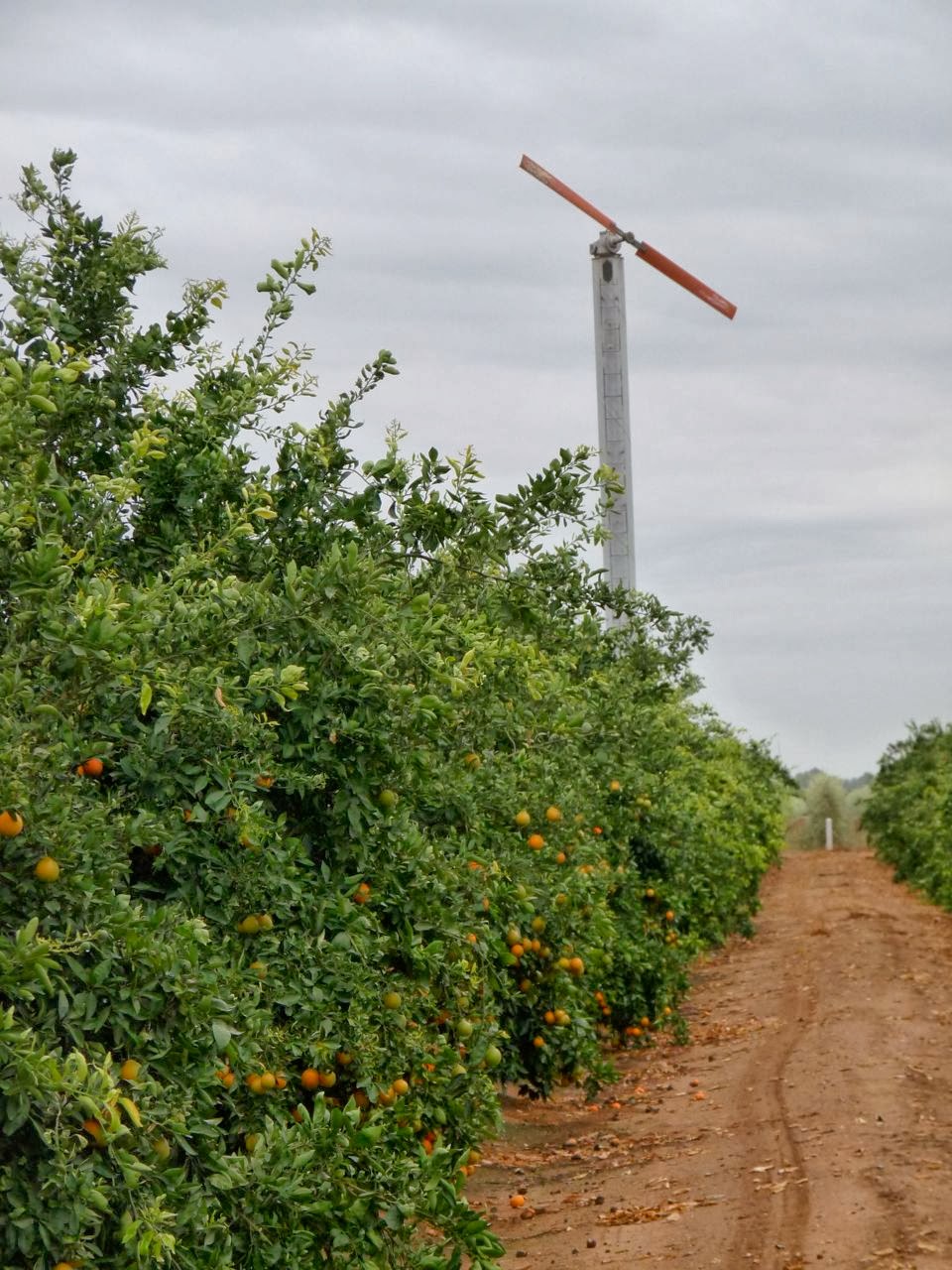
This cold weather front is expected to stay in the valley through the weekend.  A forecast of rain may also pose a challenge if temperatures stay below freezing.  The compound effect of multiple nights below subfreezing temperatures will certainly weaken the fruit, but the industry will continue running water and wind machines to minimize damage to the extent possible. 

2016-05-31T19:42:32-07:00December 6th, 2013|

LUNA—ANOTHER RELIABLE FUNGICIDE TOOL

Luna Fungicide Offers Great In-Season Protection with Post-Season Secondary Benefits

By Patrick Cavanaugh, Editor

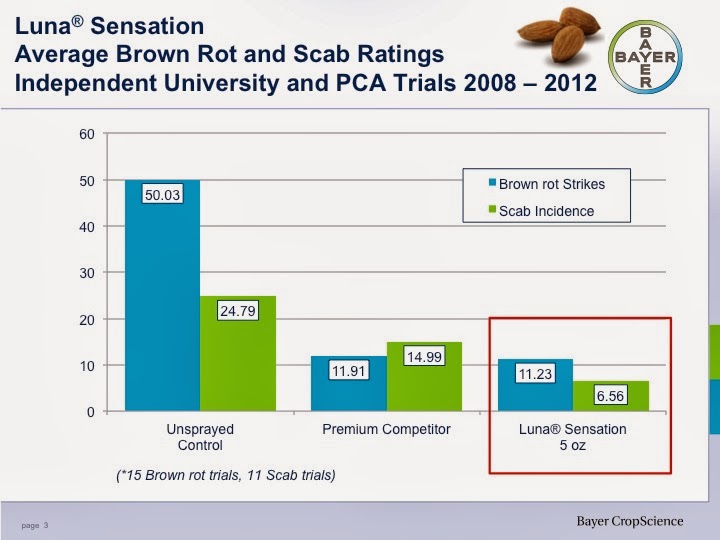
Three different formulations of Luna Products are benefiting growers while offering a good rotation product for resistance management and even extending shelf life of cherries and apple.

With Luna Experience, Luna Sensation and Luna Tranquility, growers now have a systemic solution proven to control a wide range of horticultural diseases. Effective on almond, apple, cherry, pistachio, potato, tree nuts, watermelon and wine grape crops, Luna provides unprecedented control of some of the most problematic fungal diseases to help growers deliver the best possible fruits, nuts and vegetables.

“Luna is an outstanding fungicide for protecting fruit, nut crops, and vegetables from a wide range of fungal disease such brown rot, grey mold, Alternaria, and powdery mildew, shothole on almonds,” said Jim Adaskaveg, UC Riverside Professor and Pathologist.

Luna Tranquility with active ingredients Fluopyram and Pyrimethanil is in FRAC Group 7 and 9. It is registered on apples, potatoes and winegrapes.

Luna Experience with active ingredients Fluopyram and Tebuconazole is in FRAC Group 7 and 3. It is registered on almonds, pecans, pistachios, as well as other tree nuts, watermelon, and winegrapes.

Luna Sensation with active ingredients Fluopyram and Trifloxystrobin is in FRAC Group 7 and 11. It is registered on almonds, apples, cherries, watermelon and treenuts.

The active ingredient Fluopyram, which is in all the Luna formulations, is new pyramide chemistry. Fluopyram has been found to bind more tightly to the target site than other SDHI materials. The distinctly different structure and flexibility of the Luna active ingredient allows it to remain effective where other SDHI products are failing due to resistance.

“The Luna formulations are premixed with active ingredients in different FRAC groups and have been shown to be excellent in protecting various specialty crops from diseases, while providing much needed resistance management. In fact, Luna provides the broadest options for preventing and managing resistance,” said Adaskaveg.

Key Diseases include:

·               Powdery Mildew

·               Alternaria

·               Scab

·               Botrytis

·               Botryosphaeria

·               Bunch Rot

·               Gummy Stem Blight

·               Monilinia

·               Shothole

·               White Mold

Rob Schrick, Horticulture Business Lead for Bayer Crop Science, commented, “Every once in a while we come out with a blockbuster, herbicide, fungicide, insecticide, or biological. But we come across applications outside the original intent of the product, and Luna fungicide is one of those products.”


Luna is currently registered on seven crops throughout the U.S. including apples, cherries, tree nuts, wine grapes, potatoes and watermelons. “It’s used as a traditional regiment fungicide application. But we are seeing, as growers use this product in their current practices, that that the harvested crops exhibit high quality and extended shelf life in cherries and apples,” Schrick noted.

“In cherries, we see a dramatic difference in quality due to an in-season application of Luna,” explained Shrick. “What we are seeing in cherries, as well as apples, is up to two or three weeks of extended shelf, but the quality characteristics are also extended.”

“Our focus is the grower,” Shrick said, “and what we are trying to understand is what the value of this quality component is to the grower.”

“We are looking to expand this registration to many different crops,” Shrick commented, “which should be completed in 2015 and ready for growers for the 2016 season.”

“Science is not completely settled on this, but we believe that the postharvest benefit comes from superior control of various in-season diseases and reductions of inoculum from earlier in the season,” said Mark McAuley, Product Manager for horticultural fungicides.

“Sometimes we do not see the effect of the fungi until after harvest, but the stage is set much earlier in the year when the pathogens are on the fruit and, in some cases, even embedded into the skin of the fruit,” McAuley said. “Once in the outer skin of the fruit, they lay dormant until harvest or postharvest when conditions are more favorable for the fungi to grow. The length of fungi control postharvest is unique with Luna compared with other fungicides,” he said.

McAuley noted that testing on other pending registered fruits and vegetables is showing similar postharvest benefits.

2016-05-31T19:42:32-07:00December 6th, 2013|

ANGUS EPISODE BROADCAST TONIGHT, DEC. 5TH

I Am Angus’ Explores Roots of Business
The program airs at 10 p.m. EST TONIGHT. Check local listings for more information.
Produced entirely by the American Angus Association®,the upcoming I Am Angus® episode explores the roots of the Angus business — and reminds us where we come from.

“This I Am Angus takes us back to the generations who built the platform the agriculture industry stands on today,” says Eric Grant, Association public relations and communications director. “Each segment has a different perspective, from transportation to health to genetics, on how the industry we work for has changed.”
While the program does not feature any California operations, the California rancher community may find it worthwhile.
You are invited to watch a preview of the episode.
The episode is sponsored by the GeneSeekAngus GGP-HD, helping Angus producers accelerate genetic progress and reduce risk in genetic investment.
And, save the date for the next I Am Angus episode Dec. 26, as the Association introduces families involved in the business of raising Angus cattle.
To watch segments from past shows, visit the Association’s website or YouTube channel.

The American Angus Association is the nation’s largest beef breed organization, serving more than 25,000 members across the United States, Canada and several other countries. It’s home to an extensive breed registry that grows by nearly 300,000 animals each year.
2016-05-31T19:42:32-07:00December 5th, 2013|

POLICY UPDATE ON FOOD SAFETY MODERNIZATION ACT

CAFF Update on FSMA

TODAY, Dave Runsten, Policy Director, Community Alliance with Family Farmers (CAFF), a non-profit organization that advocates for California’s family farmers and sustainable agriculture, posted the following FSMA Policy Update:

The comment period on FDA’s proposed rules for the Food Safety Modernization Act (FSMA) is now closed. Almost 20,000 comments were submitted to FDA. Most agricultural organizations joined in calling for another draft rule and further comments, given how much disagreement there was with some of FDA’s proposals. We will now wait and see if the FDA takes this good advice.
Here in California, we continue to work on a series of legislative bills that limit the food safety requirements for small producers and in many cases, allow them to self-certify and avoid inspections and audits.
This effort began with the cottage food bill in 2012, and continued with the CSA bill in 2013. Additionally, it will be taken up in several bills in 2014, including those on reforming farmers’ markets, allowing small-scale sales of raw milk, and setting rules for urban gardens.
Our goal is to create sensible and low-cost food safety best practices for producers not subject to the federal rules, allowing beginning farmers and direct marketing to continue to flourish in California.
We also continue to offer free assistance to farmers on food safety. 
2016-05-31T19:42:32-07:00December 5th, 2013|

AG THEFT CASE RESOLVED

Thieves Return Implement Carrier to Grower’s Driveway


Ag Crime Alert reports TODAY it would appear that heat from Yuba-Sutter Farm Bureau, the Sutter County Sheriff’s Department and the community was too much for some thieves.

After a cooperative effort spreading word about an implement carrier theft in Sutter County last week [reported by California Ag Today], the grower who owns the equipment found yesterday afternoon that it had been returned – to his driveway. The thief remains unknown, but Sutter County Sheriff’s Department says the grower is pretty pleased.

The Ag Crime Alert thanks everyone for keeping an eye out.


As already posted on California Ag Today, a meeting on Friday, December 6th to discuss rural crime is open to the entire rural community.

2016-05-31T19:42:32-07:00December 5th, 2013|

RED BLOTCH ON GRAPEVINES NOT NEW

New Test Identifies Virus Already Present

By Laurie Greene, Associate Editor


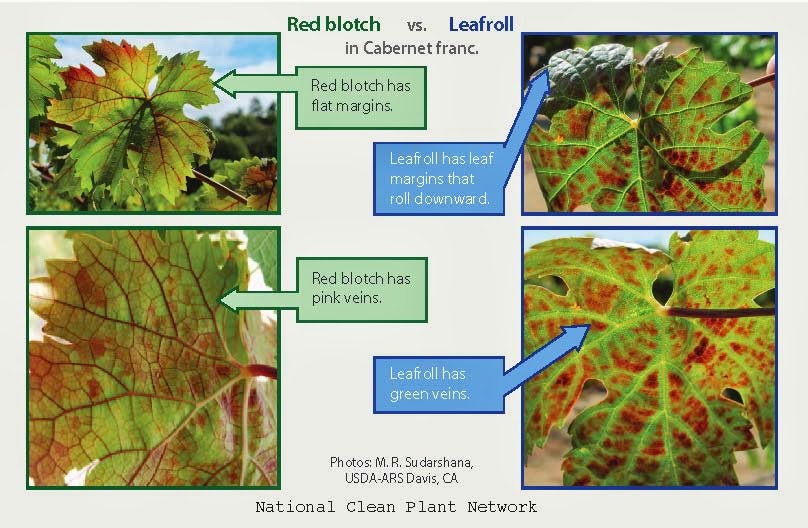
TODAY, in the midst of new Red Blotch discoveries, Monica Cooper, UCCE Viticulture Farm Advisor in Napa County told California Ag Today that Red Blotch is not new to California; it is a newly-discovered virus that affects grapevines. “We have seen it for awhile, but it has been confused with leaf roll disease that also causes leaf reddening, and it had not yet been genetically identified.”

Cooper said, “The real difference is that before we merely saw symptoms; now we can identify the virus with a test.”

Grapevine red blotch-associated virus (GRBaV) is the latest addition to the list of more than 75 graft-transmissible agents in grapevines. The National Clean Plant Networksays this recently reported virus is associated with the emerging red blotch disease first described on research plots and commercial vineyards of Cabernet Sauvignon in Napa Valley in 2008.

The USDA Agricultural ResearchService reports that in 2008, these grapevines exhibited symptoms resembling leafroll disease, and produced clusters with reduced sugar content causing delayed harvests.

Among the grapevine pests and diseases, only leafroll diseases exhibit similar canopy symptoms, cause reduced sugar accumulation in the berries and occasionally exhibit poor color development in some clusters and increased acidity as well. Potassium deficiency also has a similar appearance.

Red blotch leaf symptoms on a Cabernet Franc vine.  Photo by Marc Fuchs.

Laboratory tests in 2008 failed to detect any of the leafroll and rugose wood viruses in these samples. The disease symptoms were not caused by nutritional deficiencies, stress, bacteria, fungi and/or nematodes.

Red Blotch diagnosis based on the leaf symptoms can be challenging. A new molecular test based on genetic sequences was developed in 2012 by researchers at Foundation Plant Services at UC Davis, USDA and Cornell scientists.

This new PCR test is now commercially available, and the virus can be detected in the petioles of basal leaves, muchbefore the onset of symptoms.

Identification of the grapevine red blotch-associated virus (GRBaV) is the first step in a process to collect more information on the virus and the disease. Ongoing studies are investigating many aspects of virus and disease, for instance: researchers are investigating the exact role of GRBaV in red blotch disease, seeking more information on the genomic sequence of this DNA virus, and investigating the transmission of the virus and improved detection techniques.

The virus has been shown to be graft-transmissible and is likely responsible for the wide geographic distribution.
Thus far, disease symptoms have been observed in vineyards planted with red grape varieties such as Cabernet Franc, Cabernet Sauvignon, Merlot, Petite Sirah, Petit Verdot and Zinfandel.

Cooper says that the disease is widespread throughout California. Similar viruses have been found in vineyards in New York, Pennsylvania and Canada.

Cooper says we don’t know enough about the disease. We don’t know the different varieties, the rootstocks of choice, how it moves (by insect or in plant materials only). It is also not known if the disease has any effect on fruit yield or if it causes vine decline.

As Cooper summed up, “There will be no quarantine. This is not an actionable pest; we just do not know enough about it.”

So, what are growers to do?

Cooper recommends use of planting material free of known pathogens, given that once viruses are present in the vineyard there is no known cure.

The symptoms generally start appearing in late August through September as irregular blotches on leaf blades on basal portions of shoots. The grapevines with red blotch stop accumulating soluble solids and end the season at four to six degrees brix lower than uninfected vines.  
If grapevines, red or white, are producing fruit with Brix values lower than expected and are not showing classic leafroll-like symptoms, contact your local ViticultureFarm Advisor.

Test your vines.

The Napa Valley Grapegrowersoffers the following information and links:

Finally, Napa Valley Grapegrowers is stressing the importance of encouraging the release of funding by the California PD/GWSS Boardfor further research and understanding. 

2016-05-31T19:42:32-07:00December 5th, 2013|
Go to Top