About Patrick Cavanaugh

This author has not yet filled in any details.
So far Patrick Cavanaugh has created 1490 blog entries.

A Gift of Ag Fan Plate Supports FFA and Others

The Holiday Gift That

Gives Back

By Karen Ross, California Agriculture Secretary
 

With the holiday season now fully upon us, I’d like to take moment to suggest a gift you may not have considered – the California Agriculture License Plate.This is an excellent way to show support for California agriculture while participating in a program that actually gives back. A portion of Ag license plate fees provides funding for agricultural education programs that are crucial to our future.

These programs are important for several reasons. The disconnect between consumers and the farming community has grown over the decades as fewer and fewer people have been involved in production agriculture.  Fortunately, there is a renewed interest by consumers to know where their food comes from, how it is produced and who produced it. 

This provides an opportunity to help people understand the unique advantages we enjoy because of the bountiful diversity California agriculture provides to this state, our nation and, increasingly, the world. 

Agricultural education programs introduce our young people to the wide variety of exciting career opportunities available throughout the agricultural production system in addition to environmental stewardship, leadership skills, community service and making nutritious food choices.

Just last week, I had a fabulous visit to the FFA Chapter at Pioneer High School in Woodland.  The chapter is the state’s second largest (850 students) and continues to see dramatic growth.  The officers who escorted me around campus were smart, articulate, confident and enthusiastic! The hands-on learning and leadership development they are exposed to in addition to rigorous studies have already equipped these young people with life-long traits that any employer would value.  Because of students like these, I am very optimistic about our future and our ability to double food production to feed a fast-growing world population that is expected to number nine-billion people by 2050.

Our future is in good hands if we pay attention to our food production infrastructure.  It starts with Ag education programs like 4-H, FFA, Ag in the Classroom and many other worthy programs.

So, please, take a look at the agriculture specialty license plate for the holidays. You’ll help raise agricultural awareness and help us prepare future generations to enter an honorable profession.

2016-05-31T19:42:27-07:00December 18th, 2013|

A Warning to Calif. Regarding Lack of Water

Bakersfield Gathering Identifies 
Major Stressors to Valley Water Supply
By Don A. Wright, California Ag Today, Contributor

A letter signed by 15 Congressmen, 11 California State Senators and 23 Assembly members was sent to President Obama and Govern Brown urging them to help avoid an economic and social disaster by (instructing federal and state agencies to) allow more water to be diverted for beneficial use. The letter also urges more storage and protection of water rights.


Congressman David Valadao R-21st and State Senator Jean Fuller R-18th held a press conference at the Kern County Water Agency headquarters TODAY. The elected officials were joined by state and federal water contractors to shout a warning that California’s system is far too heavy on regulation and far too light on infrastructure.

Abuse of the Endangered Species Act and an aging storage/delivery system designed to serve only half the state’s current population was identified as the two most serious impediments to secure water deliveries vital to the San Joaquin Valley’s economy.


California’s Department of Water Resources announced an initial allocation of only five-percent of contracted State Water Project supplies. While the US Bureau of Reclamation has yet to announced an allocation to Central Valley Project contractors Westlands Water District’s deputy General Manager Jason Peltier said his district is gearing up for zero allocations.

Peltier added this could force 400,000 acres of farmland to lie fallow this coming year. The cost to the local economy could easily total billions of dollars. Senator Fuller urged anyone desiring more information to contact the Kern County Water Agency.

2016-05-31T19:42:27-07:00December 18th, 2013|

WESTLANDS ASKS GOVERNMENT FOR WATER SOLUTIONS

Westlands Water District Supports Long- and Short-Term Governmental Solutions for Water Crisis

Westlands Water District expressed its support TODAY of federal and state governments’ efforts to address California’s water crisis and the conditions that are causing both near- and long-term water supply problems. 

“We applaud the leadership of elected officials to bring attention to California’s water crisis and the ramifications of current conditions and policies,” said Thomas W. Birmingham, General Manager, Westlands Water District. “State and federal government action is needed to resolve the immediate water supply shortages and provide farmers and communities with reasonable assurance that they have the water resources needed to operate their businesses and keep people at work.”

“We cannot afford another year of uncertainty that will harm an industry that generates billions of dollars in economic activity and plays such an important role in the lives of the people that depend on agriculture,” said Birmingham.

The San Joaquin Valley faces the prospect of a record low water allocation, an historic low point in water supply reliability, and yet another year of extreme economic hardship. Without substantive action to address water supply problems, agricultural production will be greatly impacted, which will have negative consequences for numerous industries and thousands of jobs that directly or indirectly rely on the agricultural industry. This problem affects not just the Central Valley, but also the whole state of California.

Westlands encompasses more than 600,000 acres of farmland in western Fresno and Kings Counties. The District serves approximately 700 family-owned farms that average 875 acres in size. Westlands farmers produce more than 60 high quality commercial food and fiber crops sold for the fresh, dry, canned and frozen food markets, both domestic and export. More than 50,000 people live and work in the communities dependent on the District’s agricultural economy.

If unaddressed, the drought would pose a potential economic impact to the region exceeding $1 billion dollars. Indirect ripple effects of an economic downturn in agricultural production could impact related businesses including food processing, distribution, retailers, grocers, and banking.  

Westlands is calling upon policymakers to learn from those lessons of the past. The previous water crisis in 2009 caused farmers to fallow more than 300,000 acres of land and change their crops and production levels. Statewide, income losses were estimated at $2.8 billion and more than 95,000 jobs were lost. High levels of unemployment left communities in financial peril.

Now, the same water supply conditions are creating the same ramifications that devastated San Joaquin Valley communities in 2009; however, impacts are expected to be more severe because there are fewer options and coping mechanisms available now. Groundwater supplies are low, land is subsiding, and reservoirs are far below average levels. Therefore, Westlands is encouraging state and federal policy changes to provide water now.

“Westlands strongly supports federal and state efforts to implement a long-term solution to improve water reliability through the Bay Delta Conservation Plan. We will continue to work with the agencies and officials to make that plan a reality. However, the current crisis demonstrates the need for a near-term solution. We cannot wait any longer. The time is now to recognize the importance of a reliable water supply and to take action to protect the hardworking families of the Central Valley, and the broader California economy,” said Birmingham. 

2016-05-31T19:42:27-07:00December 17th, 2013|

CDFA INVITES FREP PROPOSALS

CDFA Accepting Concept Proposals For 2014 Fertilizer Research And Education Grants

The California Department of Food and Agriculture’s Fertilizer Research and Education Program (FREP) announced TODAYit is currently accepting concept proposals for the 2014 grant cycle. FREP’s competitive grant program funds research that advances the environmentally safe and agronomically sound use of fertilizing materials.
The 2014 Request for Proposals (RFP) is consistent with several new initiatives put forth by the department to help effectively manage nitrogen fertilizers in agriculture. New this year is a call for research projects to fill gaps in nitrogen management information for specific crops grown in the San Joaquin Valley, including corn, pima cotton, processing tomatoes, walnuts, and citrus.

In addition, FREP is encouraging the development and submission of concepts that demonstrate experimental research trial data (e.g., prior FREP research findings) at the field scale in organic and conventional fertilizers. Other priority research areas are to evaluate strategies and potential technologies to increase crop nitrogen fertilizer uptake; reduce nitrogen movement off irrigated agricultural lands, including nitrate movement below the root zone; and minimize nitrous oxide emissions from nitrogen fertilizers.

Additionally, as in previous years, FREP seeks concepts on developing Best Management Practices (BMPs) along with proposals to provide education and outreach opportunities on effectively and efficiently managing fertilizing materials.

Applicants are invited to submit two-page concept proposals to FREP by Wednesday, January 15, 2014. Concepts submitted should be in line with at least one of the program’s identified priority research areas. Further information on the 2014 FREP request for concept proposals including timelines, application criteria, priority research areas, and examples of successful proposals are available at: http://www.cdfa.ca.gov/is/ffldrs/frep/CompetitiveGrantProgram.html. Applicants may also send e-mail inquiries to FREP@cdfa.ca.gov.

FREP’s Technical Advisory Subcommittee will review all concept proposals. The Subcommittee will invite promising concept proposals that support at least one of the listed priority research areas to be developed into full project proposals.

Since 1990, the Fertilizer Research and Education Program has funded more than 160 research projects focusing on California’s important and environmentally sensitive cropping systems. A database of completed and ongoing research is publically available at: http://www.cdfa.ca.gov/is/ffldrs/frep.html.

2016-05-31T19:42:27-07:00December 17th, 2013|

STATE ASSEMBLY HEARS BEE NEEDS

Almond Board Testifies on Bee Needs for State Assembly Committees
(Almond Board of California)

A joint oversight hearing was held TODAY to discuss the threat to California agriculture from the widespread loss of honeybees. Assembly member Luis Alejo (D-Salinas), chair of the state Assembly’s Environmental Safety and Toxic Materials Committee, said, “California’s agriculture depends on pollination by honey bees. The potential loss of bees is important for all of us who rely on agriculture for our jobs as well as our food supply.”

Added Assembly member Susan Talamantes Eggman (D-Stockton), chair of the Agriculture Committee, “Bees are vital to our economy and the food security of the nation.”

Gabriele Ludwig, ABC’s associate director of Environmental Affairs, testifying before the committees, noted that the Almond Board has funded research on bees for nearly 20 years, and on the basis on that research, she identified two changes that would most benefit honey bee health: better forage and nutrition, and a method for Varroa mite control.

Also presenting testimony was Gordon Wardell of Paramount Farms who spoke about Paramount Farms’ practices to protect bees and to make almonds the safest crop for bees.

Other presenters included Brian Leahy, director of the California Department of Pesticide Regulation, as well as several scientists, beekeepers and allied industry members.

The consistent points given to both the Environmental Safety and the Agriculture Committees were the complexity of this issue, the need for all stakeholders to work together, and the importance of funding for continued research and extension.

2016-05-31T19:42:27-07:00December 17th, 2013|

RESEARCH SHOWS RAW MILK IS HAZARDOUS

Raw Milk a Hazard for Children and Pregnant Women
In a new policy statement, the American Academy of Pediatrics has advised children, infants and pregnant women not to consume any raw milk or raw milk products from cows, goats or sheep.

Although the sale of unpasteurized milk products is legal in 30 states, the academy says that the evidence of the benefits of pasteurization to food safety is overwhelming, and that the benefits of any elements in raw milk that are inactivated by pasteurization have not been scientifically demonstrated.


California allows raw milk sales in retail stores and requires a permit which also allows for sales on/off farms and at farmers’ markets.

The report, published in the January 2014 Pediatrics, released TODAY, notes that many species of harmful bacteria have been found in unpasteurized milk products, including Listeria, Salmonella, Escherichia coli and Cryptosporidium, among others.

In a study published last week in Emerging Infectious Diseases, researchers estimated that over the past 10 years in Minnesota, where raw milk is legally sold, more than 17 percent of those who consumed it became ill.

“There are no proven nutritional advantages of raw milk,” said a lead author, Dr. Jatinder Bhatia, the chief of neonatology at Georgia Regent University in Augusta. “Further, raw milk and milk products account for a significant proportion of food borne illnesses in Americans. There is no reason to risk consuming raw milk.”

Are cheeses made from raw milk less likely to be contaminated? “No,” Dr. Bhatia said. “They have the same potential.”

Sources: Nicholas Bakalar, New York Times; Western United Dairymen; Real Raw Milk Facts; American Academy of Pediatrics, Farm-to-Consumer Legal Defense Fund

2016-05-31T19:42:27-07:00December 17th, 2013|

GOVERNER URGES 2013 FARM BILL PASSAGE

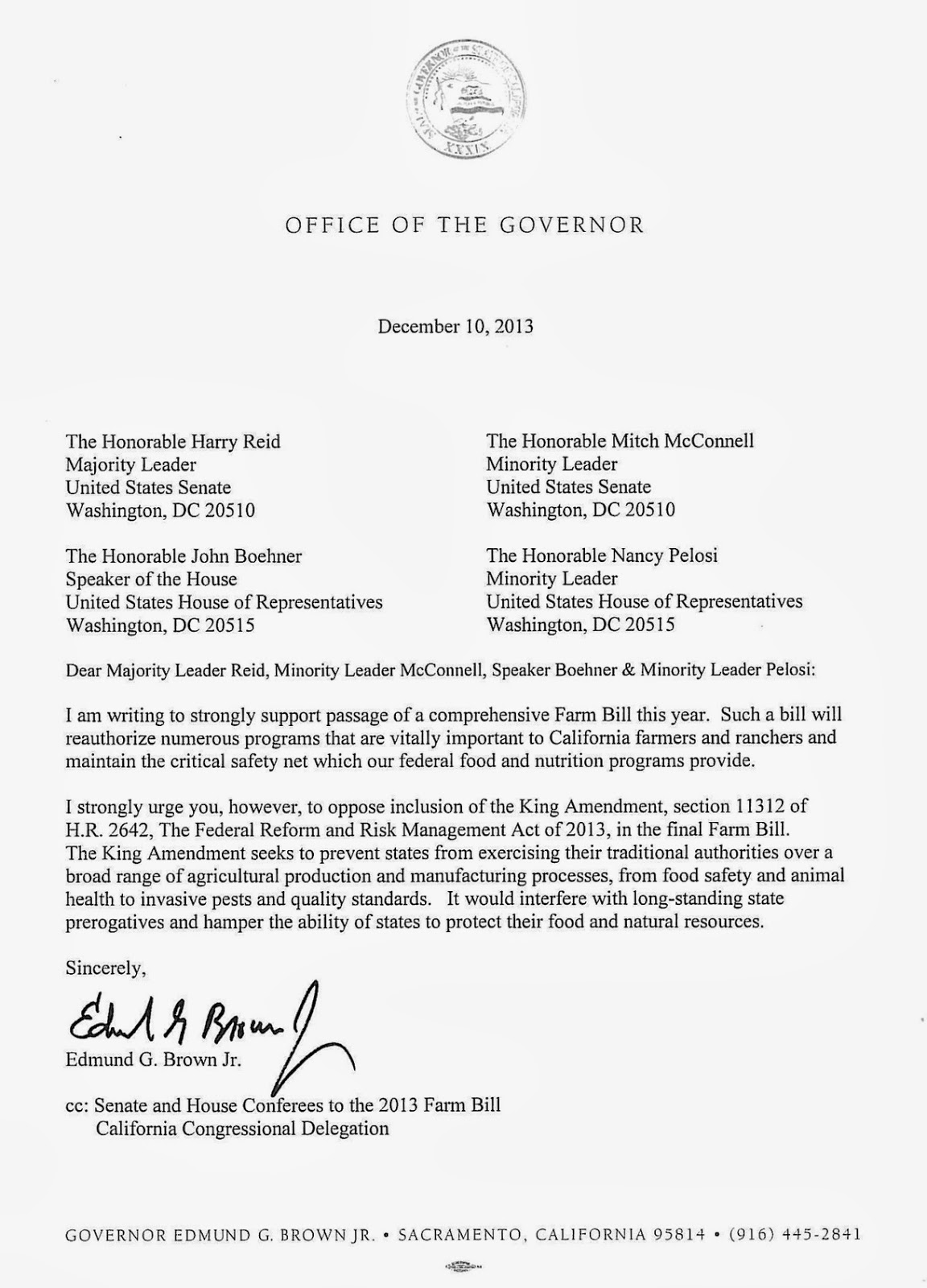
Governor Brown Urges Congress to Pass Farm Bill and Exclude King Amendment

Posted by the CDFA TODAY, California Governor Edmund G. Brown Jr. has sent the following letter about the Farm Bill to Congressional leadership in Washington D.C.

2016-05-31T19:42:28-07:00December 17th, 2013|

Almond Conf. Was Best Yet

Almond Industry Conf. Was Best Conference Yet


(From the Almond Board of California)
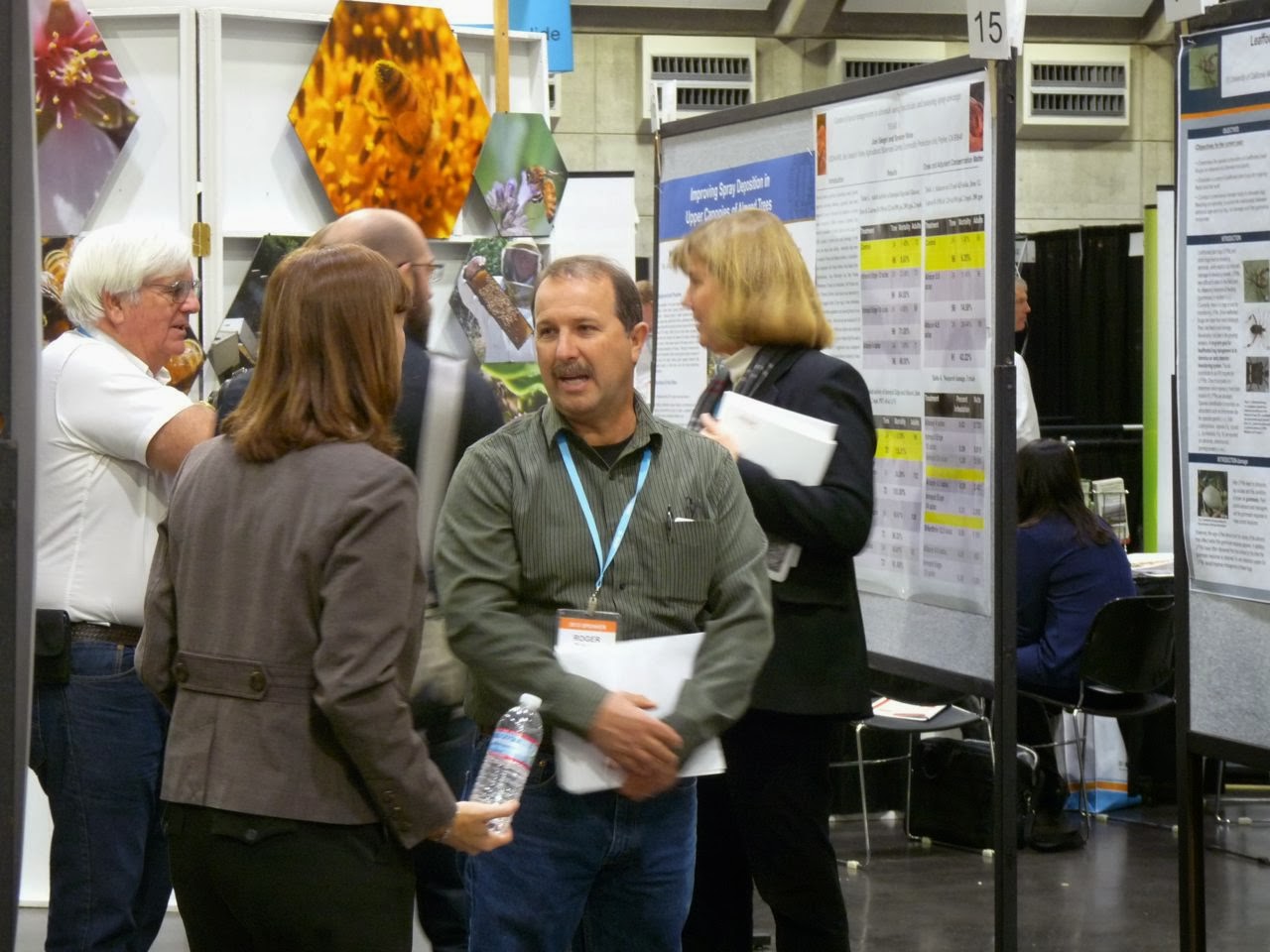
Roger Duncan UC Pomology Farm Advisor, Stanislaus
visits with attendees during the poster session of Meeting.
A quick survey of attendees reveals a general opinion that the 41st Annual Almond Conference, held Dec. 3–5, was the best ever, thanks largely to the spacious Sacramento Convention Center with its roomy trade show floor, banquet hall and meeting rooms, and the wide-open gathering spots for meeting and greeting. Add to that the stellar downtown Sacramento location, with a plenitude of hotels and restaurant choices, and you have the perfect setting for a successful event. 
But the venue tells only half the story. What went on within the walls is the other half. This year, the program was expanded to include workshops all afternoon on Tuesday, and again on Thursday during lunch. 
Guest speakers covered everything from the water situation to financial modeling, with irrigation strategies, nitrogen budgeting, marketing programs and a host of other topics eagerly received by growers, handlers and allied industry members. The “speed dating” six-minute research updates followed by the poster session both Wednesday and Thursday were well attended.

The Conference went out with a bang on Thursday evening, with a trio of master comedians provoking nonstop laughter from the record crowd at the Gala Dinner.

As one member of the audience said, “The comedians were talented, witty and kept you so engaged that I never found myself looking at my phone to see what time it was. Everyone I spoke with following the dinner said they enjoyed it immensely. Driving home, we recounted the jokes line after line and laughed all the way home!”

Polaris RANGER Side x Side Delivered to Turlock
 Thursday, Dec. 5, was a lucky day for Pat Wilkey of Turlock. Her entry was drawn from hundreds deposited in the back of a Polaris RANGER 400 UTV at The Almond Conference, where Polaris Industries Inc., and the Almond Board teamed up to provide the versatile UTV giveaway.

Pat and her husband, Jack, grow almonds in Turlock, and are also owners of Wilkey Industries, which provides processing equipment to handlers. The company was one of many exhibitors at the trade show that ran concurrently at The Almond Conference, which has grown substantially since the event was moved to the Sacramento Convention Center with its larger facilities.

2016-05-31T19:42:28-07:00December 17th, 2013|

STOP CRISIS FOR CALIF. DAIRY FAMILIES

Assemblyman Adam Gray:

Need to Stem the Tide of Dairies Going Under


(From Western United Dairymen)

The economic multiplier effect of the dairy industry is not just a statistic to Assemblyman Adam Gray (D-Merced). His grandfather started Merced Dairy Supply and his father Robert continued the business. Gray’s first job at the dairy supply store was washing storage barrels and loading feed bags, an experience that helped him learn about the local economy from the ground up.

Assemblyman Adam Gray (D-Merced


Discussing the economic crisis facing California dairy families, Gray told Western United Dairymen in an interview this week, “Dairy families are continuing to struggle and go out of business. As someone who represents a large dairy area, I am very concerned about the industry’s future.  We need to stem the tide of all these dairies folding and going under.”


Economic reports show that California’s dairy industry contributed $63 billion in economic activity to the state. According to the California Milk Advisory Board, in 2008, the latest year for which figures are available, the dairy industry created a total of 443,574 jobs in California, approximately 3 percent of the total overall job production for the year. The 2008 report shows that for every single “on-the-farm” job, 22 additional “beyond-the-farm” jobs are created.


Gray testified at a CDFA hearing held in September in support a petition filed by WUD and other dairy producer groups for emergency price relief. His remarks focused on the economic impact to the communities that surround dairies. “I spoke about the economics of the issue and I spoke from the heart,” said Gray. “I know from growing up and working at a dairy supply business how many small businesses are supported by dairy. There are so many related businesses that depend on the success of dairies. In the absence of these dairies, you are going to see these businesses go under as well.”


When the CDFA issued its decision to extend the current temporary price relief for all classes of milk, there was disappointment expressed by dairy producers. Gray shares that sentiment. “My expectation was that they would take some action to create additional equity and stem the tide of all these dairies folding and going under.”


The task ahead is to educate legislators about the dairy industry and its economic factors, said Gray.  “I’m not sure there is clear path forward but I am going to be a tireless advocate for the dairy industry,” he said. “I am constantly educating my colleagues about the dairy industry and its complex pricing issues. There are so many who do not understand the industry and I am talking to them about the industry and its needs. But the need remains for additional education of state elected officials and dairy producers have an important role to play,” points out Gray.


“My best advice is for WUD members to help in educating legislators. WUD does a great job of advocating for its members. You have to be even more determined and more persistent but not just with valley legislators. We have put in whatever extra effort is needed to advocate for why we need a solution.”


Gray said he “absolutely” sees a need for Governor Brown to be involved in finding a solution to the industry’s pricing crisis. “Ultimately, he is the top executive and it is important that the governor be part of the solution.”


“Because of his family’s background in the dairy supply business, the personal nature of the dairy crisis hits him constantly,” said Gray. “Each and every month, people are on the brink of losing their family farm. Whole communities are being hurt. This is a real crisis with broad implications and we have to figure out a way to find a solution, either administratively or through legislation.”

2016-05-31T19:42:28-07:00December 17th, 2013|

Citrus Freeze Damage High

Citrus Freeze Damage Could be

30 Percent-Plus!

Tom Wollenman, Vice President of LoBue Brothers Citrus in Lindsay, told California Ag Today that it was a very hard freeze for a substantial amount of time, and it appears that we will definitely have 30 percent damage or more on 80 percent of the fruit that is hanging.

“In early December, we had four or five cold nights across a large area of the industry with 27 degrees or below from midnight to about 6 am,” Wollenman said.

“Everyday, we are getting closer to a more accurate assessment of the damage,” he noted

Wollenman said that there has been conjecture that the cold weather may have killed Asian Citrus Psyllid populations in the Central Valley. “We do not know for sure, but   hopefully it will put a dent on any resident populations,” he said.

2016-05-31T19:42:28-07:00December 16th, 2013|
Go to Top