About Patrick Cavanaugh

This author has not yet filled in any details.
So far Patrick Cavanaugh has created 1490 blog entries.

NOVEMBER 2013 MILK PRODUCTION STATISTICS

California Remains Top Milk Production State, Nov. 2013
Sources: 
USDA-NASS publication “Milk Production”

USDA-ERS publication: “Livestock, Dairy, and Poultry Outlook”

California Milk Advisory Board (CMAB)

CDFA

CDFA reported the top five milk production states in November 2013 were:

(Percent Change from Same Month/Previous Year)

1. California +0.6%

2. Wisconsin -0.6%

3. New York         +2.1%

4. Idaho                -1.8%

5. Pennsylvania      -0.2%

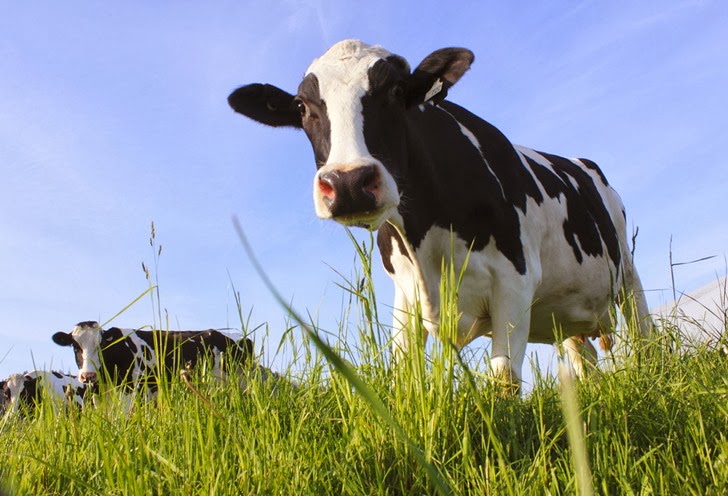
California has been the nation’s leading dairy state since 1993, when it surpassed Wisconsin in milk production. California is ranked first in the U.S. in the production of total milk, butter, ice cream, nonfat dry milk, and whey protein concentrate. California is second in cheese production.

USDA estimates overall monthly milk production across the U.S. was up by 0.1% in November 2013, compared to November 2012. California milk production increased 0.6% compared to November 2012 (on 1,000 more cows and 10 more pounds of milk per cow).

California accounts for 21% of the United States’ milk production. In 2012, California produced 42 billion pounds of milk – more than one-fifth of the nation’s total production. Approximately 40 percent of the total U.S. dairy product exports in 2012 came from California.
Dairy farming is a leading agricultural commodity in California, producing $7 billion in annual retail sales in 2012. Currently there are more than 1,500 California dairy families, whose farms house 1.82 million milk cows. Approximately one out of every five dairy cows in the U.S. lives in California.

California’s milk standards exceed federal standards because California processors add nonfat milk solids, which offer improved taste and nutritional benefits. California milk exceeds the federal guidelines for the amounts of calcium and protein in each serving.
2016-05-31T19:42:23-07:00January 1st, 2014|

USDA TO STUDY DAIRY ANIMAL HEALTH PRACTICES

USDA To Research Dairy Practices of Animal Health and Welfare Management
The U.S. Department of Agriculture’s (USDA) National Animal Health Monitoring System (NAHMS) is joining forces with the National Agricultural Statistics Service (NASS) to conduct a national dairy study in January 2014. NASS will survey dairy farmers in 17 states, including California, about their animal health and welfare management practices.

“Animal health is one of the most important issues our dairy farmers face today,” said Vic Tolomeo, director of the NASS Pacific Regional Office. “By responding to the survey, California dairy farmers will help determine trends in animal health care and best practices to ensure proper animal health.”

The two federal agencies will reach out to nearly 3,500 producers nationwide, including approximately 400 in California, to obtain the most accurate data. Farmers with fewer than 30 cows will receive a brief survey in the mail. NASS interviewers will visit farms with 30 or more cows to personally gather information from the operators.

USDA’s veterinary services representatives will visit with operators who are eligible and who choose to continue in this study. Some operators will also have the opportunity to participate in a year-long calf-monitoring study. Once the study is completed, participating operators will receive customized reports describing their animal welfare measures, as well as additional reports and information sheets.

NASS provides accurate, timely and useful statistics in service to U.S. agriculture.

2016-05-31T19:42:24-07:00January 1st, 2014|

IMPROVED PESTICIDE REGISTRATION IMPROVEMENT ACT

PRIA Tracking Email Notification Software to Deploy TODAY
EPA’s Office of Pesticide Programs (OPP) has developed and will deploy TODAY, December 31, 2013, software enhancements for the Pesticide Registration Improvement Act (PRIA)’s requirement for Registration Tracking Milestone email messages.

The enhancements will be available to the industry beginning January 1, 2014 and will inform registrant contacts when any of their PRIA submissions reach each of the seven defined tracking milestones.

Before manufacturers can sell pesticides in the United States, EPA must evaluate the pesticides thoroughly to ensure that they meet federal safety standards to protect human health and the environment. The EPA grants a “registration” or license that permits a pesticide’s distribution, sale, and use only after the company meets the scientific and regulatory requirements.

Applications for a new or amended pesticide registration must include the appropriate EPA forms.

2016-05-31T19:42:24-07:00December 31st, 2013|

TULARE CITRUS INCURS FREEZE DAMAGE

Tulare Citrus Grower Evaluates Freeze Damage


Ed Chambers is a citrus grower whose main acreage is located down by Richgrove in Tulare County.

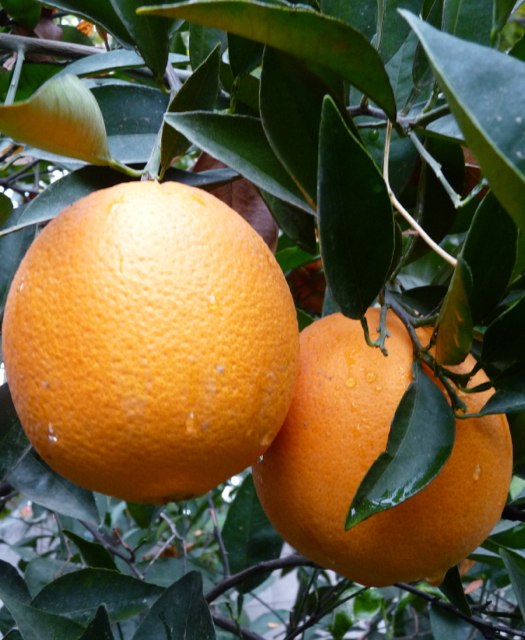
Chambers grows “the whole gamut of citrus” on 650 acres, including murcotts, tangos, seedless Valencias, Satsumas, Navels, regular oranges, lemons, grapefruit, and limes.

Chambers assessed damage from the early December freeze, resulting from the temperature drop and short water supplies. “Of the 340 acres in the Richgrove area, I have 80 acres of late navels and they are hurt bad. They will probably go to juice; I think they may be a total loss.”

“The seedless Valencias are the same way, they were hurt pretty badly, but we have to wait and see about them,” said Chambers. ‘The same is true for regular navels, the old line navels and the Fisher navels, there was a lot of damage, but we don’t know to what extent yet.”

Chambers continued, “We have water and wind machines, but the temperature was down around 25 or 26 degrees (F) for too many hours over too many consecutive nights, and the fruit is not hardy enough to withstand such temperatures.”

“Wind machines were started 30 degrees or below and they went all night, but they bring down temperatures only a few degrees.” Chambers remarked, the low temperatures are hard to combat; if the wind machines don’t bring you up above 27 degrees, you are still hurting all the time.”

“The mercots and tangoes are thin-skinned,” Chambers said. “We did manage to keep the temperatures up a little more in those, and I think we will be able to salvage them. There is damage, but it’s not so that you can’t pack fruit.”

Chambers explained, “We had a really light crop on the late fruit, generally found in the middle of the block. I think when you have light crops, there isn’t enough fruit to keep everything else warm, and so they get cold more quickly.”

“I went into the citrus business for myself in 1967,” Chambers recalled. “In 1990, I spent half the night sobbing, looking at the trees facing temperatures of 16 or 17 degrees. It was the worst citrus freeze in history. There were spots in the Valley that were zero degrees. It was devastating.”

Chambers recalled, “1967 was a nasty freeze too. There were some freezes in the ‘70’s too, but back then we didn’t have any insurance.”

“Insurance eases the pain; in times like these, you don’t make any money—only about 2/3 of your cost of production,” Chambers commented. “ Some growers did not insure enough. The big insurance, for the most part, keeps you from going broke; but it is expensive. If you buy the big insurance, you can emerge with your costs covered, and maybe just a little more.”

“We’ll get through it,” declared Chambers. “We’ve gotten through every time before this. While this time was not as bad as ’90, I think it was worse than ’07 or ’98, a pretty tough one too.”

2016-05-31T19:42:24-07:00December 31st, 2013|

Contest underway: Find the first Cabbage White Butterfly

Want to Trade a Butterfly for a Beer? 
Arthur Shapiro is willing to trade a butterfly for a beer.
And it’s all in the name of science.

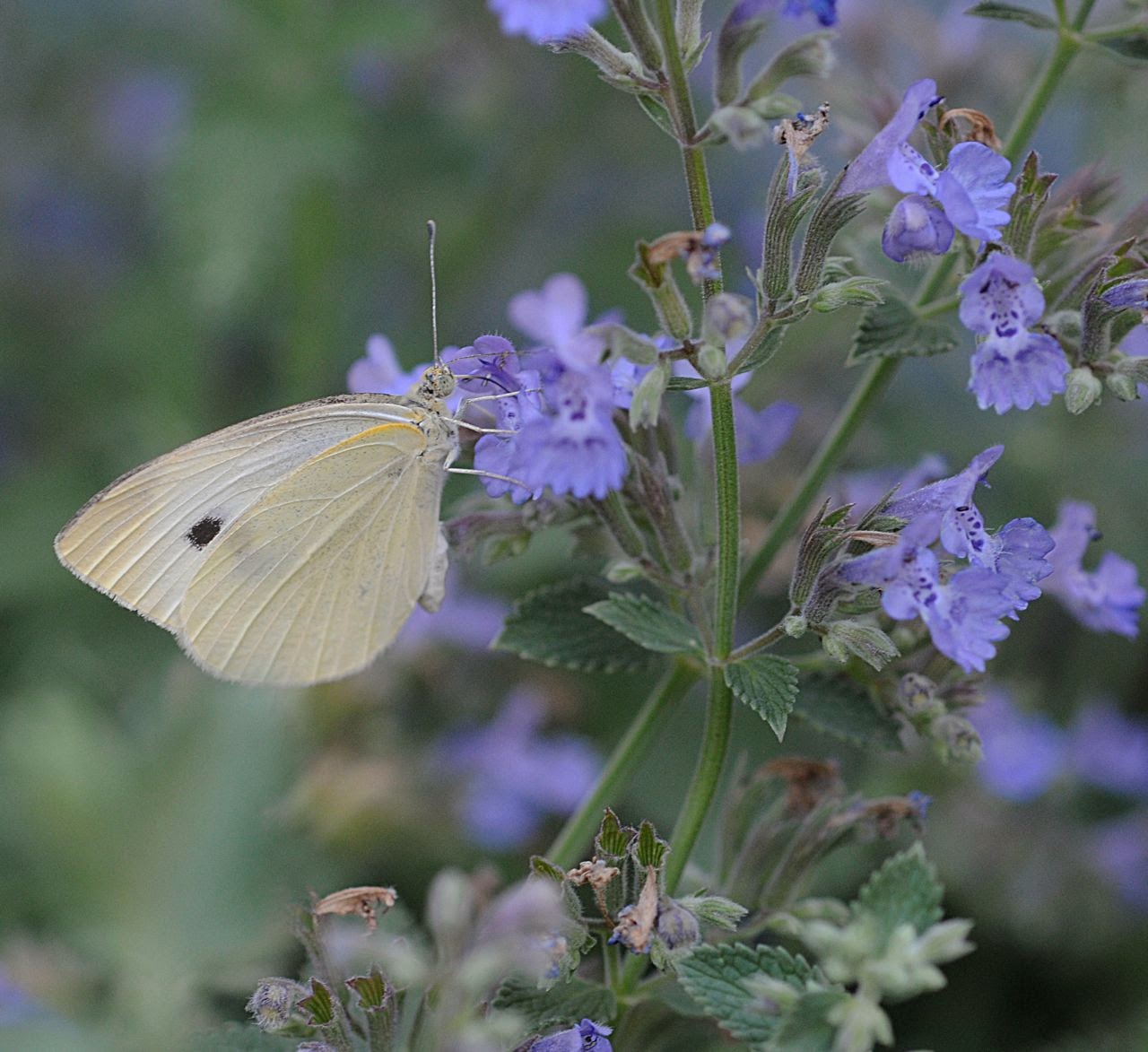
Cabbage White Butterfly on Catmint. Photo: Kathy Garvey
If you collect the first cabbage white butterfly of 2014 in the three-county area of Yolo, Solano or Sacramento, you’ll collect a pitcher of beer or its cash-prize equivalent from Professor Shapiro of the UC Davis Department of Evolution and Ecology.

It’s all part of Shapiro’s 43-year study of climate and butterfly seasonality.  He launched the annual contest in 1972 to draw attention to Pieris rapae and its first flight.

“It is typically one of the first butterflies to emerge in late winter,” he says. “Since 1972, the first flight has varied from Jan. 1 to Feb. 22, averaging about Jan. 20.” Shapiro, who usually wins his own contest, snagged the first cabbage white butterflies of 2013 on Jan. 20 and 21.

The cabbage white butterfly inhabits vacant lots, fields and gardens where its host plants, weedy mustards, grow. The male has white wings; the female may be slightly buffy. The underside of the hindwing and of the tip of the forewing is distinctly yellow and the hindwing is more or less overscaled with gray below. The black markings on the upperside, except the black at the bases of the wings near the body, tend to be faint or even to disappear early in the season.

The butterfly must be collected outdoors in Yolo, Solano or Sacramento counties and must be delivered live to the office of the Department of Evolution and Ecology in 2320 Storer Hall, during work hours — 8 a.m. to 5 p.m. Mondays through Fridays. All entries must list the exact time, date and location of the capture and the collector’s name, address, phone number and email.

“The receptionist will certify that it is alive and refrigerate it,” Shapiro said. “If you collect it on a weekend or holiday, hold it your refrigerator but do not freeze it. A few days in the fridge will not harm it.”

Shapiro, who is in the field more than 200 days a year, has been defeated only three times since 1972. Those winners were all his graduate students, whom he calls “my fiercest competitors.” Adam Porter won the beer in 1983, and Sherri Graves and Rick VanBuskirk each won in the late 1990s.

When Shapiro wins, he shares the reward with his graduate students and their significant others.

All in all, the cabbage white butterfly contest “helps us understand biological responses to climate change,” Shapiro said. “The cabbage white is now emerging a week or so earlier on average than it did 30 years ago here.”

Shapiro maintains a website on butterflies at http://butterfly.ucdavis.edu, where he records the population trends he monitors in Central California. He has surveyed fixed routes at 10 sites since as early as 1972. They range from the Sacramento River Delta, through the Sacramento Valley and Sierra Nevada mountains, to the high desert of the western Great Basin. The sites, he said, represent the great biological, geological and climatological diversity of Central California.

Shapiro and biologist/writer/photographer Tim Manolis co-authored “A Field Guide to Butterflies of the San Francisco Bay and Sacramento Valley Regions,” published in 2007 by the University of California Press.

A distinguished professor, Shapiro is a fellow of the American Association for the Advancement of Science, the Royal Entomological Society and the California Academy of Sciences.

For more information on the beer-for-a-butterfly contest, contact Shapiro at amshapiro@ucdavis.edu or (530) 752-2176.

2016-05-31T19:42:24-07:00December 31st, 2013|

CRIME ALERT

–>

Equipment Stolen in Monterey
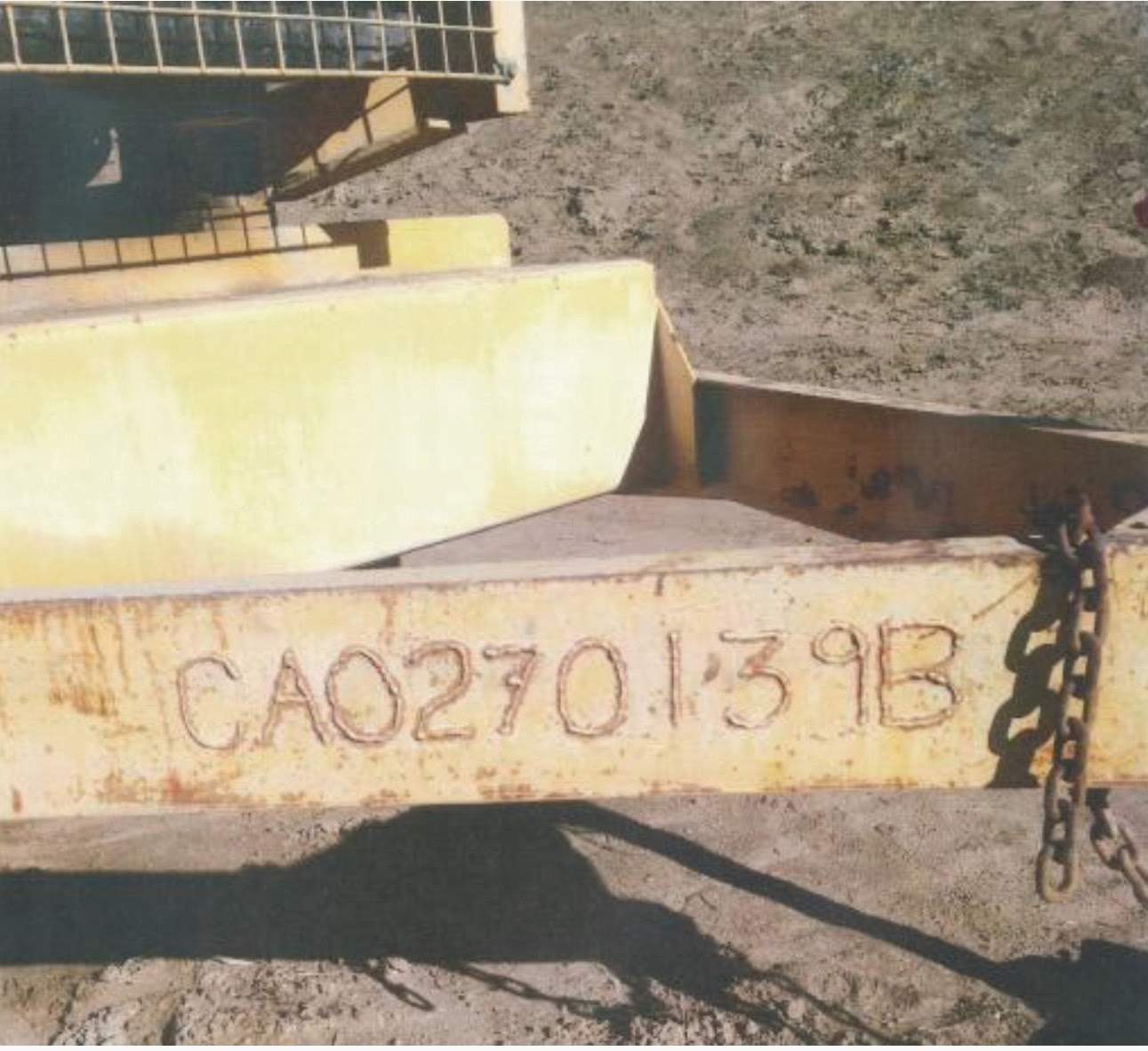
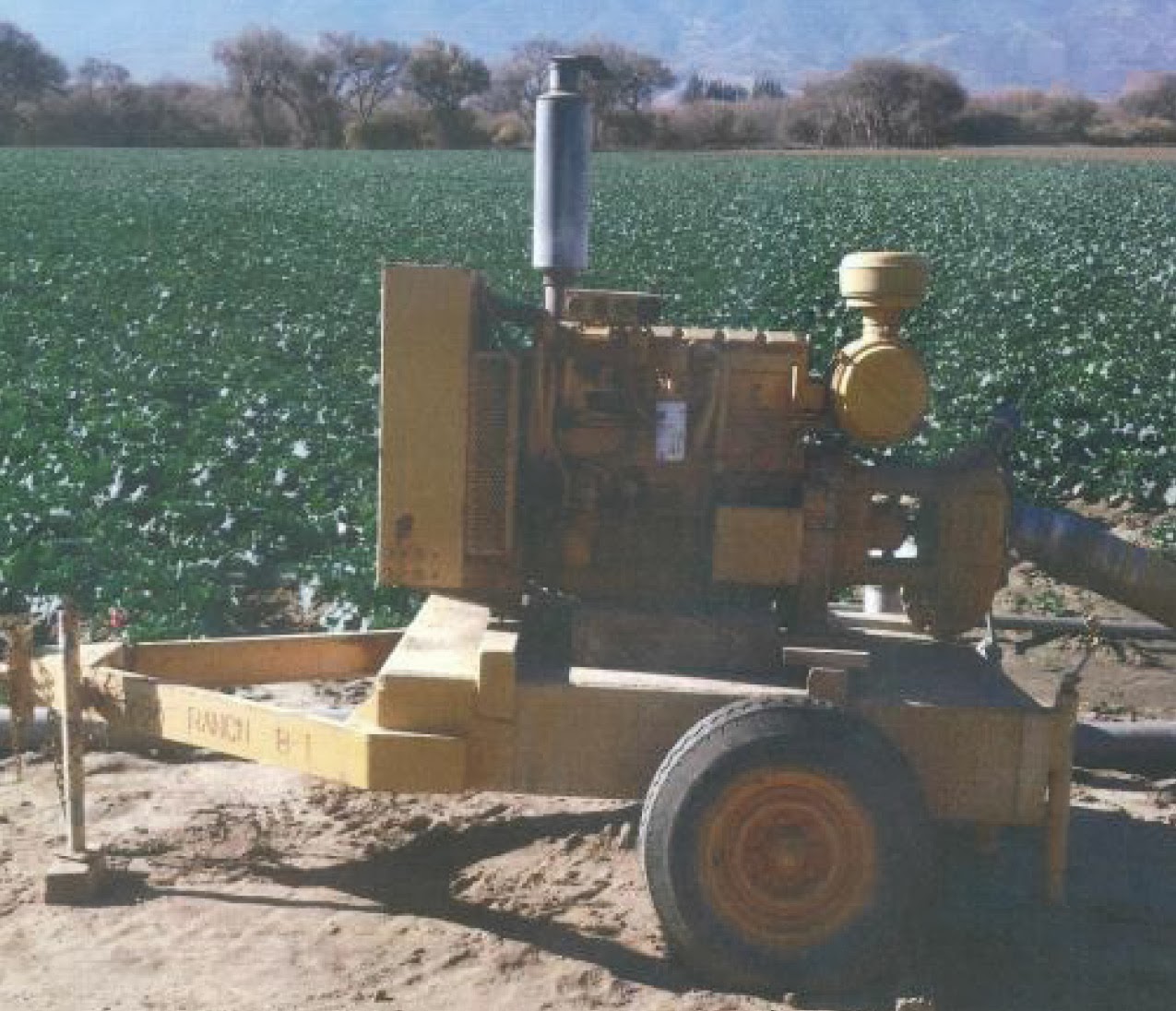
The Monterey County Sheriff’s Office Ag Crime Unit is requesting assistance in locating a CAT Diesel Booster Pump and trailer stolen from southern Monterey County between 12/22/13 and 12/23/13. 
The trailer has an owner-applied number on the right side tongue (CA0270139B). It also has “B-9” on the tongue. See posted photos.
Please contact MCSO Det. Javier Galvan at (831) 755-3811or Deputy Kris Knott at 755-3722 if you have information regarding this case. 

Please refer to CR07967-13. Please distribute this flyer accordingly.

Monterey County Sheriff’s Office 
Rural Crime Unit NET ALERT 12/30/2013 
Scott Miller–Sheriff/Coroner 
MCSO Ag Crime Unit 831-755-3780
2016-05-31T19:42:24-07:00December 31st, 2013|

Trapping and Inspecting new Flush is Important

New Year Brings Vigilance on ACP in Citrus


By Patrick Cavanaugh, editor

During 2013, there were many finds of Asian Citrus Psyllids in the San Joaquin Valley which means the pest is on the move and spreading.

Beth Grafton-Cardwell
According to Beth Grafton-Cardwell, UC Riverside IPM Specialist and Research Entomologist, and director of the Lindcove Research and Extension Center, with 2014 arriving, the industry must have traps out and a close inspection of the new flush of growth in February.

“The cold snap that we had in December was probably really good to help reduce the psyllid numbers, so we are hoping that it will slow things down,” Grafton-Cardwell said.  “The psyllid does not do well in cold weather, however the citrus growers try to keep their orchards warmer to try and protect the fruit so in doing so they may be protecting the psyllid.”

Grafton-Cardwell said that researchers across the nation are working hard to come up with solutions for the disease Huanglongbing (HLB), which will kill the tree. She said there is work being done in Florida on breeding citrus with tolerance to the bacterium that causes HLB.

Grafton-Cardwell reminds the public that if they are moving citrus fruit around to make sure it’s free of leaves and twigs to insure that no psyllids are riding on them. “Also do not move any citrus plant material around the state,” she said.

2016-05-31T19:42:24-07:00December 31st, 2013|

CDFA AND DWR MEET FOR DROUGHT PREPARATION

Water Transfers And Drought Preparedness Meeting Jan. 7th
Announced TODAY, California State Board of Food and Agriculture will be joined by representatives from the California Department of Water Resources (DWR) and State Water Resources Control Board to discuss water transfers and drought preparedness on January 7, 2014. This meeting will be held from 10 a.m. to 3 p.m. at the California Department of Food and Agriculture, 1220 ‘N’ Street – Main Auditorium, Sacramento, CA 95814.


“California’s farmers and ranchers need to prepare for a potentially significant drought year,” said CDFA Secretary Karen Ross. “We are looking at scenarios in which considerable land fallowing and unsustainable groundwater overdraft will occur – leading to direct impacts within our rural farming communities. CDFA is partnering with federal and state government agencies to provide further information on drought preparedness for the agricultural sector.”

In November, initial allocation levels were released for the State Water Project providing a five percent allocation for water contractors. This initial allocation is among the lowest on record, duplicating the initial allocation level following California’s most recent drought (2007-2009).

In addition, nine of California‘s 12 major reservoirs are below 50 percent capacity – including Lake Shasta (37 percent), Lake Orville (37 percent), San Luis (29 percent), and Folsom Lake (20 percent). DWR reports that about half of California’s statewide precipitation occurs December through February, with three-quarters occurring November through March. 


Invited speakers include: Bill Croyle, California Department of Water Resources; Tom Howard, State Water Resources Control Board; Paul Fujitani, U.S. Bureau of Reclamation, Mid-Pacific Region; David Guy, Northern California Water Association; Jason Peltier, Westlands Water District; Luana Kiger, USDA Natural Resources Conservation Service; Navdeep Dhillon, USDA Farm Service Agency; Randy Fiorini, Delta Stewardship Council and Thad Bettner, Glenn-Colusa Irrigation District.

“We are sounding the alarm on behalf of the agricultural industry,” said Craig McNamara, president of the California State Board of Food and Agriculture. “With the strong potential that California is entering its third dry year, we need to start planning now to minimize long-term impacts. I remain hopefully that the next few months will bring much-needed precipitation, but planning for the future must begin today.”

The California State Board of Food and Agriculture advises the governor and the CDFA secretary on agricultural issues and consumer needs. The state board conducts forums that bring together local, state and federal government officials, agricultural representative and citizens to discuss current issues of concern to California agriculture.

This meeting will be streamed online at: www.cdfa.ca.gov/LiveMediaStream.html

Follow the board on Twitter at: www.twitter.com/Cafood_agboard

2016-05-31T19:42:24-07:00December 31st, 2013|

Having Good Water Rights Gives More to Farmers

Westside Fresno County Farmers Continue Field Work, Waiting for Rain

By Patrick Cavanaugh, editor

Bill Diedrich farms near Firebaugh in western Fresno County. Despite his location, he may have more water than most since he is in Firebaugh Canal Water District, which is part of the San Joaquin River Exchange Contractors, which hold some of the oldest water rights in the State, dating back to the late 1800s.

Diedrich farms almonds, prunes, alfalfa pomegranates, cannery tomatoes and cotton.

“Right now we are tuning up our irrigation system in our tomato fields, flushing the lines repairing leaks we might have and generally getting it in top shape for next year. And since the fields are dry we are able to be in the field working and keeping our employees busy.

He noted that he is also pruning pomegranates and almonds and will start shaking the nut mummies out of the trees to prevent navel Orangeworm pressure next summer. “Of course the number one topic on every farmer’s mind is that lack of rain and snowfall,” he said.

Where Diedrich farms, water is more available due to the water rights from the San Joaquin River. “We will hopefully get 75 percent of our normal water supply, so I do not have any plans yet to not plant anything in the spring.”

Diedrich also farms in Madera County and relies on ground water and surface water. “That is something that is on everyone’s mind, but we feel pretty good about our ground water this year,” he said. “I’m in the San Luis Water District, a federal water district where there is will be an initial zero water allocation, but we are waiting to see what January, February and March brings us, and hopefully we can get some inflow to Shasta and get some water in the system. That’s what we are all hoping on!”

“If we do not get the rain and snow, then it may be catastrophic enough to get our politician’s attention to actually get something done,” he said. “We need to get storage money back in the water bond and hopefully get this state turned around in regard to policy on water.”

2016-05-31T19:42:24-07:00December 30th, 2013|

Farmer Needing Winter Rain Feel the Pain

Field Crop Farmers Hurting with No Winter Rain

By Patrick Cavanaugh, editor

Michael Correia farms field crops in Tulare County, relying on winter rains for germination. And since California is having a record drought with negligible rainfall so far this winter, Correia is worried about his crop.

“I farm oats along with alfalfa inter-planted in wheat and we have not been able to get it out of the ground due to less than a half-inch of rain,” Correia said. “So, I am having to irrigate the ground with well water, and I am not sure if I am going to make a crop.”

“We rely on winter rains to grow these crops as well as recharge the ground water,” he said. “So with no rain, we are just pushing the ground water down further. I already have two wells that have dried up on me and now I need to drill some new wells.”

This year is the worse Correia as seen.  He said he started pulling down a living on his dad’s ranch when he was seven-year’s old, and I am 58-years-old now. “Again, I have never seen it this bad,” he said. “One year it did not rain until December 23, but then we got a good rain from that point on.”

Correia noted that “even if we get a good rain in January, February and March it may not bring the underground water supply back up.”

“I could get some help from my two water districts, which are Persian and Watson, but I have had no deliveries from them this season,” he said. “It’s going to be very tough this year and making matters worse is that the power bills will be outrageous. Southern California Edison is already raising our rates because they are having to buy power from other suppliers because they have very little water in the reservoirs to run through there generators for power. So they’re having to buy from coal and natural gas fired generators, which costs a lot more,” Correia said.

He noted that he also usually plants corn in the spring and harvests it 90 to 120 days later. He grows corn for human consumption and well as silage corn for the dairy industry. “I will need to know that I have water before I plant the corn this spring,” he said.

Something he did last year that saved on irrigations is that he planted milo for silage, which gives the same amount of tonnage on less irrigation. “That worked out pretty good for me,” he said.

2016-05-31T19:42:24-07:00December 28th, 2013|
Go to Top